The complaint usually lands the same way: the thermostat says 21°C, the boiler is on, the radiators are warm, yet the room still feels wrong. Heating performance is what turns gas, electricity, and hardware into comfort, but user expectations often ask for something more like “instant, even, silent warmth” with no thought for drafts, fabric, or physics. That gap matters because it costs money, drives call-backs, and quietly eats trust in otherwise “working” systems.
You can be standing in a new-build hallway with a mug going cold, watching the heat pump hum like a fridge in the next room. Or in an older terrace where the combi fires, the rads click, and the air near the sofa still has that thin edge. Engineers don’t always argue with the customer. They take notes, glance at the emitter sizes, and do the mental arithmetic nobody asked for.
“It works” is a low bar-and comfort is a higher one
In building services, “working” often means the system can hit a setpoint under test conditions. Comfort means the occupants stop thinking about the heating altogether. Those are not the same achievement.
A room can reach 21°C and still feel chilly if the mean radiant temperature is low (cold walls, big glazing, uninsulated reveals). Likewise, a room can be “warm enough” but unpleasant because the heat is lopsided: hot ceiling, cold floor, or one corner that never quite gets there. People don’t experience temperature as a number; they experience it as a whole-body verdict.
“The stat says it’s fine,” is not a diagnosis. It’s a clue that the building and the system are disagreeing about what “fine” feels like.
The quiet physics behind the disappointment
There are a few repeat offenders engineers see again and again. None are exotic; most are boring, which is why they survive.
1) Air temperature isn’t the same as warmth
Comfort tracks radiant balance as much as air temperature. A cold external wall or a large window pulls heat from your body like a slow suction. The thermostat is often on an internal wall, reading a calmer, warmer pocket of air while the seating area sits in a colder radiant field.
2) Heat delivered ≠ heat distributed
Hydronics love the path of least resistance. If the system isn’t balanced, one radiator gets the flow and another starves. If pipework is undersized, or pump settings are wrong, you can have a boiler “doing loads” and rooms still lagging.
With heat pumps, the same story shows up as low flow temperature designs installed with high-temperature habits: emitters too small, controls pushing short cycles, and a steady-state machine forced into stop-start misery.
3) Controls optimise the bill, not the body
Weather compensation, load compensation, smart schedules: all good ideas. But many are commissioned as if the building is a neat textbook box. Real homes have kitchen extract fans, leaky loft hatches, curtains over rads, and someone who likes a window cracked “for fresh air”.
Users want the heating to respond like a light switch. Most wet systems respond like a slow cooker. The mismatch isn’t stupidity; it’s timescale.
4) The building fabric is the hidden emitter
If a house is draughty or under-insulated, the heating system spends its life refilling a bucket with a hole in it. The occupant experiences this as “it’s always on”. The engineer experiences it as “the load never drops”.
A particularly British twist: a home that’s partially upgraded-new boiler, old single glazing, patch insulation-creates uneven surfaces and uneven complaints. The system is blamed for a fabric problem because it’s the part you can see and hear.
Where user expectations drift from design reality
Most domestic systems are designed to a compromise: reasonable cost, reasonable comfort, reasonable efficiency, for an assumed pattern of use. Then people live in them.
Common expectations that cause friction:
- “Warm in ten minutes.” Possible with high flow temperatures and oversized emitters, but that usually clashes with efficiency targets and heat pump best practice.
- “Same temperature everywhere.” Hard in homes with mixed orientation, glazing, or open-plan leakage paths without zoning and careful commissioning.
- “Silent.” Pumps, valves, expansion noises, and airflow all have acoustic signatures. “Quiet enough” is achievable; “inaudible at night” needs attention early.
- “Set-and-forget forever.” Controls drift, TRVs get nudged, air gets into systems, filters clog, and occupancy changes. Homes aren’t static.
Engineers quietly watch because the technical fix is often easy, but the expectation reset is the real job. And that part rarely sits on a quote.
A pragmatic way to assess heating performance (without turning your home into a lab)
You don’t need a dissertation, just a structured check that separates comfort from equipment.
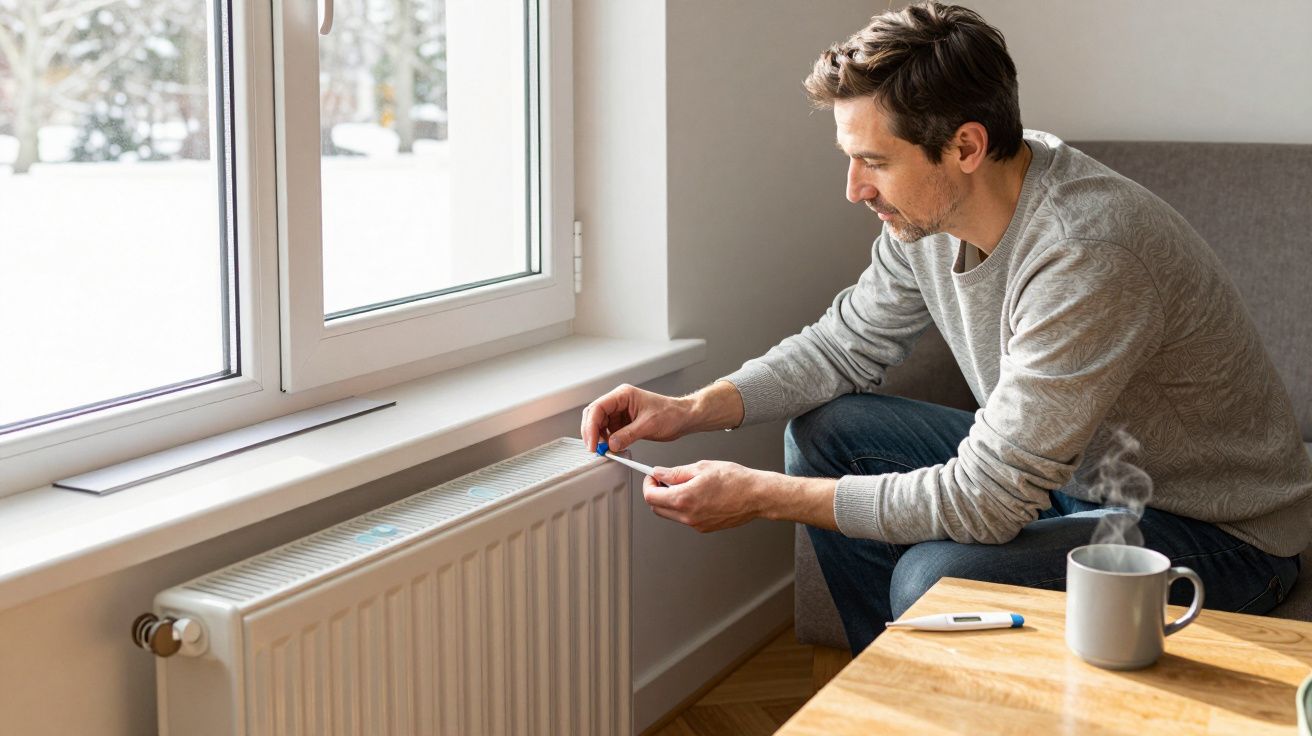
- Measure in the right place. Put a cheap thermometer where you actually sit, not where the thermostat lives. Note temperature and time to recover after a setback.
- Look for asymmetry. Cold corner, cold floor, chilly near glazing: that points to distribution or fabric, not “the boiler is weak”.
- Check flow and return temperatures (if you can). Big deltas can hint at low flow, blocked filters, or balancing issues; tiny deltas with poor comfort can hint at insufficient emitter area or too-low flow temperature.
- Watch cycling behaviour. Frequent on/off suggests control issues, oversized boilers, or heat pumps being asked to do high-temperature sprints.
- Do the simple maintenance bits. Bleed radiators only if there’s clear air noise/cold top; clean strainers; make sure TRVs aren’t stuck; confirm programmer settings match real life.
If you’re calling someone out, ask for commissioning evidence, not just reassurance: balancing, control setup, design temperatures, and-crucially-what comfort standard they were aiming for.
The fixes that actually move the needle
Most improvements are unglamorous, which is why they work.
- Balancing and hydraulic checks. A modest amount of time here can outperform a lot of expensive hardware.
- Emitter and flow temperature alignment. Bigger radiators (or more surface area) let you run lower flow temperatures for the same comfort-especially with heat pumps.
- Zoning that matches how you live. Not “one zone per room because the brochure said so”, but zones that reflect occupancy and exposure.
- Draft-proofing and targeted insulation. A few cold surfaces can dominate comfort. Fix the worst offenders first: loft hatch, suspended floors, leaky window seals, uninsulated pipework in voids.
- Thermostat placement and sensing. Sometimes the system is “working” perfectly for the wrong sensor.
The subtle win is this: when the building stops fighting the heating, the heating stops needing to prove itself.
Signals engineers notice (and occupants can learn to spot)
These are the little tells that predict disappointment:
- Rooms overshoot then cool quickly (control strategy or low thermal mass with high losses).
- Radiators hot at the top and lukewarm at the bottom (flow issues or sludge).
- One room always “behind” the rest (balancing, emitter sizing, or fabric exposure).
- Heat pump running constantly but still not comfortable (often normal behaviour, but comfort points to emitter/fabric mismatch).
- People adjusting TRVs daily like volume knobs (system not matching the real load pattern).
What this means for anyone specifying, buying, or inheriting a heating system
If you’re choosing equipment, don’t start with the appliance. Start with the comfort you expect, the fabric you actually have, and the temperatures the system must run to deliver that comfort. Heating performance is an ecosystem: controls, emitters, pipework, and the building itself.
And if you’ve already got a “working” system that still disappoints, treat it as a commissioning problem before you treat it as a replacement problem. The quiet truth engineers learn early is that most homes don’t need more heat. They need the right heat, in the right places, at the right pace.
FAQ:
- Why does my house feel cold at 21°C? Often because radiant temperatures are low (cold walls/windows) or there are draughts. Air temperature alone doesn’t guarantee comfort.
- Is constant running bad for a heat pump? Not necessarily. Heat pumps are often happiest running steadily at low flow temperatures. If comfort is poor, the issue is more likely emitter sizing, controls, or building heat loss.
- Do I need a bigger boiler if rooms don’t warm up? Not usually. Slow warm-up is commonly caused by poor balancing, control settings, or high heat losses-bigger output can mask issues while increasing cycling and bills.
- What’s the quickest “high impact” improvement? Proper balancing and control commissioning, plus fixing obvious drafts. These are relatively low-cost and often transform comfort.
- How do I explain the problem to an installer? Describe where it feels cold, when it happens, and what the system is doing (cycling, flow temps if known). Ask what design assumptions were used and what commissioning checks were completed.




Comments (0)
No comments yet. Be the first to comment!
Leave a Comment