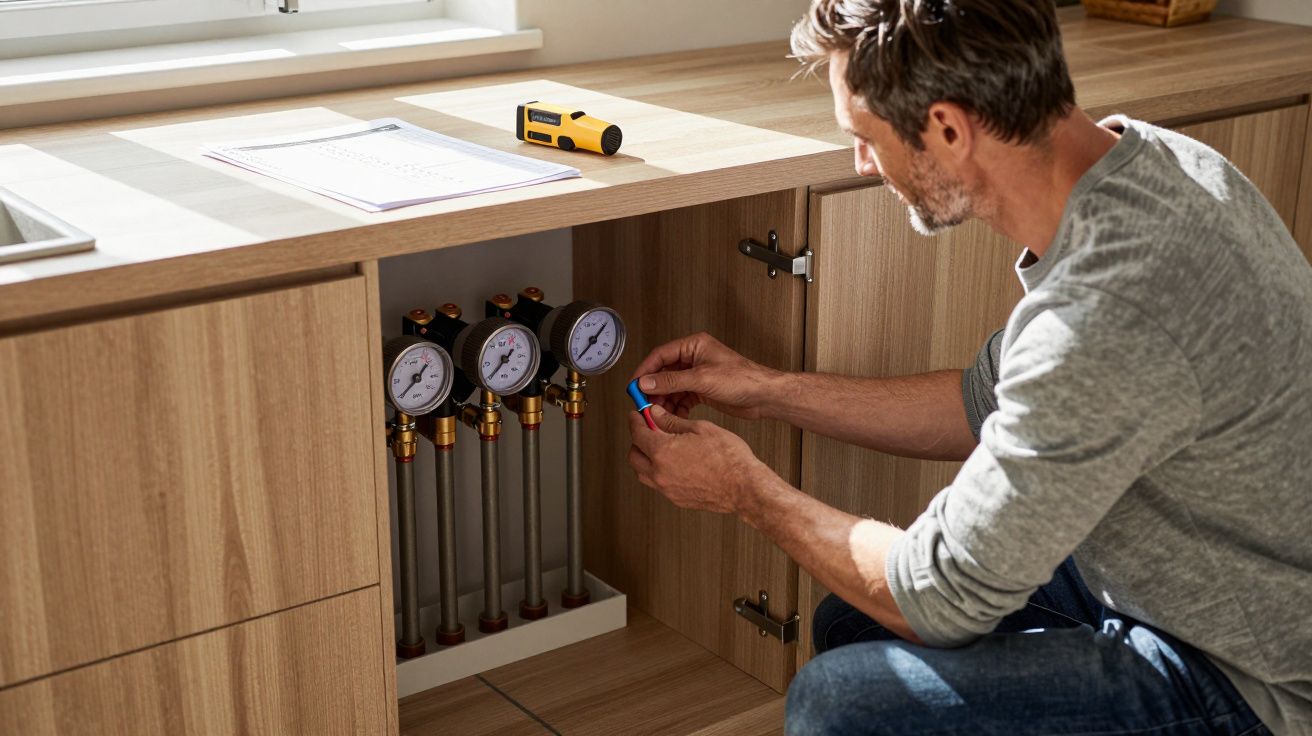
Underfloor heating is sold as the quiet, invisible comfort upgrade: warm tiles, steady air, no radiators stealing wall space. But when it misbehaves, the root cause is often upstream - in system design, controls, or even the way the whole house is insulated - not in the pipes or cables beneath your feet. If you only look at the floor, you can spend a lot of money fixing the wrong thing.
A cold patch in the kitchen, a bathroom that never quite dries out, a heat pump running all day like it’s chasing something it can’t catch. It’s tempting to blame a “failed loop” or a faulty mat. Sometimes that’s true. More often, the floor is just the place where a decision made elsewhere finally becomes obvious.
The floor is the symptom, not the source
Underfloor heating is slow by nature. That’s its superpower and its trap. It stores heat in the screed and releases it gently, so any mistake in temperature, flow, zoning or timing can look like a “floor problem” when it’s really a control or hydraulic problem.
A classic pattern is this: one room feels lukewarm, the next is roasting, and the boiler (or heat pump) seems to cycle. The loops are fine. The water getting to them - and the logic telling it when and how hot to be - isn’t.
“People call because the tiles feel cold. Nine times out of ten, it’s settings, flow, or balancing - not a broken pipe,” says a heating engineer who spends his winters chasing ‘mystery’ cold floors.
The quiet culprits: settings, sensors, and mixed messages
There’s a small moment where things go wrong, and it’s rarely dramatic. It’s a thermostat placed in the wrong spot. A floor probe that’s missing, miswired, or reading a void. A schedule copied from old radiator habits: big temperature jumps morning and night, like a system that can sprint.
Underfloor heating doesn’t sprint. It drifts. If your controls demand fast changes, the system either overshoots (hot later than you wanted) or never catches up (tepid all day).
Common control-side issues that masquerade as floor faults:
- Air temperature control only, with no floor limit in bathrooms or tiled areas, leading to odd comfort and “cold tile” complaints.
- Aggressive schedules (e.g., 16°C overnight → 21°C at 6am) that don’t match the thermal mass.
- Thermostat location problems: near a sunny window, on a cold external wall, above a TV, or in a draughty hallway.
- Wrong mode on heat pumps: weather compensation disabled, flow temperature set too high, or setbacks too deep.
Flow and balancing: the bit you never see, but always feel
If a room is consistently cooler than the rest, it’s often not the floor finish - it’s flow. Underfloor loops compete. Longer runs need more careful balancing, and manifolds need the right settings so each zone gets its share.
When balancing is off, you get the most frustrating kind of problem: everything works, just not evenly. The warm rooms mask the cold ones, and the heat source thinks the job is done.
Look for these tell-tales:
- One or two rooms always lag behind, even with the thermostat calling for heat.
- Manifold flow meters sitting near zero on certain loops.
- Short cycling on the boiler/heat pump because the system reaches target too quickly in one zone while others starve.
A small habit helps: check the manifold when the system is actively calling for heat, not when it’s idling. People glance once, see “some movement”, and assume it’s fine. It isn’t always.
Mixing valves, flow temperatures, and the “too hot / too cold” seesaw
Underfloor heating typically wants lower water temperatures than radiators. If you have a mixed system (rads upstairs, UFH downstairs), the interface matters. A blending/mixing valve set wrong - or a wiring setup that bypasses it - can send water that’s too hot (causing overshoot and discomfort) or too cool (leaving you with eternally mild floors).
This is where “far away from the floor” becomes literal. The problem can live in:
- the plant room,
- the wiring centre,
- the heat pump controller,
- or the boiler’s flow temperature settings.
If your installer set the boiler to 70°C for radiators and the UFH relies on a mixer that’s sticking or mis-set, the floor becomes a victim of the wider system, not its own failure.
Insulation and heat loss: the room that can’t hold what you’re making
Sometimes the system is delivering heat properly - and the building is losing it faster. The floor feels disappointing because the room never stabilises. That’s not “bad underfloor heating”. That’s a heat-loss story.
The giveaway is usually one of these:
- A room with lots of glazing (bi-folds, skylights) and no shading, so temperature swings are huge.
- Uninsulated or poorly insulated floors, especially in older extensions where the buildup was compromised.
- Drafts and ventilation: trickle vents, leaky doors, extractor fans that run long after showers.
Underfloor heating shines in well-insulated, steady spaces. In a leaky room, it can still work - but only if the output was designed for that loss, and the controls aren’t fighting the physics.
A quick “before you rip up the floor” checklist
Most people jump straight to the scary diagnosis: failed pipe, damaged cable, ruined screed. Before you go there, do the boring checks. They’re boring because they work.
- Confirm the thermostat is actually calling for heat (not satisfied, not in setback, not locked by a floor limit).
- Check actuator heads on the manifold: are they opening when the zone calls?
- Look at flow meters: do the “cold” loops have flow compared with the others?
- Verify flow temperature at the manifold (especially on mixed systems).
- Bleed air and check system pressure if it’s a wet system and performance has suddenly changed.
- Compare room behaviour: does it lag by hours (thermal mass) or never improves (flow/heat-loss/control)?
If you can’t answer those quickly, you’re not ready to blame the floor.
The fix that lasts: make the system make sense
The most satisfying underfloor heating fixes aren’t dramatic. They’re small, structural corrections: better zoning, sensible schedules, proper balancing, and temperatures that match the heat source.
Think of it like this: you’re not trying to make the floor hotter. You’re trying to make the whole system calmer.
- Aim for steady temperatures, not big daily swings.
- Keep flow temperatures as low as comfort allows (especially with heat pumps).
- Balance loops so every room gets enough flow, then fine-tune.
- Treat insulation and draughts as part of the heating system, because they are.
Once that’s right, the floor stops being a suspect and goes back to being what you bought it for: quiet, even comfort you don’t have to think about.
FAQ:
- Why does my underfloor heating feel cold even when the room is warm? Tiles and stone conduct heat away from your feet quickly, so they can feel cool even at comfortable air temperatures. A correctly set floor sensor/limit and steady operation help more than short, hot bursts.
- Do I need to run underfloor heating all day? Often, yes in winter - but “all day” can mean low and steady, not maxed out. Underfloor systems respond slowly, so constant gentle heat is usually more efficient and comfortable than big on/off swings.
- Is it normal for some rooms to heat up slower than others? A bit, yes, due to loop lengths, floor build-up, and heat loss. If one room is consistently behind, it’s commonly balancing, flow, or insulation rather than a failed loop.
- Can bad controls really cause big problems? Absolutely. Incorrect thermostat placement, missing floor probes, or aggressive schedules can make a healthy system look broken because underfloor heating can’t react like radiators.






Comments (0)
No comments yet. Be the first to comment!
Leave a Comment