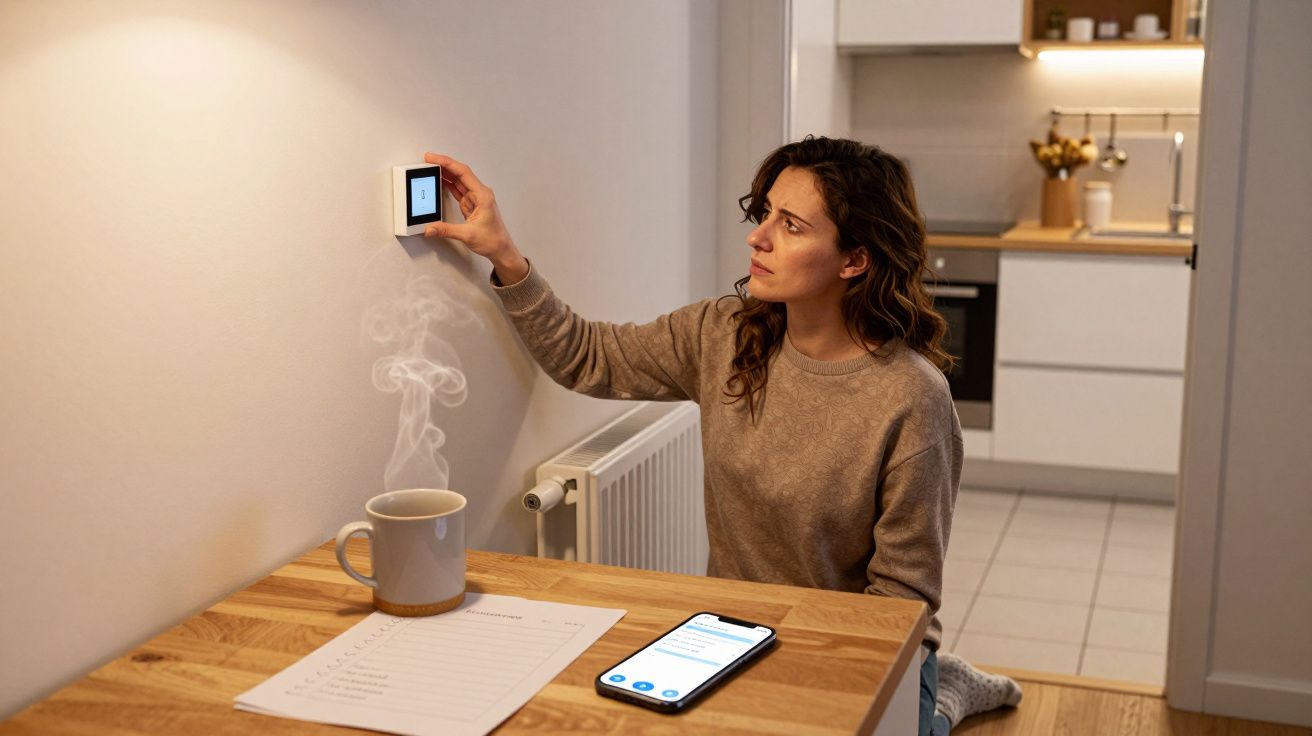
The box says it’s “learning”, the app says it’s “optimised”, and yet the lounge is freezing at 7pm while the bedroom feels like a greenhouse at 3am. Smart thermostats often create comfort problems because a small misconfiguration can hide inside a setup that looks perfectly sensible on the screen. If you’re living with hot‑cold swings, rooms that never quite settle, or heating that seems to “argue” with you, you’re not imagining it.
I learned this in the most ordinary way: standing in socks on a cold kitchen floor, watching the boiler fire, stop, then fire again like it was nervous. The schedule was tidy. The target temperature was reasonable. The graph looked professional. The house still felt wrong, like the heat was arriving late and leaving early.
The uncomfortable truth is that comfort isn’t a number. It’s timing, air movement, room-to-room balance, and how your home leaks heat when the wind turns. A smart control can manage those brilliantly-until one tiny assumption is off.
The setup looks correct. The house doesn’t.
Most people check the obvious bits: the schedule, the target temperature, whether “Eco” is on, whether the batteries are fresh. They don’t check the hidden bits-the parts that decide when the system should start, how long it should run, and what the thermostat thinks it’s controlling.
Smart thermostats are essentially translators between your house and your heating system. If the translation is even slightly wrong, the system behaves like it’s doing the right thing while your body keeps disagreeing. It’s the heating equivalent of soil that looks dry on top but is damp underneath: the surface signals lie, and you end up making the wrong move.
A classic example is the living room: you set 20°C for 6pm, it reaches 20°C at 6pm, and you still feel chilly. That can happen if the thermostat is reading warm air near a radiator, or if the room warms quickly but the rest of the house hasn’t caught up. The number is “right”; the comfort is missing.
The quiet misconfigurations that cause loud discomfort
These are the ones that show up again and again-especially after a DIY install, a boiler swap, or a “helpful” app update.
1) The thermostat is in the wrong microclimate
A thermostat doesn’t read “the room”. It reads the air right around its sensor.
If it’s near a radiator, in a sunny patch, above a TV, by a draughty hallway, or on an exterior wall, it can be confidently wrong by a degree or two. That doesn’t sound like much until you add cycling and timing and the fact that humans notice drafts and cold surfaces more than they notice air temperature.
Quick checks that take a minute: - Is it in direct sun at any point in the day? - Does a radiator, fireplace, lamp, or router warm the wall behind it? - Do you feel a draught when you stand where it’s mounted?
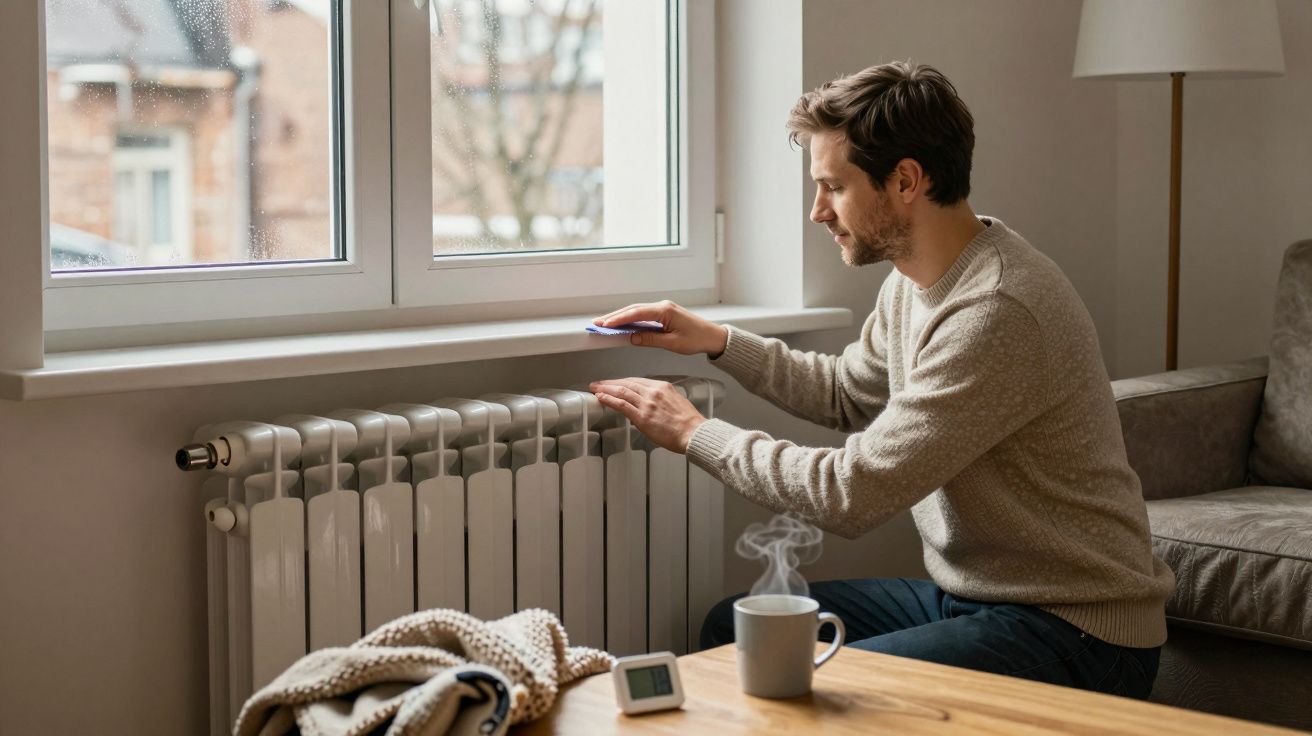
If the thermostat “thinks” the house is warm early, it will back off too soon and you’ll feel that thin, underheated cold that makes you put the kettle on for warmth.
2) Your control mode doesn’t match your heating system
Many homes have one of these realities: - A boiler with simple on/off control - A boiler with OpenTherm or another modulating control - A heat pump with long, gentle run times - Electric underfloor heating that hates sudden changes
Smart thermostats can run any of these, but the wrong mode (or wiring setup) produces odd behaviour: short bursts, overshoot, slow recovery, or the heating “doing nothing” for ages then panicking. You can set beautiful schedules and still get lumpy comfort because the system’s rhythm is wrong.
If your boiler fires for 3–5 minutes repeatedly, that’s a clue. If a heat pump is constantly being asked to “boost”, that’s another. Comfort hates stop‑start heat.
3) “Learning” features are fighting your expectations
Optimisation sounds like a gift: start heating early so you hit temperature on time; stop heating early so you don’t overshoot. In practice, optimisation can feel like the thermostat is ignoring you-especially in draughty houses, high‑thermal‑mass homes, or places with big solar gain in the afternoon.
Common comfort complaint: “It was perfect yesterday, awful today.” Often that’s the algorithm reacting to weather, occupancy guesses, or recent manual overrides. You changed it once because you were cold, it learned the wrong lesson, and now it’s preheating at odd times like a well-meaning nuisance.
If your app offers settings like optimum start/stop, early on, adaptive, or learning, try switching them off for a week. A boring schedule is a good diagnostic tool.
4) One room is driving the whole house
When the thermostat lives in the warmest room, the rest of the house can never catch up. When it lives in the coldest room, the warm rooms become saunas. Smart thermostats make this easier to do by accident because you can add sensors, “zones”, and radiator valves-then assume the system will naturally balance itself.
It won’t, unless it’s told how.
If you have smart TRVs, check whether the thermostat is acting as: - the single boss (one sensor decides for all), or - a coordinator (multiple rooms can call for heat), or - just another room (and can be ignored).
A setup can look “complete” and still be logically unfair to half the rooms.
5) Minimum run times and cycles are set too aggressively
Short cycling makes homes feel unstable: warm for a bit, then cooling, then warm again. It’s often caused by: - radiator output too high near the thermostat - boiler minimum output too high for the system - control parameters that allow frequent on/off calls
Some thermostats let you set cycle rate, minimum on time, or hysteresis (the temperature swing allowed before switching). If those are too tight, the system fidgets. Comfort likes calm, longer burns-especially in older, leaky houses where surfaces need time to warm.
A “comfort check” you can do without tools
Treat this like a small investigation, not a grand rewiring project. The goal is to find out whether the thermostat is reading the right place and controlling the right rhythm.
- Pick one day and stop tweaking. No boosts. No manual overrides. Let the schedule run.
- Note three moments: morning warm-up, late afternoon, bedtime. Write down how it feels in the room you’re in (not just the temperature).
- Stand by the thermostat for 60 seconds. Do you feel sun, draught, radiator heat, or kitchen steam influencing it?
- Listen to the heating rhythm. Long steady run, or lots of short bursts?
- Compare two rooms. If one is always comfortable and one is always off, that’s usually zoning or sensor placement, not “your boiler being old”.
If you’re chasing comfort by changing setpoints constantly, the system never gets to show you its true behaviour. A still day reveals the pattern.
“The app can be right and the room can be wrong,” a heating engineer once told me. “Comfort lives in the gaps.”
Fixes that don’t require starting again
Most comfort problems from smart thermostats don’t need a new thermostat. They need the setup to match the house.
Try these in order: - Move the sensor reality, not the number: relocate the thermostat if it’s in sun/draught/radiator influence, or use a remote sensor placed where you actually live. - Turn off clever features temporarily: disable optimum start/stop and learning for a week to stabilise behaviour. - Choose a gentler schedule: fewer big jumps. A small setback overnight often feels better than a dramatic morning sprint. - Check zoning logic: decide which room should be the reference, and ensure other rooms can call for heat if you’re using smart TRVs. - Adjust cycling (if available): fewer cycles per hour, slightly wider hysteresis, longer minimum on time.
The win is simple: fewer surprises. When the house behaves predictably, you stop fighting it-and comfort returns without you watching graphs like a day trader.
| What you see | Likely cause | What to try |
|---|---|---|
| Warm-cold swings, frequent boiler firing | Short cycling or overly tight control | Reduce cycle rate / increase minimum on time / move thermostat away from radiator influence |
| Temperature “hits target” but still feels chilly | Sensor in warm microclimate or cold surfaces/draughts | Relocate sensor, use remote sensor, reduce drafts, allow longer warm-up |
| One room perfect, others always wrong | Zoning/sensor hierarchy mis-set | Reassign reference room, allow multi-room heat calls, balance TRVs |
FAQ:
- Why does it feel colder at the same temperature now? Comfort is affected by drafts, humidity, and the temperature of walls and floors. A smart thermostat can hit 20°C in the air while the room still “radiates cold” if the heating cycles too quickly or stops early.
- Should I leave “learning” on? Only if it’s producing predictable results. If comfort varies day to day, switch learning/optimisation off for a week to establish a stable baseline, then reintroduce features one at a time.
- Do smart TRVs automatically create proper zoning? Not always. They can create conflicting demands unless the system knows how to prioritise rooms and when to run the boiler. Check which sensor is in charge and whether multiple rooms are allowed to call for heat.
- Is short cycling always the thermostat’s fault? No. It can be boiler sizing, minimum output, system water volume, or radiator placement. But a misconfiguration in cycle settings or sensor location can trigger or worsen it.
- What’s the simplest test for sensor placement? Stand where the thermostat is for a minute at different times of day. If you can feel sun, radiator warmth, cooking steam, or a hallway draft, the sensor can “feel” it too-and it will control the whole house based on that.



Comments (0)
No comments yet. Be the first to comment!
Leave a Comment