You notice it first as a smell, not a warning light. A drain that takes a second longer to clear, a filter that suddenly needs rinsing twice a week, a pump that sounds like it’s working harder than it used to.
In most buildings and small plants, system sludge is the unglamorous by-product that settles out in pipework, tanks, sumps and strainers as water moves around. When poor water quality is in the mix-extra solids, oils, minerals, or microbial load-that sludge doesn’t just appear, it accelerates, and it starts stealing efficiency long before anything “breaks”.
The quiet maths of sludge: small inputs, big build-up
Sludge rarely comes from one dramatic event. It’s usually a slow accumulation of tiny bits: grit, rust, softened biofilm, limescale dust, fibres, food residue, soaps, grease, and whatever the water picks up on its way through the system.
The catch is that build-up isn’t linear. Once a thin layer forms, it becomes a trap. Flow slows slightly, more particles settle, microbes get a surface to cling to, and the next layer forms faster than the last. What felt stable for months can tip into “why are we cleaning this again?” territory in a couple of weeks.
What sludge actually is (and why it behaves like it has a mind)
“Sludge” sounds like one thing, but it’s usually a blend. Knowing the blend is what explains the speed.
- Mineral solids: sand, silt, hardness scale that flakes off, cement dust, construction debris.
- Corrosion products: iron oxide (rust), magnetite in closed heating circuits, copper fines.
- Organic load: fats, oils and grease (FOG), food particles, detergents, skin cells in greywater.
- Biological matter: biofilm, bacteria, fungal growth, algae (where there’s light), dead biomass.
Each type changes the others. Grease turns fine grit into a sticky paste. Corrosion roughens surfaces, giving biofilm an easy foothold. Biofilm then holds on to more solids like Velcro.
The most common reason it builds faster than expected: water isn’t as “clean” as you think
Poor water quality doesn’t always look dirty. Water can be clear and still be overloaded with the things that form sludge: dissolved minerals, fine particulates, nutrients for bacteria, or chemistry that encourages corrosion.
A few everyday scenarios that quietly shift the balance:
- Seasonal mains changes (more turbidity after heavy rain, main repairs, hydrant use).
- Boreholes and private supplies with higher iron, manganese, or hardness.
- Inconsistent softening or dosing (salt bridging in softeners, empty inhibitor drums).
- Higher-than-normal temperature in parts of the circuit, which speeds up scaling and microbial growth.
- Cross-contamination from make-up water lines, storage tanks, or poorly sealed covers.
When the incoming water changes, the system often keeps running exactly the same way-same flow rates, same purge schedule, same filter mesh. The sludge doesn’t.
The “lettuce bag” problem in pipework: moisture, stagnation, and trapped junk
Sludge build-up loves the same conditions that make anything go limp and slimy: not enough turnover and nowhere for moisture and debris to escape.
Dead legs, oversized pipe runs, rarely used branches, low-flow periods overnight, and under-loaded pumps all create calm pockets. In those pockets, solids settle out. Once they settle, they don’t politely re-suspend when flow returns; they compact, bind with grease or biofilm, and become their own little sediment bed.
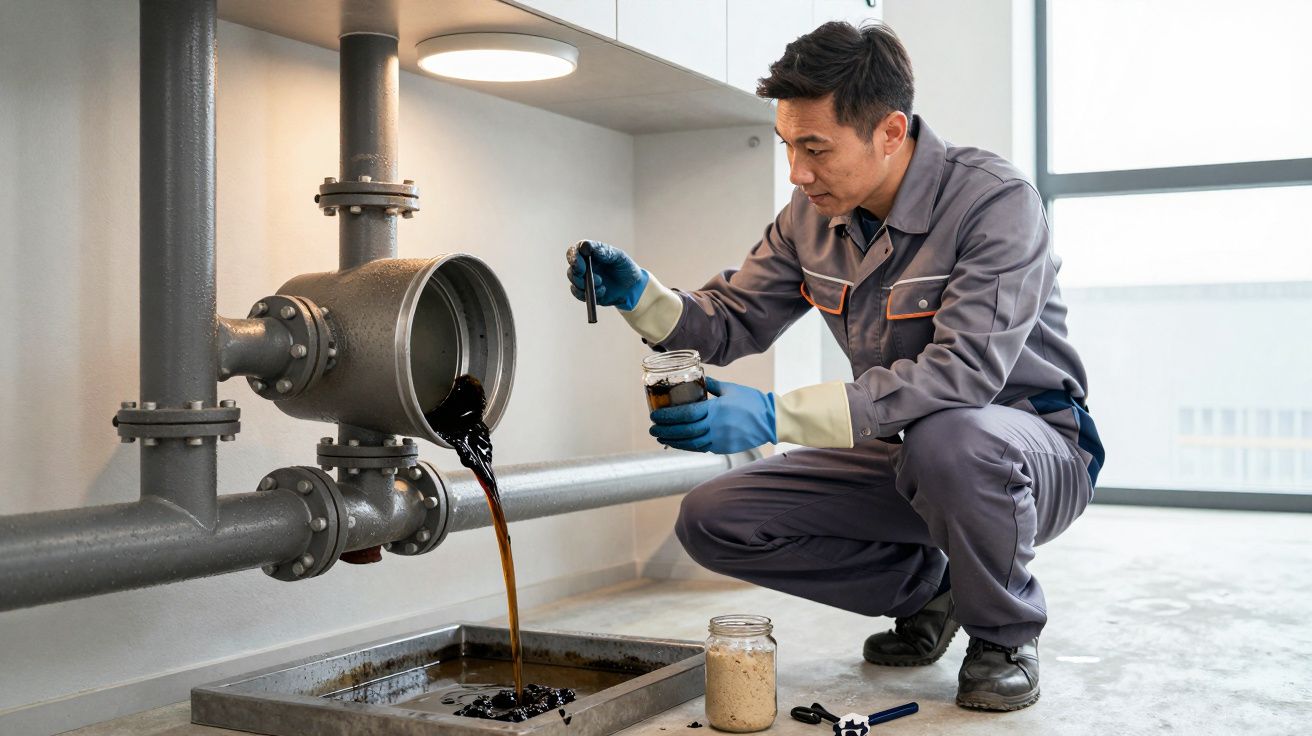
If you’ve ever drained a low point and seen the first surge come out dark, gritty, and thick, you’ve found the system’s “crisper drawer”.
The chemistry trap: scale and corrosion create sludge even without dirt
Some sludge is self-inflicted by the water chemistry.
Hard water lays down calcium carbonate scale on hot surfaces (heat exchangers, calorifiers, boiler sections). That scale doesn’t stay pristine; it cracks and sheds, turning into fine solids that drift until they lodge somewhere inconvenient. Meanwhile, aggressive or poorly inhibited water eats metal, producing rust and black oxide that looks like dirt but is actually your pipework turning into particles.
A common pattern is this: the system is “fine”, then someone increases temperature setpoints, changes inhibitor, adds fresh make-up water more often, or introduces a new mixed-metal component. The result isn’t immediate failure-it’s a sudden rise in sludge formation.
Biology: when the system becomes a habitat
Microbes don’t need dramatic contamination. Give them:
- a surface (even a thin film),
- a food source (organics, nutrients, even some inhibitors),
- lukewarm temperatures,
- and a bit of stagnation,
…and biofilm forms. Biofilm is not just “slime”; it’s infrastructure. It traps solids, creates low-oxygen zones that accelerate under-deposit corrosion, and sheds fragments that block strainers and foul sensors.
In open or semi-open systems-cooling towers, some greywater set-ups, tanks with air contact-this effect is even more pronounced. In closed loops (heating and chilled water), it’s often driven by oxygen ingress and repeated topping-up.
Why your maintenance routine can accidentally make it worse
A system can look well cared-for and still sludge up fast if the routine is reactive rather than targeted.
Typical culprits:
- Cleaning only the symptom (rinsing strainers) while leaving low points and dead legs untouched.
- High-pressure flushing at the wrong time, breaking loose deposits without having enough filtration to catch them.
- Filter changes that disturb settled beds, especially if flow direction or pump staging changes.
- Overdosing “quick fix” chemicals, which can destabilise deposits and trigger a shedding event.
- Ignoring make-up water volume, which is effectively importing new minerals and oxygen every day.
Sludge is opportunistic. If you dislodge it, it will travel. If you don’t capture it, it will re-home itself somewhere tighter.
A simple diagnostic that saves weeks of guessing
Before buying another additive or blaming “old pipes”, get specific. Ask two questions:
- Where is it collecting? (low points, strainers, heat exchangers, tank bottoms, pump volutes)
- What is it made of? (gritty mineral, oily paste, black magnetic powder, brown rust, gelatinous slime)
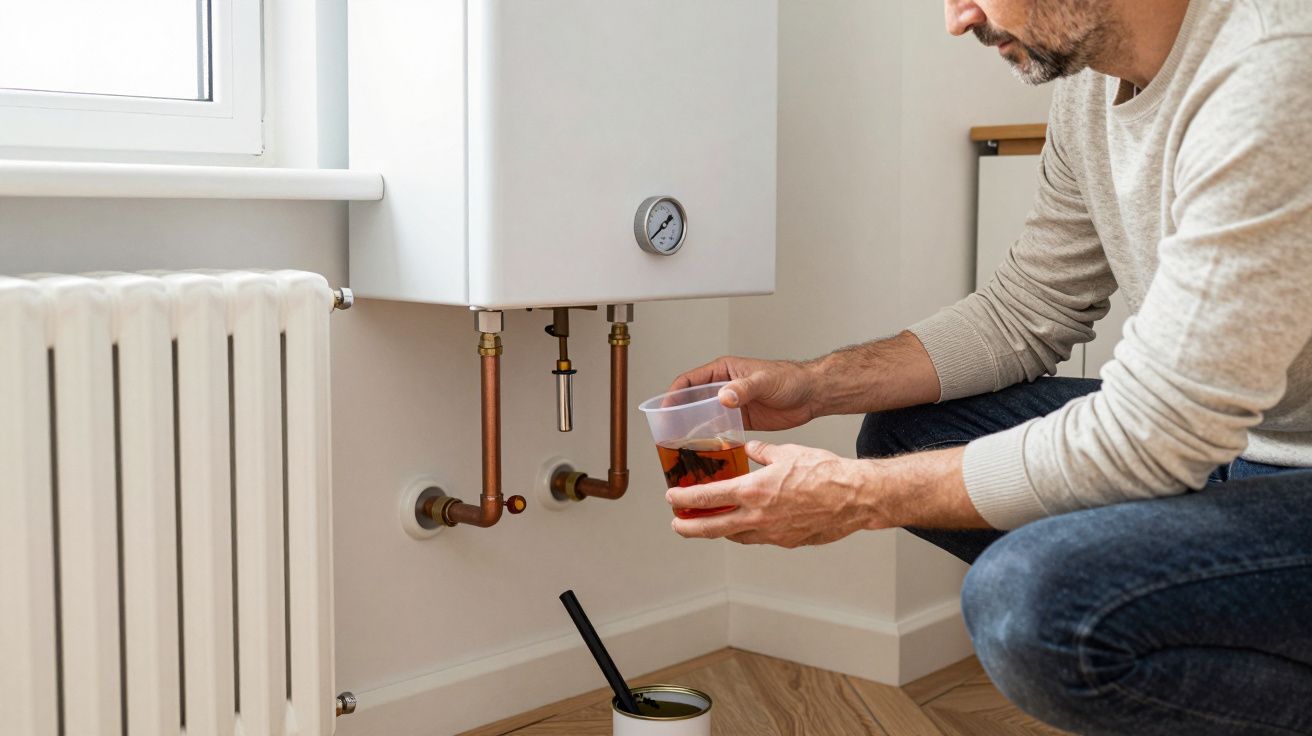
Even basic observations help. Black, magnetic sludge points to corrosion products in a closed loop. Beige grit suggests incoming particulates or scale shedding. Sticky, smelly deposits point to grease or biological activity.
If you want a quick field check, try this:
- Rub a sample between fingers (grit vs grease).
- Hold a magnet to it (magnetite vs not).
- Note odour (biological/organic load often announces itself).
- Look at where it sits (hot side scale shedding vs low-flow settlement).
How to slow it down without turning your week into a water project
You don’t need a lab to make progress, but you do need to treat sludge like a system problem, not a cleaning problem.
- Stabilise incoming water quality: service softeners, verify dosing, check tank covers and vents, flush after mains work.
- Reduce stagnation: remove dead legs where possible, balance flows, schedule periodic circulation on rarely used branches.
- Capture what you release: if you flush, pair it with proper filtration (and enough time) so loosened solids don’t just migrate.
- Control chemistry: keep inhibitors within spec, minimise make-up water, address oxygen ingress points.
- Clean the right locations: drain low points, not just the accessible strainer by the plant room door.
Small corrections held consistently beat big clean-outs that happen once the system is already choking.
| Fast-build driver | What it looks like | What to check first |
|---|---|---|
| Incoming particulates | Beige/grey grit, rapid strainer clogging | Mains events, tanks, pre-filtration |
| Corrosion products | Black magnetic sludge, noisy pumps | Inhibitor level, make-up rate, oxygen ingress |
| Biofilm/organics | Slimy deposits, smell, recurring blockages | Stagnation zones, temperature, disinfection strategy |
FAQ:
- Why does sludge suddenly get worse after we “fix” the system? Flushing, pump changes, valve replacements and temperature adjustments can dislodge old deposits. If filtration and low-point drains don’t capture what’s released, it simply relocates and blocks something else.
- Is clear water proof that poor water quality isn’t the issue? No. Water can be visually clear and still carry fine particulates, high hardness, dissolved iron, or chemistry that drives corrosion-each of which forms sludge over time.
- What’s the quickest way to tell if it’s corrosion sludge? Take a sample and use a magnet. If much of it is strongly magnetic and black, you’re likely dealing with magnetite from a closed-loop corrosion process.
- Do chemicals “remove” sludge? Chemicals can help disperse, dissolve, or loosen certain deposits, but they don’t make solids disappear. Without capture (filters, separators, drains), you often just move the problem downstream.
- Which areas should we inspect first? Low points, strainers, pump volutes, heat exchangers, tank bottoms, and any rarely used branches. These spots reveal whether you’re dealing with settlement, shedding scale, or biofilm growth.




Comments (0)
No comments yet. Be the first to comment!
Leave a Comment