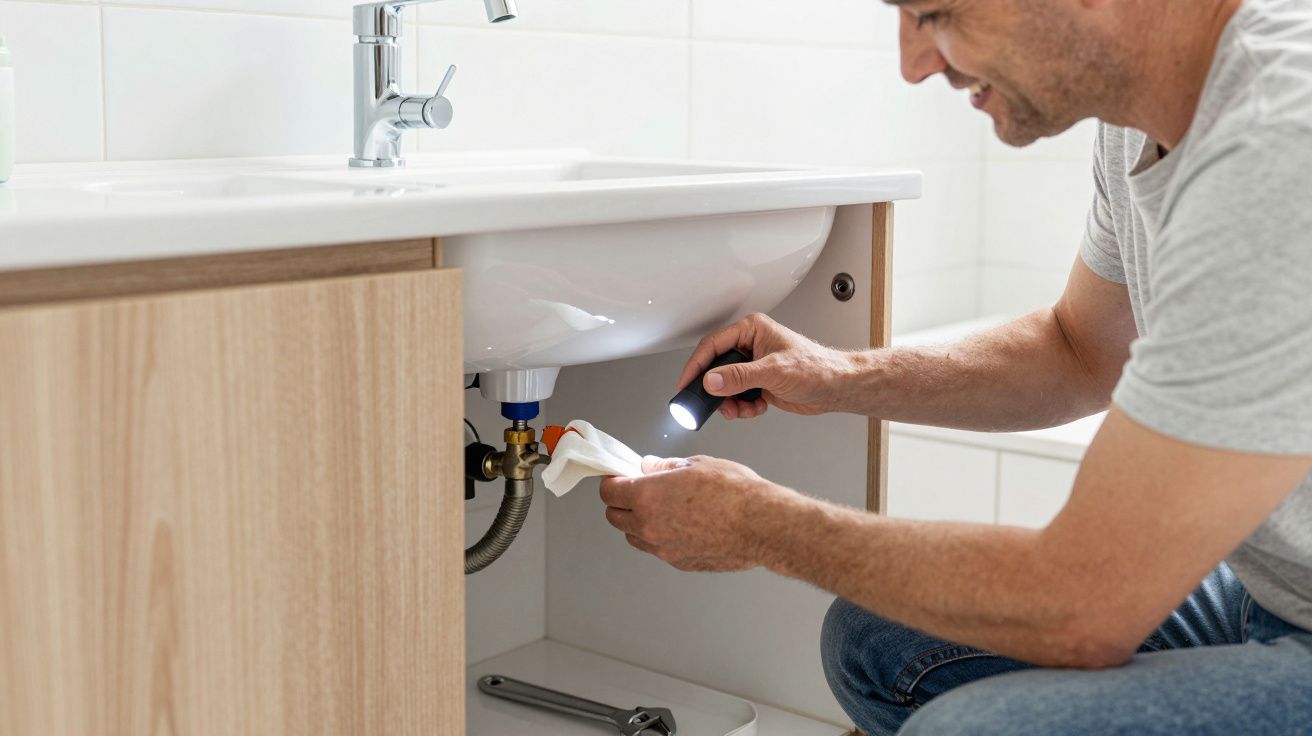
You replace the tap, swap the shower head, even fit shiny new plumbing fittings under the basin - and the leak still comes back. That’s because most drips aren’t a “bad fixture” problem; they’re the result of root causes hiding in pressure, pipework, sealing faces, or the way everything is aligned. If you understand what’s actually failing, you stop paying twice: once for the new part, and again for the same water damage.
It usually starts with a small, annoying sound at night. A rhythmic drip, then a damp patch that looks like it’s “coming from the tap”, so the tap gets blamed. The new one looks great. The leak, meanwhile, has simply found the next weak spot.
The new tap illusion: why the drip returns anyway
There’s a reason replacing a fixture feels like a fix: it’s visible, contained, and you can point to it. But leaks don’t care about aesthetics. They care about pathways, pressure, and surfaces that don’t mate properly.
A modern mixer can be perfectly fine and still leak if:
- the isolating valve underneath is weeping on the spindle
- the tail connections aren’t seated squarely
- the pipe has a hairline split that only opens when warm water runs
- the basin waste is cross-threaded or distorted
You end up with a brand-new tap sitting above an old problem. The water doesn’t respect the “new” bit; it follows the easiest route down.
Where leaks actually start (and why you rarely see it)
Most household leaks are slow enough to be deceptive. Water travels along pipe runs, across cabinets, down screws, and under flooring before it shows itself. By the time you notice it, the source and the symptom can be in different places.
Common root causes that masquerade as “a bad fixture” include:
1. Pressure that’s too high (or spikes you never notice)
High mains pressure can make seals chatter, cartridges wear faster, and compression joints relax over time. You might not feel it at the tap, but your fittings do.
- Sign: dripping that worsens after the washing machine fills or the boiler cycles
- Fix: check pressure, fit/adjust a pressure reducing valve if needed
2. Movement and stress in pipework
Pipes expand with heat and shift slightly with use. If they’re not clipped properly, that movement loads joints and wastes. The leak can appear “new” because you disturbed things during the swap.
- Sign: leak only when hot water runs, or only after someone uses the shower
- Fix: add clips/supports, re-make stressed joints, avoid forcing misaligned tails
3. Worn sealing faces, not worn “parts”
A washer can be new and still not seal if the valve seat is pitted. An O‑ring can be perfect and still fail if the surface it seals against is scratched, oval, or limescaled.
- Sign: repeated cartridge/washer replacements with no lasting improvement
- Fix: inspect and dress/replace the seat, clean scale, replace the whole valve body where necessary
4. Poor joint choice (the wrong fitting in the wrong place)
This is where plumbing fittings matter in the unglamorous way. Compression, push-fit, soldered, press-fit - all can be solid, but only when used correctly and on the right pipe type.
- Sign: “it was fine for months” then suddenly starts weeping
- Fix: use the correct inserts/liners, compatible pipe, and the right joint for heat and access
5. Hidden culprits: wastes, traps, and overflows
Not every “tap leak” is pressurised water. Sometimes it’s waste water escaping under flow, which makes it feel random: no drip until the basin is used.
- Sign: dry all day, wet after brushing teeth or running the bath
- Fix: check waste compression washers, trap seals, overflow routing, hairline cracks in plastic traps
A calmer way to diagnose before you buy another shiny thing
If you can, do one boring test before you change anything: dry everything, then make the water choose a path in stages. Leaks hate being watched slowly.
Try this sequence:
- Dry and line: wipe pipes and joints; place dry tissue around suspect joints.
- Cold only: run cold water for 60 seconds; watch.
- Hot only: run hot water for 60 seconds; watch.
- No flow, pressure on: stop the tap and watch for 5 minutes (pressurised seepage).
- Waste test: plug the basin, fill, then release (waste-side leak).
If the tissue goes damp when no water is flowing, that points to pressurised supply joints or valves. If it only dampens during draining, it’s the waste side. This is how you stop blaming the wrong component.
The “tighten it a bit more” trap
Leaks can tempt you into one last quarter-turn. It sometimes works - and it sometimes cracks a trap, deforms an olive, or splits a plastic nut that was already stressed.
If you’re repeatedly tightening the same joint, assume one of these is true:
- the pipe isn’t fully inserted or is out of round
- the olive has bitten badly and won’t reseal
- the thread is crossed or the face is distorted
- the joint type is wrong for the pipe/material
At that point, remaking the joint properly is cheaper than chasing it with force.
When replacing a fixture does help (and when it doesn’t)
Sometimes the fixture is genuinely the problem: a split cartridge, a cracked body, a failed internal seal you can’t service. The key is knowing whether the leak originates inside the fixture or at the connections around it.
A quick rule of thumb:
- Water appears at the spout/aerator when tap is off → likely cartridge/washer/seat issue.
- Water appears under the basin or on the back wall → likely tails, isolators, or waste.
- Water appears only after using the basin → waste/trap/overflow more likely than tap.
You’re not being fussy by separating these. You’re being accurate.
Quick fixes that actually address root causes
If you want the short list of changes that genuinely reduce repeat leaks:
- Fit decent isolating valves (and replace old weepers rather than ignoring them).
- Clip and support pipework so joints aren’t carrying strain.
- Match plumbing fittings to the pipe type, and use inserts where required.
- Clean and inspect sealing faces; don’t just swap rubber and hope.
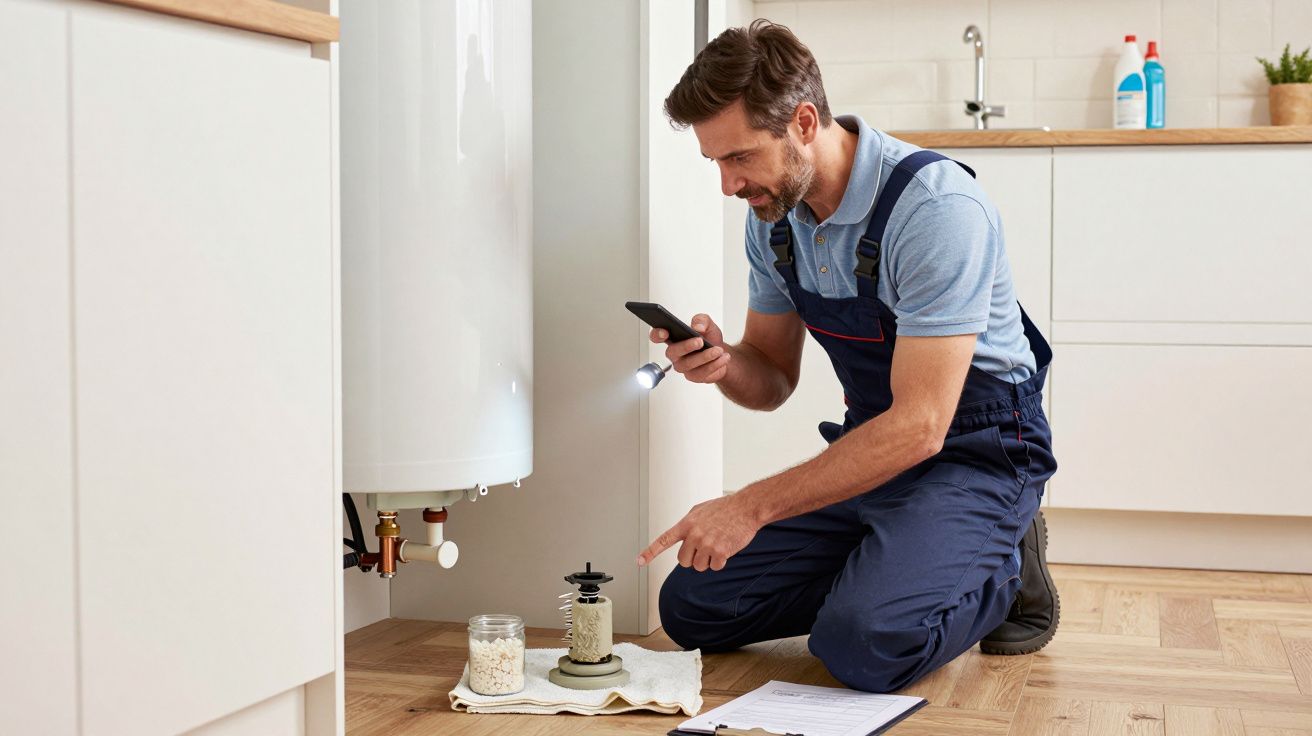
- If limescale is heavy, treat the water systemically (or plan for more frequent servicing).
Leaks are rarely dramatic at first. They’re persistent. The win isn’t the new chrome; it’s removing the conditions that let water escape in the first place.
| What you changed | What might still be wrong | What to check next |
|---|---|---|
| New tap/mixer | Pressure spikes, weeping isolator | Pressure, isolator spindles, tails |
| New shower head | Leaking hose/valve, poor seal | Hose ends, valve cartridges, washers |
| New waste/trap | Cross-threaded nut, distorted washer | Seating faces, alignment, overtightening |
FAQ:
- Is a slow drip always the tap cartridge? No. If moisture appears under the basin or behind the cabinet, it’s often an isolating valve, tail connection, or condensation mimicking a leak.
- Why did it start leaking after I replaced the fixture? Disturbing pipework can shift stressed joints, crack old plastic, or unseat an olive/washer. The timing is real, but the fixture may still be innocent.
- Do push-fit plumbing fittings leak more than compression? Not inherently. Most failures come from poor preparation (pipe not fully inserted, no insert on plastic pipe, damaged O‑ring) rather than the fitting type.
- When should I call a plumber? If the leak is within a wall/floor, pressure-related, or you can’t identify supply vs waste side within a couple of simple tests. Hidden leaks escalate quickly.




Comments (0)
No comments yet. Be the first to comment!
Leave a Comment