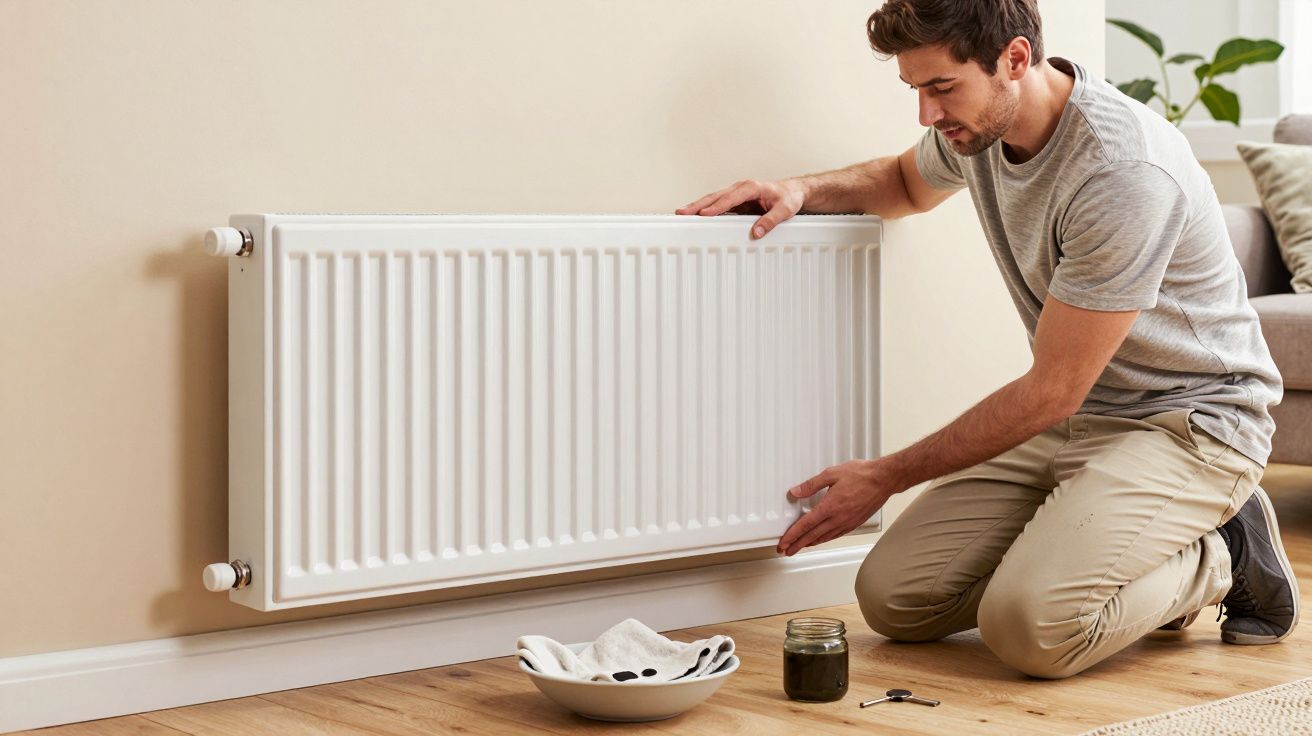
You notice it on a cold evening when the heating’s been on for an hour and the room still feels stubborn. Radiator sludge and contaminated system water are the quiet reasons radiators often stay cold at the bottom, even when the top is piping hot. It matters because it wastes fuel, leaves rooms unevenly heated, and can shorten the life of a boiler that’s already expensive enough to replace.
Engineers rarely look shocked when you point at the cold strip near the skirting board. They’ve seen the pattern: the system is running, the thermostat is behaving, yet the warmth won’t travel through the full panel. It’s not a mysterious quirk of winter, it’s usually physics and dirt.
The cold-bottom clue most people miss
A radiator that’s hot at the top and cold at the bottom is telling you something very specific. Heat is arriving, but water isn’t flowing properly through the lower channels. Instead of a steady circulation, you get a radiator that “sort of works” - which is the worst kind, because it tempts you to turn the heating up and pay for disappointment.
Air causes the opposite pattern (cold at the top, warmer below), which is why bleeding doesn’t always fix this one. If you’ve bled the radiators and the bottom still feels like a chilled shelf, it’s time to stop chasing air and start thinking about what’s inside the water.
What radiator sludge actually is (and why it settles low)
Radiator sludge isn’t one thing; it’s a mix. Over time, tiny particles of rust, limescale, and magnetite (a black iron oxide) build up inside the system, especially in older pipework and steel radiators. When system water becomes contaminated system water, it stops being a clean heat-transfer medium and starts acting like a soup carrying grit.
The reason it stays low is boring and brutal: gravity. Heavier particles settle in the bottom of radiators and low points in pipework, gradually forming a layer that blocks the flow paths where hot water should circulate. The top still heats because some heat arrives and sits there, but the lower part loses the battle against restricted movement.
How it builds up in normal homes
You don’t need a “neglected” house for this to happen. A few everyday conditions make it more likely:
- An older open-vented system that regularly takes in fresh water (fresh oxygen feeds corrosion).
- Radiators that have been swapped or added without a proper clean-out.
- A boiler change where the system wasn’t flushed thoroughly first.
- Repeated small top-ups after pressure drops, bringing in more oxygenated water.
- No inhibitor, or inhibitor that’s long since diluted.
Sludge is patient. It doesn’t announce itself until it has somewhere to sit.
Why engineers don’t rush to “just bleed it”
A decent heating engineer tends to ask a few calm questions before they touch a bleed key. How old is the system? Does the boiler short-cycle? Are some radiators slow to warm? Do you hear gurgling, or is it just uneven temperature? That’s because the cold-bottom radiator isn’t just a radiator problem; it’s a system problem.
If they suspect sludge, they’re also quietly thinking about the boiler’s heat exchanger and pump. Restricted circulation can make the boiler run hotter than it should, cycle on and off, and spend more time working hard for less comfort. The radiator is simply the part you can touch.
The quick checks you can do without tools
You don’t need to dismantle anything to get a clearer picture. A few small observations often separate air issues from flow-and-sludge issues.
- Feel the radiator pattern: top hot/bottom cold points to poor flow; top cold suggests air.
- Compare rooms: if the furthest radiators or downstairs ones are worse, circulation is struggling.
- Listen near the boiler: kettling or harsh ticking can appear when flow is restricted and components overheat.
- Look at the bleed water (carefully, with a cloth): if it’s dark, gritty, or smells metallic, the system water is likely contaminated.
None of this is a diagnosis on its own. But it gives you something better than guesswork when you call someone out.
What actually fixes a cold-bottom radiator
There are three broad routes, and the right one depends on how widespread the sludge is.
1) A proper clean, not a hopeful bleed
If it’s one radiator, sometimes a targeted clean helps. Engineers may remove the radiator and flush it outside, pushing water through until it runs clearer. It’s messy, but it can be effective when the system isn’t universally clogged.
If several radiators show the same pattern, a system flush is usually the conversation. That might be:
- Chemical flush: a cleaner is circulated, then drained and refilled.
- Powerflush: higher-velocity flushing with agitation to shift stubborn deposits.
A flush only really “counts” if it’s followed by protection. Otherwise you’re just resetting the clock.
2) Magnetic filtration (the unglamorous hero)
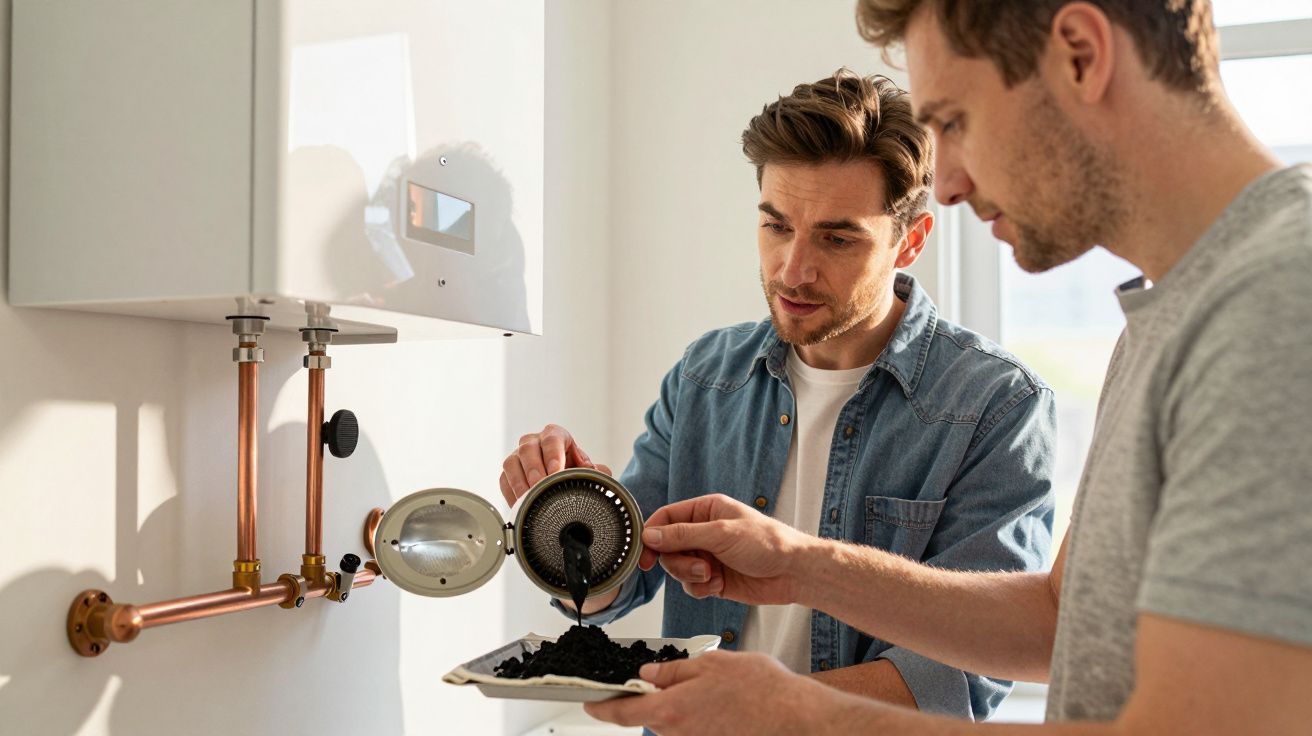
Because much radiator sludge is magnetic magnetite, a magnetic filter near the boiler can catch a surprising amount of debris. Engineers like them because they reduce ongoing build-up and protect the boiler’s internals. Homeowners like them because they’re a fit-and-forget upgrade-until you see what comes out at service time and feel mildly betrayed by your own pipework.
3) Inhibitor and keeping the water stable
After cleaning, inhibitor is what keeps the system water from turning into contaminated system water again. It slows corrosion and helps prevent new sludge formation. This is also why constant top-ups are a problem: every fresh refill dilutes inhibitor and adds oxygen, which is basically inviting rust back in.
A small pressure loss that never gets investigated can become an expensive habit.
The “quiet costs” of leaving it alone
People often put up with a cold-bottom radiator because the house is mostly warm. That’s when the inefficiency sneaks in.
- The boiler runs longer to reach temperature, using more gas.
- Rooms heat unevenly, so you keep nudging the thermostat up.
- Pumps and valves work harder, and wear faster.
- Boiler protection can trip more often, or the unit can short-cycle.
It’s not dramatic day-to-day. It’s a slow leak in comfort and money.
When it’s worth calling someone quickly
If you see one cold-bottom radiator in an otherwise healthy system, it might wait until the next service. If you see a pattern, don’t.
Call sooner if you have:
- Multiple radiators cold at the bottom.
- Boiler noise that wasn’t there last winter.
- Repeated pressure drops and top-ups.
- Radiators that need “encouragement” (turning TRVs up and down) to heat.
A good engineer won’t sell you the biggest option first. They’ll look for the smallest intervention that restores reliable circulation and keeps it that way.
FAQ:
- How do I tell air from sludge? Air usually leaves the top cold and the bottom warmer; sludge more often leaves the bottom cold while the top heats. If bleeding doesn’t change anything, poor flow is more likely than trapped air.
- Is radiator sludge dangerous? Not in the immediate, health-and-safety sense, but it can damage boilers and raise running costs. Think of it as mechanical harm rather than a household hazard.
- Will a powerflush definitely fix it? It often improves circulation and heat output, but results depend on how blocked the system is and whether it’s followed by inhibitor and (ideally) magnetic filtration.
- Can I prevent it coming back? Yes: keep inhibitor at the right level, fix pressure-loss causes, avoid frequent fresh-water top-ups, and service a magnetic filter if you have one.





Comments (0)
No comments yet. Be the first to comment!
Leave a Comment