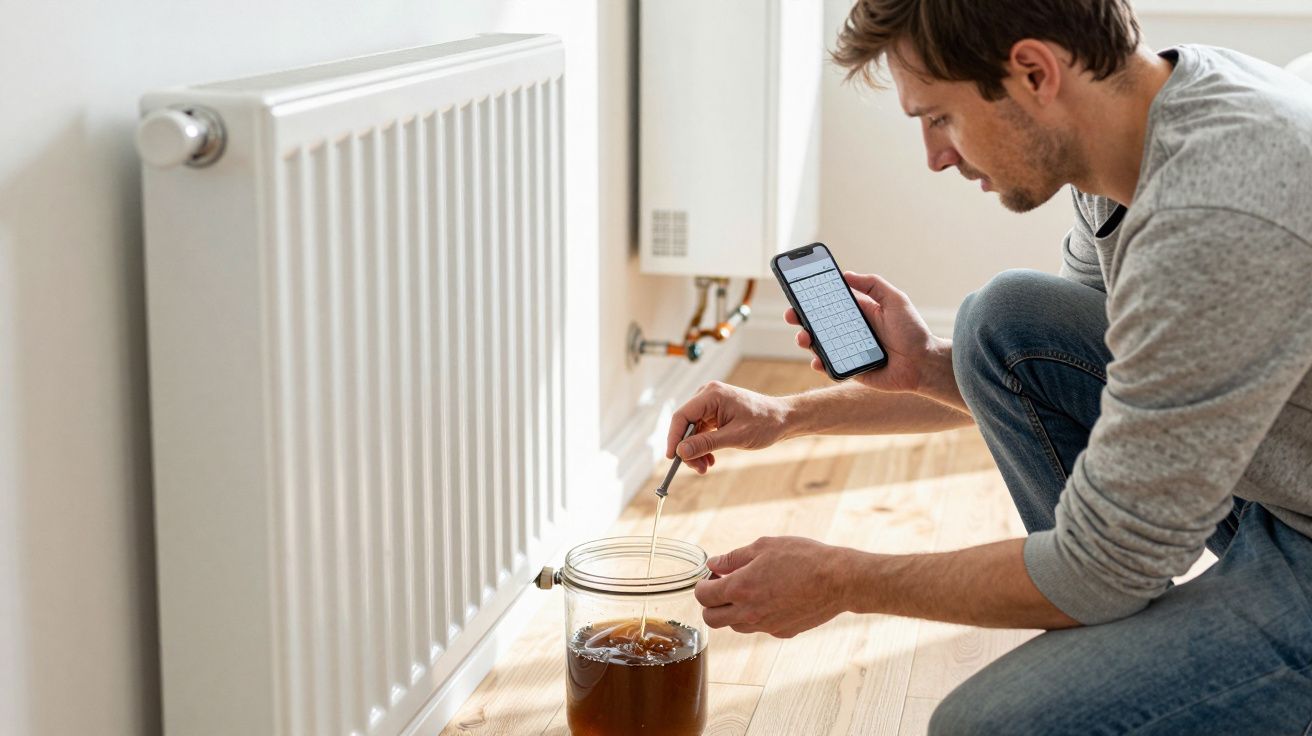
A cold snap hits, radiators start gurgling, and the boiler sounds like it’s boiling a kettle. Power flushing is the deep clean for a wet central-heating system, and used well it can be a preventive strategy that protects the boiler, helps radiators heat evenly, and slows down corrosion. But the part most homeowners miss is this: the timing often matters more than the price you’re quoted.
I’ve stood in too many hallways where the decision was made on cost alone-usually after the system has already turned on its owner. By then, you’re not choosing between quotes. You’re choosing between inconvenience now or bigger inconvenience later.
Why the “cheap flush” can be the expensive one
Sludge doesn’t arrive dramatically. It builds up quietly: magnetite from corrosion, limescale in hard-water areas, little flakes of old inhibitor that’s run out of puff. For months you get small hints-one cold radiator panel, a pump that seems louder, a boiler that short-cycles-until the day it stops feeling like a quirk.
That’s when timing turns a planned job into a rescue job. A flush booked in spring is calm and methodical; a flush booked on the first freezing week is rushed, reactive, and often paired with emergency call-out fees, parts delays, and a household that can’t be without heat for long.
Cost matters, obviously. But when you flush decides whether you’re paying for maintenance, or paying to recover from neglect.
The best window: before the system starts shouting
The sweet spot is when the heating is still mostly working, but you’re seeing early friction. The system is warm enough for chemicals to circulate properly, you have flexibility to isolate and balance radiators, and you’re not under pressure to “just get it running”.
Look for timing cues that are easy to ignore:
- Radiators hot at the top, cooler at the bottom even after bleeding
- Boiler noises (kettling, rumbling) that come and go
- A radiator that takes longer each week to heat up
- Dirty water when you bleed a radiator or drain a small amount off
- Repeatedly needing to top up pressure (a separate issue sometimes, but often a signal to investigate)
Done in that window, a power flush is less about dramatic before/after and more about keeping the system stable through the next season.
When you should not wait
There’s a tempting idea that you can postpone until “it’s really needed”. The problem is that once sludge is mobile-breaking off in chunks-it can clog valves, plate heat exchangers, and pump impellers. At that point the flush may still help, but you’re also gambling on what fails first.
A few scenarios where delaying is usually false economy:
- New boiler on an old system without a thorough clean. Many manufacturers expect evidence the system was cleaned and inhibited properly.
- Repeated cold spots across multiple radiators. That often indicates system-wide contamination, not a single-radiator issue.
- A system that’s been drained and refilled multiple times. Each refill introduces oxygen and accelerates corrosion unless inhibitor is restored.
If you’re already paying for repeated call-outs, the “cheaper” option is often the one that stops the pattern, not the one with the smallest line item today.
Timing as a preventive strategy: plan it like a service, not a crisis
The calmest time to book is typically late spring to early autumn, when you can live without heating for a day and engineers aren’t triaging breakdowns. You also get better conversations then-about whether you need a full power flush, a chemical clean, or simply improving filtration and inhibitor levels.
A sensible preventive strategy usually combines the flush with measures that keep the system clean afterwards:
- Fit or service a magnetic filter and make sure it’s actually cleaned
- Re-dose with the right inhibitor once the system is refilled
- Check balancing so one radiator isn’t hogging the flow while others starve
- Replace stuck TRVs/lockshields if they’re causing poor circulation
- Confirm the system is filled with clean water and properly bled, then recheck pressure
The goal isn’t to flush often. It’s to flush at the right moment, then avoid needing it again for a long time.
A simple way to judge “right time” in your own home
If you’re weighing up quotes, add one more question: “What happens if I do nothing until winter?” A good engineer will answer without theatrics. They’ll talk about risk-boiler stress, efficiency drop, blocked heat exchangers-and they’ll tell you what evidence they’re seeing (magnetite, flow restriction, temperature differential across rads).
You can also do a low-drama test yourself: run the heating for 15–20 minutes, then feel each radiator from top to bottom. One lukewarm radiator can be a local issue. Several with cold bottoms points to a system that’s carrying sludge.
That’s the point where timing beats cost. You’re buying control.
| Point clé | Détail | Intérêt pour le lecteur |
|---|---|---|
| Timing beats bargain quotes | Flushing before winter avoids rush fees and breakdown decisions | Lower risk, better scheduling, less disruption |
| Early signs are your window | Cold bottoms, noise, slow heat-up, dirty bleed water | Flush becomes maintenance, not emergency |
| Lock in the benefit | Filter, inhibitor, balancing, valve checks | Keeps the system clean longer |
FAQ:
- Is power flushing always necessary for cold radiators? No. Sometimes it’s trapped air, balancing, or a stuck valve. But if multiple radiators have cold bottoms or the water is visibly dirty, a flush is more likely to be justified.
- When’s the best time of year to book it in the UK? Late spring through early autumn tends to be easiest: less reliance on heating, more appointment availability, and fewer emergency premiums.
- Will a power flush fix boiler noise? It can help if the noise is linked to poor flow or sludge-related overheating. If the noise is from a failing component or limescale in the heat exchanger, it may need additional work.
- How do I stop sludge coming back after a flush? Ensure inhibitor is added, keep a magnetic filter fitted and cleaned, and avoid repeated draining/refilling. A quick check a few weeks later can confirm the water is staying clean.
- Can flushing damage an old system? If a system is already fragile, aggressive flushing can expose weak points. A competent engineer will assess condition first and may recommend a gentler chemical clean or targeted fixes instead.





Comments (0)
No comments yet. Be the first to comment!
Leave a Comment