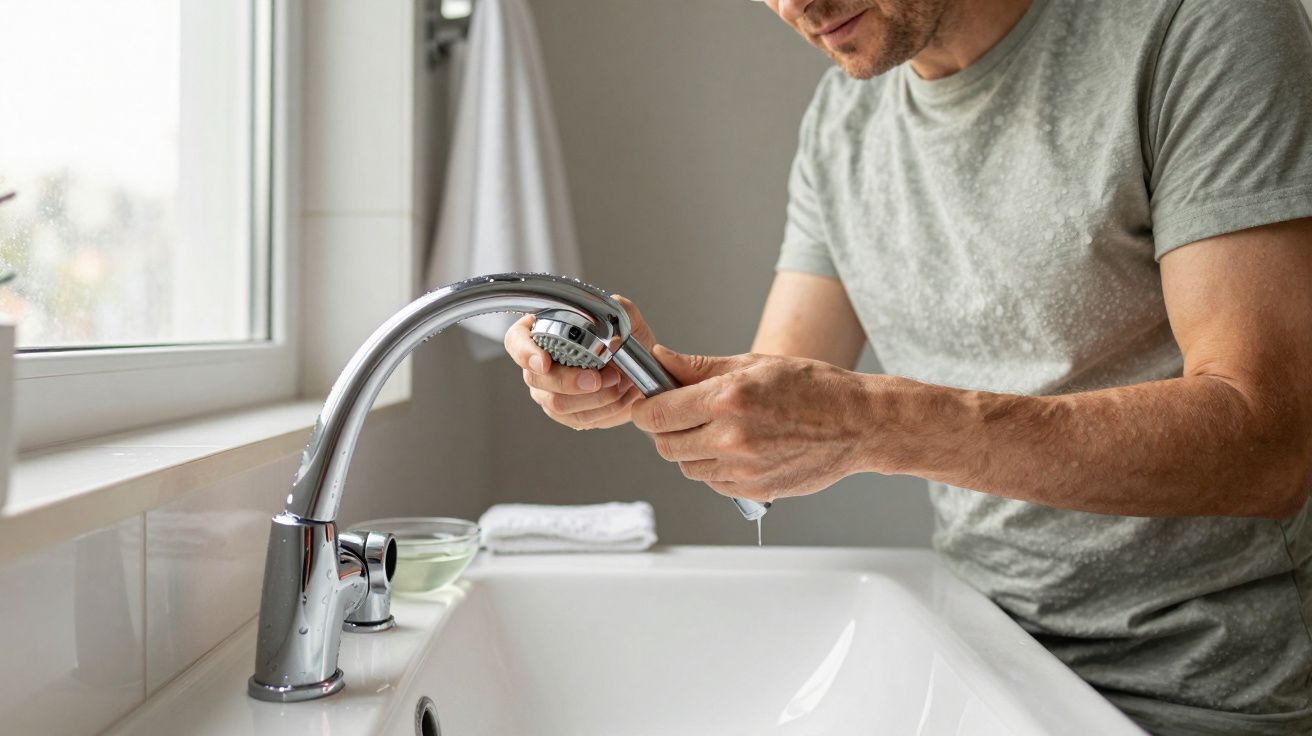
You don’t usually notice hard water damage the day it starts. You notice it later, when component wear has quietly stacked up inside a boiler, a tap, a dishwasher, or the shower you swear you cleaned last week. It matters because by the time something “fails”, you’ve often been paying for it in energy use, poor performance, and shortened lifespan for years.
Think of limescale as a slow, pale sediment that turns normal living into friction. It doesn’t announce itself with alarms. It just makes everything work a bit harder than it should.
Why it takes years to look “serious”
Hard water doesn’t break things like a power surge. It nudges them out of tolerance, one tiny layer at a time. Minerals (mainly calcium and magnesium) fall out of hot water and cling to surfaces, especially where water is heated, sprayed, or evaporates.
Most of the early harm is hidden. The damage is happening inside pipes, on heating elements, in valves, and in the fine passages that make modern appliances efficient. Nothing looks dramatic-until enough is clogged, insulated, or stuck that performance drops fast.
The irony is that the system often “still works”, just not at its designed efficiency. That’s the quiet part.
The two tracks: build-up and wear
Hard water damage is really two problems travelling together. One is the physical build-up (scale). The other is the knock-on component wear caused by that build-up changing heat transfer, flow rate, and mechanical movement.
1) Scale acts like insulation where you want heat transfer
On kettles and heating elements, scale forms a crust. That crust makes the element run hotter to get the same water temperature. Over time, that extra heat stresses the element, seals, and nearby plastics.
In boilers, scale can narrow waterways and coat heat exchangers. The system compensates by firing longer or cycling differently, which can make small weaknesses show up sooner.
2) Flow restrictions force everything to work harder
When passages narrow, pumps push against more resistance. Valves and diverters move with more grit and more pressure difference across them. Aerators clog, shower heads spray unevenly, and suddenly “normal” water pressure feels like a problem with the whole house.
This is where component wear creeps in: not because a part was bad, but because its operating conditions were quietly changed.
3) Moving parts don’t like gritty, mineral-rich water
Washers, cartridges, solenoids, and float valves are designed for clean movement. Add mineral crystals and you get sticking, chattering, incomplete sealing, and tiny leaks that leave their own mineral trails.
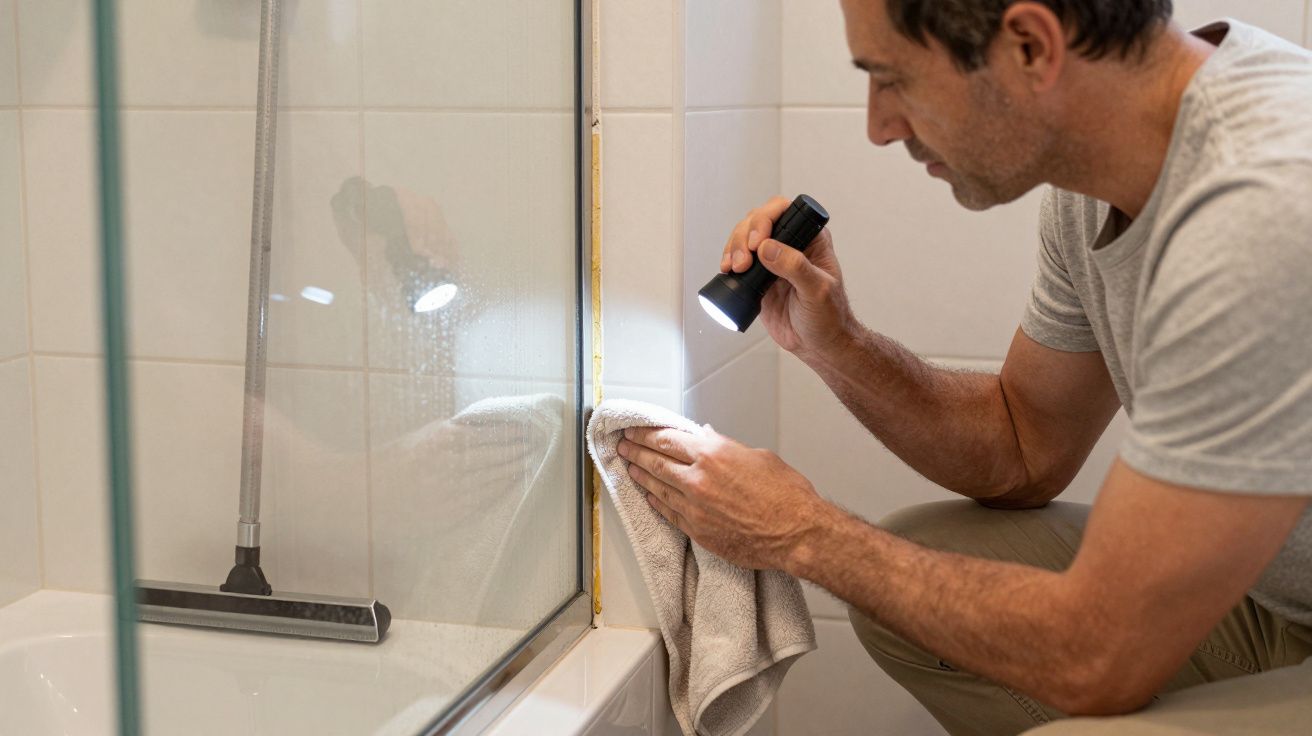
Those trails are often your first visible clue: white crust on a tap base, chalky seams on a shower screen, a toilet that needs a second flush. The part hasn’t “failed” yet-it’s signalling.
Where the early damage actually starts (and why you miss it)
A lot of people look for scale on the shower screen and assume that’s the whole story. But the worst build-up often forms where you can’t see it.
- Heating zones: kettles, immersion heaters, combi boilers, coffee machines.
- Narrow channels: heat exchangers, mixer taps, dishwasher spray arms.
- Seals and seats: anywhere a valve is meant to close cleanly.
You can wipe a tap. You can’t wipe the inside of a diverter valve. So the hidden parts get a multi-year head start.
The “still working” phase that costs you money
Hard water damage shows up early in your bills and routines, long before it shows up as a breakdown. It’s the slow drift you adapt to without noticing.
- You use more detergent because minerals interfere with lathering.
- Hot water takes longer to heat, or runs less hot than it used to.
- The boiler cycles more, sounds different, or throws the odd pressure dip.
- The dishwasher leaves a film, and you assume it’s “just how glassware is”.
None of these are dramatic. They’re just the appliance doing extra work to deliver the same outcome.
A system compensating can look like a system coping. That’s why it runs for years-until it doesn’t.
Why failures look sudden when they aren’t
When a part finally gives up, it’s tempting to blame age or bad luck. But with hard water, the end is often a threshold moment: a channel narrows enough to tip flow below spec, a sensor reads oddly because heat transfer is inconsistent, or a valve that’s been sticking finally jams.
A few common “sudden” failures that are usually long-term stories:
- Burnt-out heating element after months/years of running hotter under scale.
- Stuck thermostatic mixer after repeated mineral deposits around the cartridge.
- Noisy pump after prolonged operation against restricted flow.
- Leaking taps when deposits prevent a clean seal, then the seat wears.
The visible failure is the last chapter. The earlier chapters were quiet.
A quick way to spot it before it bites
You don’t need a lab. You need a couple of small checks that tell the truth.
Three fast clues you can use this week
- Look at the kettle element or base: a gritty, chalky layer is a direct preview of what’s happening elsewhere.
- Check shower head spray: missing jets or sideways spray often means internal build-up, not just dirt.
- Watch how soap behaves: if shampoo and hand soap struggle to lather, the water is doing more work than you think.
If you want one more: unscrew a tap aerator and look for grit. It’s not glamorous, but it’s honest.
What reduces damage (without turning it into a lifestyle)
You don’t have to become a full-time descale technician. The goal is to stop the slow accumulation that drives component wear.
- Descale little and often: kettles, shower heads, and appliance-safe cycles beat heroic once-a-year efforts.
- Protect heating systems: if you’re in a hard water area, ask about scale prevention when servicing a boiler.
- Mind temperatures: higher heat accelerates precipitation, so avoid running everything unnecessarily hot.
- Consider a softener or conditioner: especially if you’re repeatedly replacing cartridges, elements, or valves.
The win isn’t perfection. It’s keeping the system close to design conditions so parts age normally, not under constant extra stress.
The simple takeaway to remember
Hard water damage doesn’t wait for a dramatic moment. It starts the first week you live with it and spends years rewriting how your home’s plumbing and appliances behave. By the time something “suddenly” fails, it has usually been negotiating with mineral build-up for a long time-and component wear has been paying the difference.




Comments (0)
No comments yet. Be the first to comment!
Leave a Comment