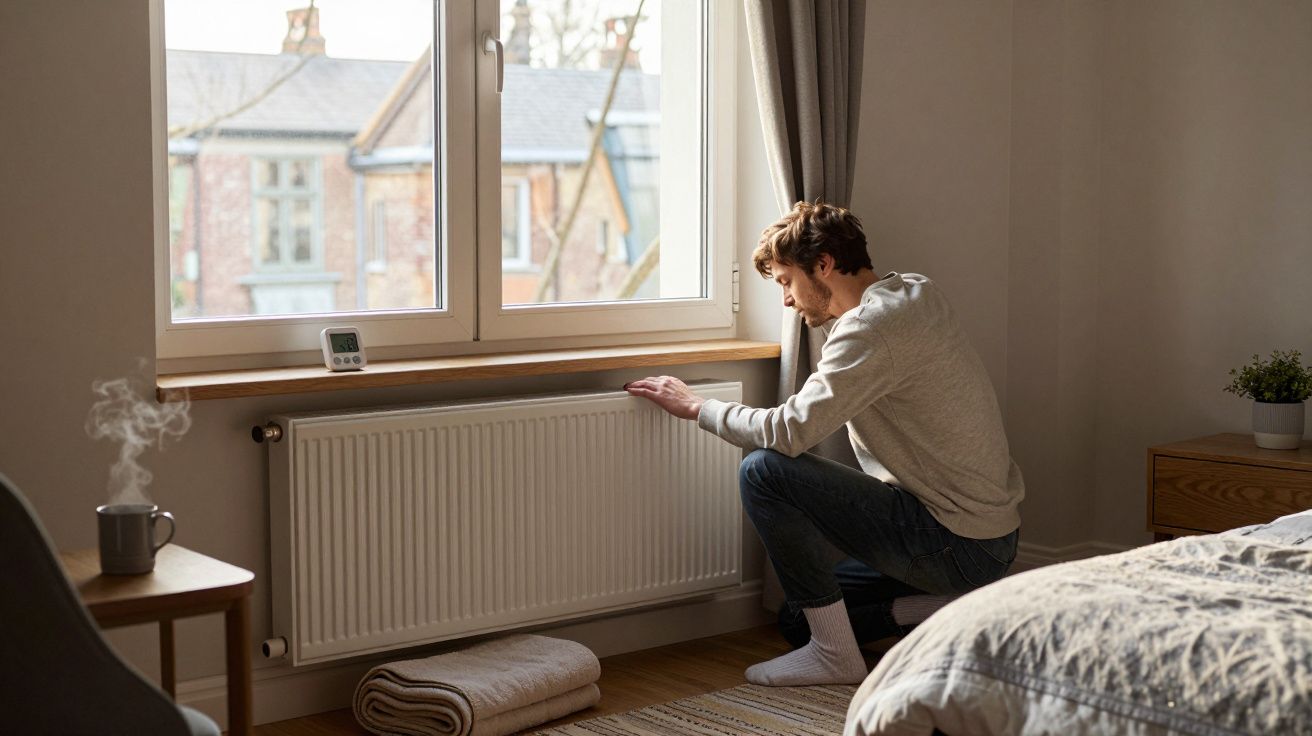
The first time I lived with energy efficient heating, I expected it to feel like a quiet upgrade: lower bills, steadier rooms, fewer fiddly moments. What I didn’t expect was the steady drip of comfort compromises - the kind that don’t show up on an EPC certificate but do show up at 3 a.m. when your bedroom feels “fine” on paper and oddly clammy in your bones. This matters because the UK is swapping old boilers for heat pumps, weather compensation and smart controls at speed, and a system can be technically better while emotionally harder to live with.
It’s not that efficiency is a con. It’s that efficiency changes the shape of comfort, and most of us were trained by decades of on–off heating to want a different kind of warmth than the one the maths optimises for.
The promise: less waste, more comfort - in theory
The pitch is straightforward. Insulate more, leak less, run the heating at lower temperatures for longer, and the house should settle into a gentle, stable baseline. Your system stops doing the Victorian sprint-and-collapse routine of blasting hot water through radiators then cooling off in dramatic swings.
On a spreadsheet, it’s beautiful. In a lived-in home with wet towels, school runs, draughty floorboards and one person who likes the bedroom cold, it can feel… fussy. Not broken, just less forgiving.
Efficient systems don’t only change how much heat you use. They change when you feel it, where you feel it, and what you have to do to keep it feeling “right”.
Why “better” warmth can feel worse
A lot of the discomfort is simply a mismatch between expectations and delivery. Old systems were loud and obvious: radiators pinging, pipes clicking, that first blast of heat you could physically lean into. Newer systems often aim to remove the drama, which is great until you realise the drama was your feedback loop.
Here are the main reasons the lived experience can degrade even when the numbers improve:
- Lower flow temperatures mean less “instant gratification”. A heat pump or weather-compensated boiler may keep radiators lukewarm rather than hot. The room can be at 20°C and still feel underwhelming if you’re used to the radiators doing theatre.
- Long, slow cycles expose weak spots. A chilly hallway, a cold bathroom floor, one north-facing room - continuous low-level heating can make these contrasts more noticeable, not less.
- Humidity becomes the uninvited housemate. Airtight homes hold moisture. Without deliberate ventilation, “warm” can drift into “muggy”, and “cool” can drift into “damp”.
- Controls become a relationship, not a switch. Schedules, zones, apps, learning algorithms, weather curves. You stop asking “is it on?” and start asking “what does it think I want?”
None of this means the system is wrong. It means the definition of comfort you grew up with may have included waste as a feature.
The hidden trade: responsiveness for stability
Old heating trained us to live in pulses. Come in from the cold, turn it up, feel the room change, then turn it down because you’ve overcooked it. Efficient systems tend to trade that responsiveness for steadiness: fewer peaks, fewer troughs, fewer panicked corrections.
This is where comfort compromises sneak in. A stable 19–20°C can still feel “cold” if the surfaces are cold, the air is damp, or your body expects a warm-up surge. Meanwhile, if the system is set too high “just in case”, the steadiness turns into a steady overheat you don’t notice until you feel tired and irritable.
The emotional problem is that stability is subtle. You only notice it when it’s missing, and efficient systems make the “missing” feel like your fault: you must have set it wrong.
Friction comes from the boring bottlenecks
Efficiency gains usually come from removing slack. Slack is also what makes life easy.
A few everyday bottlenecks that make efficient setups feel pricklier than they should:
Hot water that requires planning
Cylinder-based systems are brilliant when sized and set correctly. But they punish the old habit of “run a bath whenever” if reheat times are long or schedules are tight. If the household’s routine is messy - teenagers, shift work, guests - the system’s efficiency can feel like a curfew.
Noise and location effects you didn’t sign up for
Fans, compressors, pumps and new pipework routes can create a low-level awareness you never had with a boiler tucked away. Even when it’s within spec, a hum outside a bedroom window or a vibration through a joist can colour your whole perception of comfort.
The “it’s fine” room that never feels fine
Thermostats measure air temperature. People feel mean radiant temperature too - the chill coming off a big window, a cold external wall, a tiled floor. Efficient heating can maintain air temperature while your body still registers the room as stingy.
If you’ve ever sat near a window in a “warm” room and felt your shoulders tense, you’ve met the gap between measurement and experience.
What actually helps (without giving up the efficiency)
The fixes are rarely dramatic. They’re the small, boring adjustments that make the system feel human again.
- Tune the system before you judge it. Weather compensation curves, maximum flow temperature, minimum run times - small changes can reduce that “nothing’s happening” feeling without wrecking efficiency.
- Ventilate on purpose. Trickle vents, extractor fans that actually run long enough, or MVHR in very airtight homes. Dry air at 19°C often feels warmer than damp air at 20°C.
- Prioritise surfaces, not just air. Curtains that fit, rugs in the cold zone, insulating a problem wall, sealing a persistent draught. These are comfort multipliers.
- Use zoning like a scalpel. Not every room needs the same target. A slightly warmer bathroom and a slightly cooler bedroom can reduce household conflict more than any app.
- Accept a new kind of “signal”. In efficient setups, comfort often shows up as the absence of discomfort: no cold shock in the morning, no massive swing at night, fewer “why is it freezing in here?” moments.
The emotional maths: when efficiency feels like homework
There’s a tone shift that happens in a lot of “upgraded” homes. Heating stops being a background utility and becomes a managed system. You’re not just paying a bill; you’re making decisions about setpoints, schedules, airflow, and sometimes even how long showers should be.
That’s why efficient systems can feel worse: they move work from fuel to attention. If you’re already stretched, any extra layer of management feels like a downgrade, even if the kilowatt-hours look great.
The good news is that most of this fades once the system is dialled in and the house learns its new rhythm. The bad news is that the dialling-in phase is where people decide they hate it.
A quick way to spot what kind of “worse” you’re dealing with
If you’re trying to work out whether you’re facing a design issue, a settings issue, or a plain old building issue, a simple check helps. Note what you’re feeling and when it happens, because the pattern usually points to the culprit.
| What you notice | Likely cause | First thing to try |
|---|---|---|
| Room is “warm” but you feel chilled near walls/windows | Cold surfaces, draughts, radiant loss | Curtain/rug/seal one spot; check glazing gaps |
| Air feels stuffy or clammy at normal temps | Humidity/ventilation imbalance | Run extractors longer; check trickle vents |
| Takes ages to feel any change after turning it up | Low-temp system behaving normally, or curve too low | Adjust weather comp/flow temp slightly; avoid big swings |
The point nobody puts in the brochure
Efficiency is a technical win. Comfort is a lived experience with politics: who controls it, who notices it, and who pays when it’s wrong. If your system is efficient but makes the household argue more, you will remember the arguments, not the COP.
The goal isn’t to go backwards to wasteful heat. It’s to admit that “efficient” is not the same as “pleasant”, and to design and tune for both. When the friction drops, the system stops feeling like a lesson and starts feeling like a home.



Comments (0)
No comments yet. Be the first to comment!
Leave a Comment