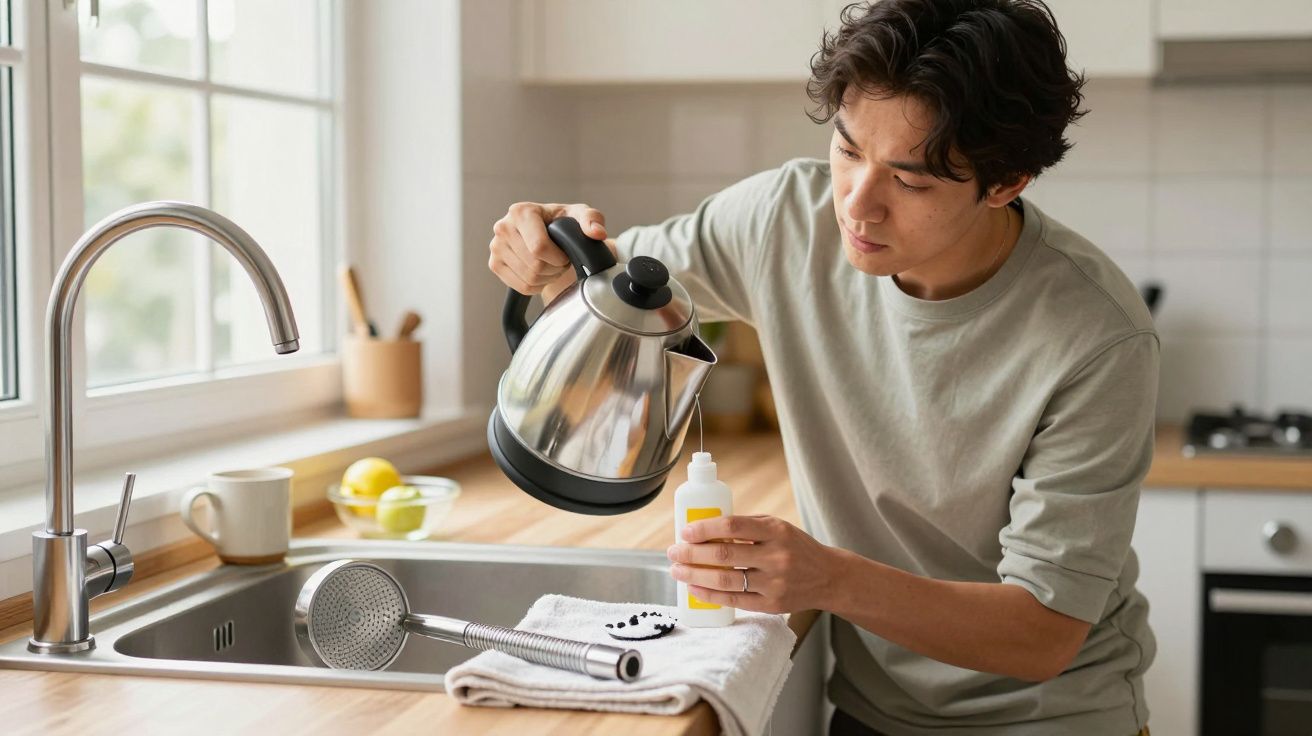
The moment a kettle starts taking longer, or a boiler begins to sound “gravelly”, most people assume the same thing: it’s on the way out. Descaling is usually the cheaper, faster fix, yet it gets skipped because our cost decisions are driven by panic, not evidence. In hard‑water areas, limescale is often the real culprit - and it’s surprisingly reversible.
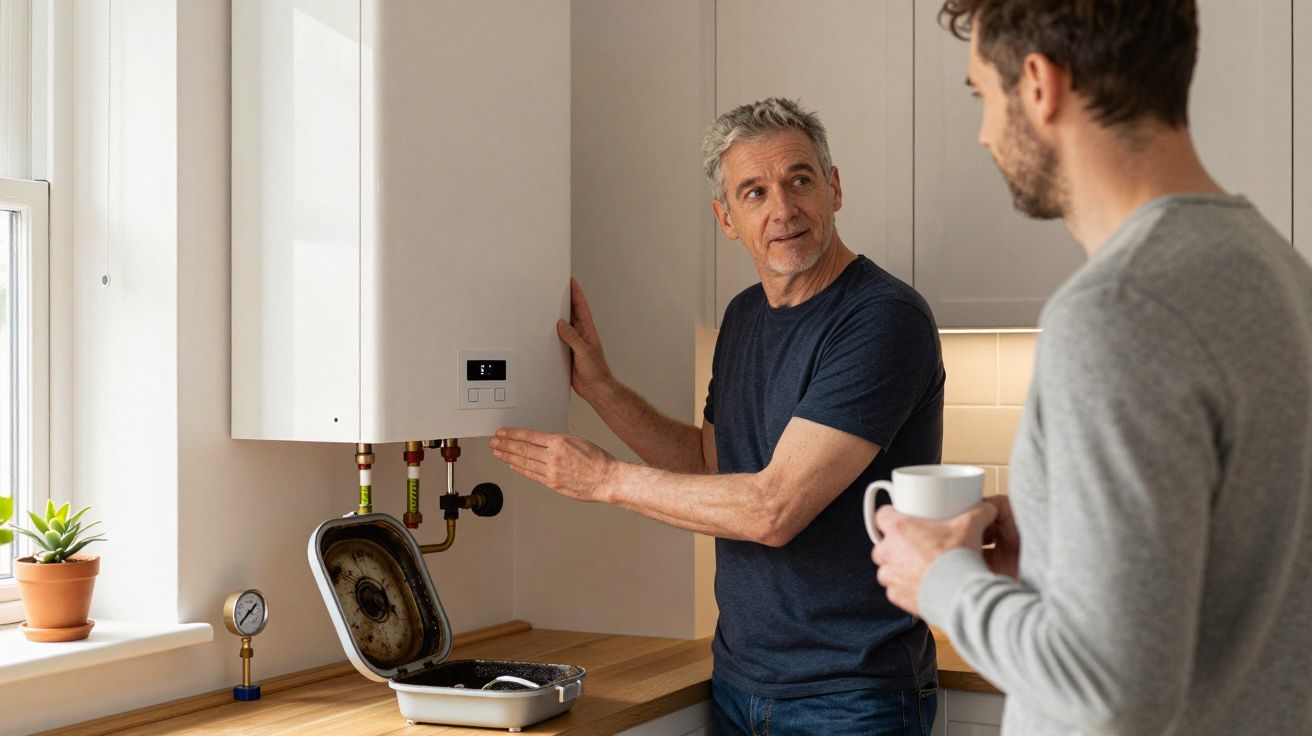
A service engineer can spot it in minutes. Heat exchanger running hot, flow dropping, taps spitting, radiators warming unevenly. None of that automatically means “replace the whole unit”. Often it just means “remove what’s clogging it”.
Why limescale creates faults that look like failure
Limescale builds where water is heated and slowed: inside kettles, coffee machines, combi boilers, cylinders, shower heads, and taps. It doesn’t need years to do damage; it just needs the right conditions. A thin layer is enough to reduce heat transfer, raise energy use, and trigger sensors that interpret the problem as a fault.
The tricky part is that the symptoms mimic old age. You hear banging or kettling in a boiler and think something is cracking. You see weak hot water flow and assume a pump is dying. In reality, the system may be fighting a narrowing passage and overheating in tiny pockets.
Many “end-of-life” symptoms are actually the system shouting: I’m scaled up.
The descaling effect: what changes when the blockage is gone
Descaling doesn’t just make things cleaner. It changes performance in ways you can feel within a day.
- Hot water comes through faster and more consistently.
- Heating cycles become quieter as localised overheating drops.
- Energy use often falls because the appliance doesn’t have to overheat to deliver the same output.
- Components last longer because they’re not running under strain.
That last point matters. Scale makes machines work harder than they were designed to, and wear accelerates. Removing the cause can turn a “replace it” story into a “keep it running” story.
When replacement is genuinely sensible (and when it isn’t)
There are situations where replacing is the right call. But it’s rarer than you might think, and usually obvious once you separate scaling from structural failure.
Descaling is usually worth trying first if:
- The unit is otherwise sound and parts are available.
- Problems started gradually, especially after moving to a hard‑water area.
- Flow and heat issues are inconsistent (classic scale behaviour).
- You can point to scaled fixtures elsewhere (taps, shower head, kettle).
Replacement is more likely if:
- The heat exchanger is corroded or leaking (not just blocked).
- The casing, flue, or safety systems fail inspection.
- You’re facing repeated major faults unrelated to water quality.
- The appliance is so inefficient that running costs dwarf repair costs.
A good rule: limescale causes restriction and overheating; corrosion causes leaks and structural weakness. One is often reversible. The other usually isn’t.
The hidden cost decisions: why we overpay for “new”
Most people don’t replace because it’s rational. They replace because it feels final and safe.
There’s also a timing trap. A breakdown in winter turns cost decisions into emergency decisions. The price you pay includes urgency, availability, and the fear of being cold for days. Descaling, by contrast, is a controlled intervention: smaller cost, lower disruption, faster scheduling.
If you’re choosing between “spend big now” and “spend small to test the real issue”, descaling is often the smarter diagnostic step. Even when it doesn’t solve everything, it clarifies what’s actually failing.
A practical checklist before you authorise a replacement
Ask for evidence, not vibes. A decent engineer will explain what they’re seeing and why it points to scale versus a terminal fault.
- Where is the restriction: at the inlet filter, plate heat exchanger, or elsewhere?
- Are temperatures spiking or fluctuating in a way that suggests poor heat transfer?
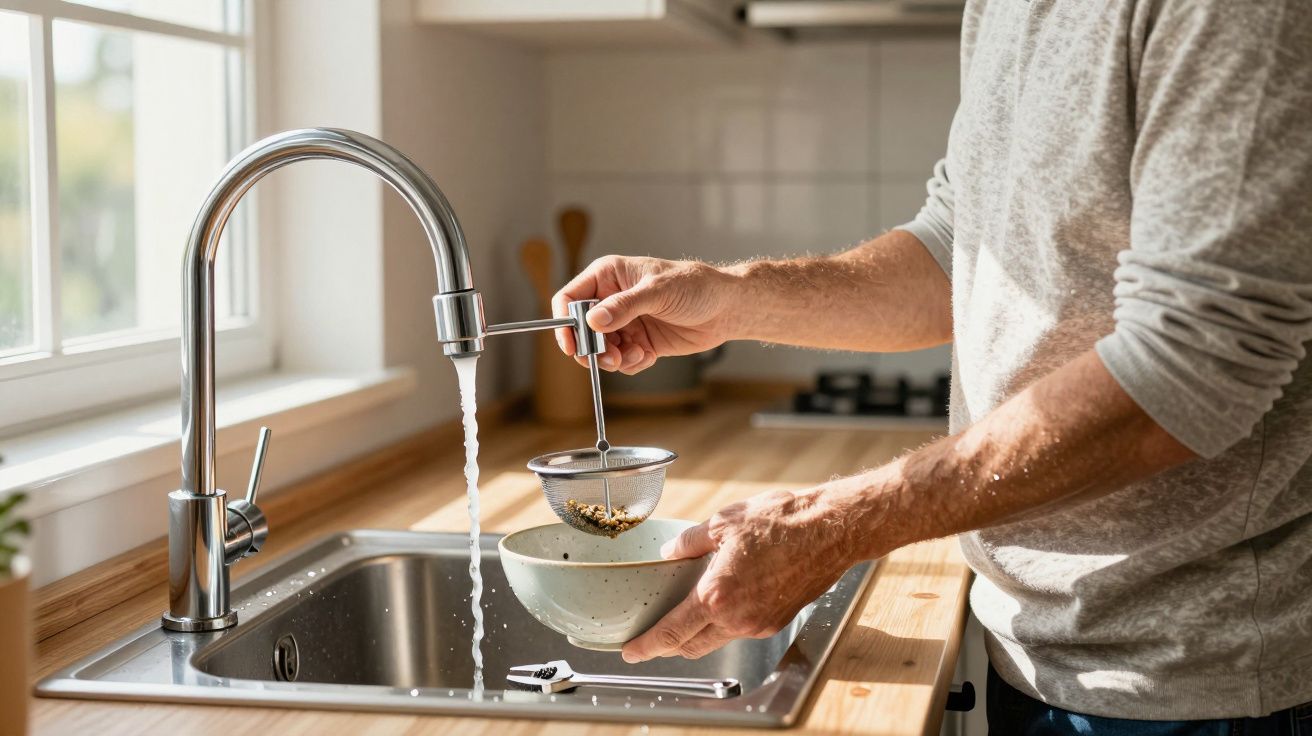
- Is there scale visible in strainers, aerators, or shower heads around the home?
- Has the system ever been flushed or descaled in a hard‑water area?
- Would a chemical descale or powerflush be a reasonable first step?
If the answer to that last question is “no”, ask what specifically makes it unsuitable. “It’s old” is not a technical reason.
How descaling fits into long-term prevention (without turning your life into maintenance)
You don’t need to obsess. You just need to stop scale becoming the default state.
- Fit and maintain a scale reducer or water softener if you’re in a hard‑water region.
- Clean tap aerators and shower heads before you blame “low pressure”.
- Service hot-water appliances on schedule, especially combi boilers and coffee machines.
- Don’t ignore noise changes; kettling sounds are often an early scale signal.
Descaling works best when it’s done before restrictions become severe. Done early, it’s maintenance. Done late, it’s rescue.
Quick guide: “descales first” situations vs “replace now” situations
| Situation | Better first move | Why |
|---|---|---|
| Slower hot water, noisy cycling | Descale | Often restriction + overheating |
| Patchy flow at taps and shower | Descale fixtures | Simple, cheap diagnostic |
| Leaks from internal components | Replace/repair parts | Scale isn’t the core issue |
| Safety or flue problems | Replace/urgent repair | Non-negotiable risk |
FAQ:
- Is descaling just for kettles and shower heads? No. It’s relevant anywhere water is heated or flow is restricted, including combi boilers, cylinders, coffee machines, and some heating components.
- Will descaling definitely avoid replacement? Not always. But it often restores performance, reduces strain, and helps you make a clearer decision based on evidence rather than symptoms.
- Is it risky to descale a boiler? It should be done by a qualified engineer using the right chemicals and procedure for the appliance. Done properly, it’s a common and controlled maintenance step.
- How do I know if I live in a hard‑water area? Look for frequent white deposits on taps and shower screens, rapid kettle scaling, or check your local water supplier’s hardness report.


Comments (0)
No comments yet. Be the first to comment!
Leave a Comment