
It usually starts as a comment, not a crisis. You notice the lounge feels “a bit chilly” even though the thermostat says 20°C, and suddenly heating comfort becomes something you’re thinking about at 7am in your dressing gown. Those early symptoms matter because they often show up weeks before an actual breakdown, when a small correction is still cheap and straightforward.
A boiler rarely goes from “fine” to “dead” in one dramatic moment. What happens is quieter: a system drifts out of balance, a sensor reads slightly off, an air pocket forms, a pump begins to struggle. You don’t get a red fault code straight away. You get complaints-cold corners, noisy pipes, a bedroom that never quite warms-until one day the system finally tips.
The complaint is the clue, not the customer being fussy
Most comfort calls sound vague on the phone. “It’s not warm enough.” “It takes ages.” “It feels draughty.” Engineers hear that and start thinking less about a single broken part, and more about the whole chain that turns gas or electricity into steady heat across your home.
Heating comfort is a performance outcome, not a component. You can have a boiler that fires perfectly and still feel cold because heat isn’t being delivered evenly, or because it’s being produced at the wrong time, or because it’s bleeding away faster than it should.
There’s also a human layer. Once you’ve noticed discomfort, you become hyper-aware of it. Like dry lips that suddenly feel worse the moment you’ve lost your balm, a slightly underperforming system becomes impossible to ignore once your body has clocked it.
What “early symptoms” look like in real UK homes
The tricky thing is that early symptoms aren’t always dramatic. They’re the small changes you explain away as weather, “old house problems”, or you just being tired.
Common ones include:
- Rooms heating unevenly (one radiator scorching, another lukewarm).
- Longer warm-up times, especially in the morning.
- Radiators hot at the top, cold at the bottom (often sludge or poor flow).
- Gurgling, ticking, banging from pipes or radiators as the system expands and struggles with air.
- Hot water going tepid faster than it used to, or taking longer to recover.
- Thermostat confusion: the display says one thing, your body says another.
None of these automatically mean “new boiler”. They often mean “something is drifting” - and drift is exactly what shows up before failure.
Why comfort drops before things actually break
A heating system can keep running while delivering worse comfort because it has slack built in. Pumps can weaken gradually. Heat exchangers can fur up. Valves can stick halfway instead of fully failing. Controls can misread by a couple of degrees and still look “normal”.
You feel the result first because your home is the sensor. You’re noticing heat distribution, response time, and stability across hours. The boiler, meanwhile, is only checking whether it can fire and whether basic safety conditions are met.
There’s a second reason complaints arrive early: many faults are system faults, not boiler faults. A boiler can be healthy while the rest of the system is clogged, unbalanced, undersized, or poorly controlled.
The usual culprits (and what they do to comfort)
Think of discomfort as a trail. Follow it and you often land on a familiar shortlist.
Air, sludge, and flow problems
Air trapped in radiators and sludge in pipework both reduce flow. Reduced flow means less heat gets to the places you want it, and the boiler may cycle oddly because it can’t move heat away efficiently.
If you’re constantly bleeding radiators, that can be a clue in itself. Air keeps appearing for reasons: topping up pressure too often, tiny leaks, poor inhibitor levels, or corrosion byproducts building up.
Poor balancing and “the easy route” for hot water
Hot water takes the path of least resistance. If your system isn’t balanced, the nearest radiators to the boiler get fed first and the farthest ones starve. You end up living in a house where the hallway is tropical and the back bedroom is a coat-wearing zone.
Balancing doesn’t sound exciting, which is why it’s often skipped. Comfort, though, loves boring engineering.
Controls that don’t match how you live
A thermostat in the warmest room can trick the whole house. A schedule that assumes you’re home 9–5 can leave you chasing warmth with manual boosts. And smart controls can be “smart” in a way that fights you-learning patterns that aren’t your real patterns.
Comfort complaints often improve dramatically when the system is simply told the truth: where you actually are, when you actually need heat, and what temperature the coldest room reaches.
Heat loss catching up with you
Sometimes the heating hasn’t worsened; the house has. A new draught, a broken window seal, loft insulation disturbed by a recent job, or a bathroom extractor that’s always on can quietly change the maths.
The giveaway is when the system feels fine on milder days but can’t hold temperature when it’s properly cold. That’s not just “winter being winter”. That’s capacity meeting reality.
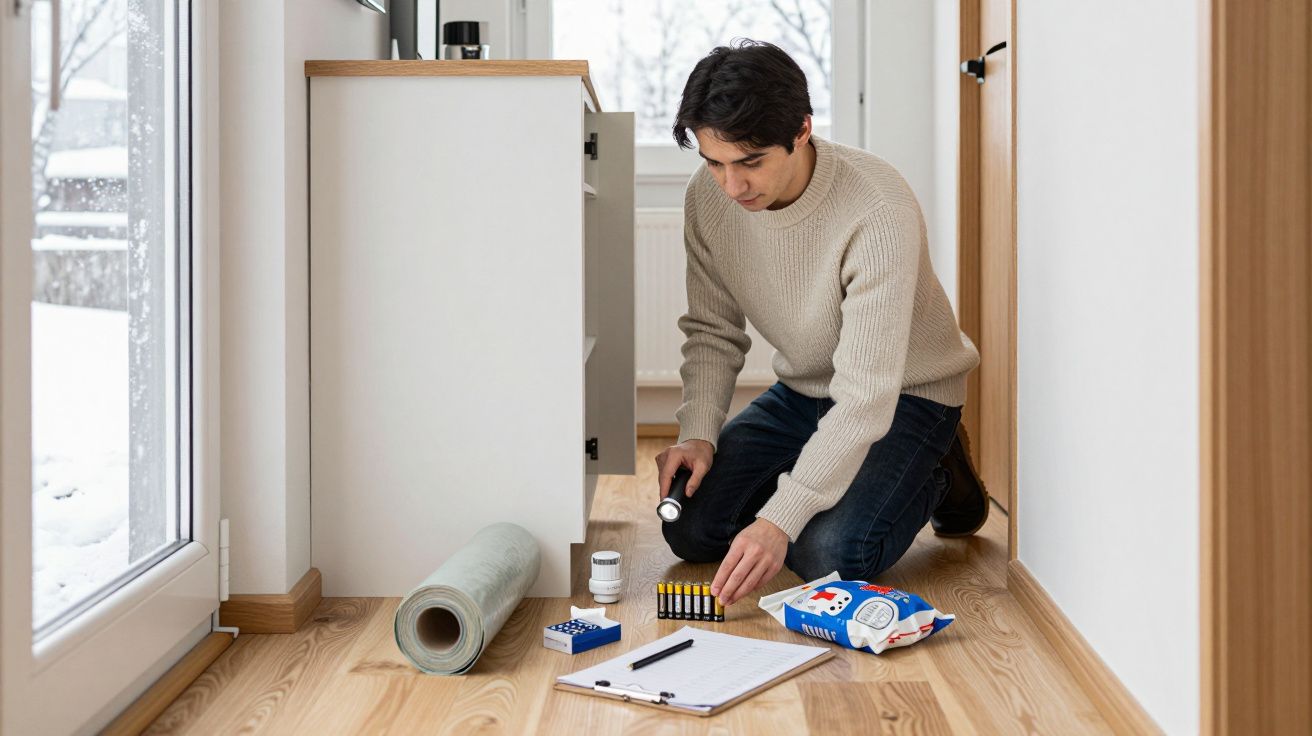
A quick “comfort-first” check you can do before calling anyone
You don’t need to be an engineer to gather useful clues. The goal is to describe the pattern clearly so you’re not paying someone to guess.
- Note where discomfort happens: which rooms, and at what times of day.
- Check radiator feel: top-to-bottom warmth, and whether all radiators warm up together.
- Listen: gurgling (air), banging (expansion/flow issues), humming (pump).
- Look at boiler pressure (if you have a combi): repeated drops are a story, not a one-off.
- Check thermostat placement and settings: is it being warmed by sunlight, a TV, or a nearby radiator?
If you can say “the back bedroom radiator stays cool at the bottom and the boiler short-cycles after five minutes,” you’ve already turned a vague comfort complaint into actionable diagnostics.
The small fixes that stop the big failure later
Most breakdowns are the end of a longer decline. Catching early symptoms can mean you resolve it with maintenance rather than replacement.
Typical interventions that restore heating comfort fast:
- Bleeding radiators and re-pressurising correctly (if safe and appropriate for your system).
- Balancing radiators so heat reaches the far rooms.
- Cleaning system water: inhibitor top-up, powerflush only when justified, magnetic filter service.
- Pump or valve attention before they seize fully.
- Control tweaks: thermostat relocation, TRV adjustments, better schedules.
None of this is glamorous. It’s the heating equivalent of “plain, fragrance-free, boring” - and it works because it finishes the job rather than distracting you with sensations.
When a comfort complaint is actually a safety signal
Most comfort issues are mundane, but a few should move you from “monitor it” to “act now”.
Call a qualified engineer promptly if you notice:
- Repeated pressure loss with visible leaks, staining, or constant topping up.
- A persistent smell of gas or signs of soot around the appliance.
- Carbon monoxide alarm activation (leave the property and follow the alarm instructions).
- Boiler making violent banging or kettling noises that are new and severe.
- Hot water temperature swings that could risk scalding, especially with children or older adults.
Comfort is often the first messenger, but safety always gets the last word.
The simple takeaway: treat discomfort like a dashboard light
Comfort complaints start before breakdowns because your body notices performance drift faster than a boiler’s fault logic does. The system can limp along for ages while delivering worse heat, until one day it can’t.
If you treat early symptoms as information instead of annoyance, you usually buy yourself options: cheaper fixes, better efficiency, and a home that feels steady again rather than temperamental.
| What you notice | Likely theme | Why it matters |
|---|---|---|
| Cold rooms despite “normal” thermostat | Delivery/balancing issue | Heat is being made, not shared |
| Noises, gurgling, slow warm-up | Air/flow/sludge | Flow problems often worsen over time |
| Comfort drops only in real cold snaps | Heat loss/capacity | Your home may be outrunning the system |
FAQ:
- Does uneven heating mean my boiler is failing? Not necessarily. Uneven heating is often balancing, flow, or radiator issues; the boiler can be fine while distribution is poor.
- Why does my house feel cold when the thermostat says it’s warm enough? The thermostat may be in a warmer spot than the rooms you occupy, or the system may be heating that area quickly while other rooms lag behind.
- Is bleeding radiators a proper fix or just a temporary one? It can be a proper fix if air has built up once. If you need to bleed frequently, there’s usually an underlying cause worth investigating.
- Should I powerflush straight away if comfort is poor? Not automatically. Sludge can cause comfort issues, but a good engineer will assess system water quality and symptoms before recommending an invasive flush.
- When should I stop troubleshooting and call someone? If you have repeated pressure loss, severe new noises, any gas/soot concerns, or a CO alarm event-call a qualified engineer promptly.





Comments (0)
No comments yet. Be the first to comment!
Leave a Comment