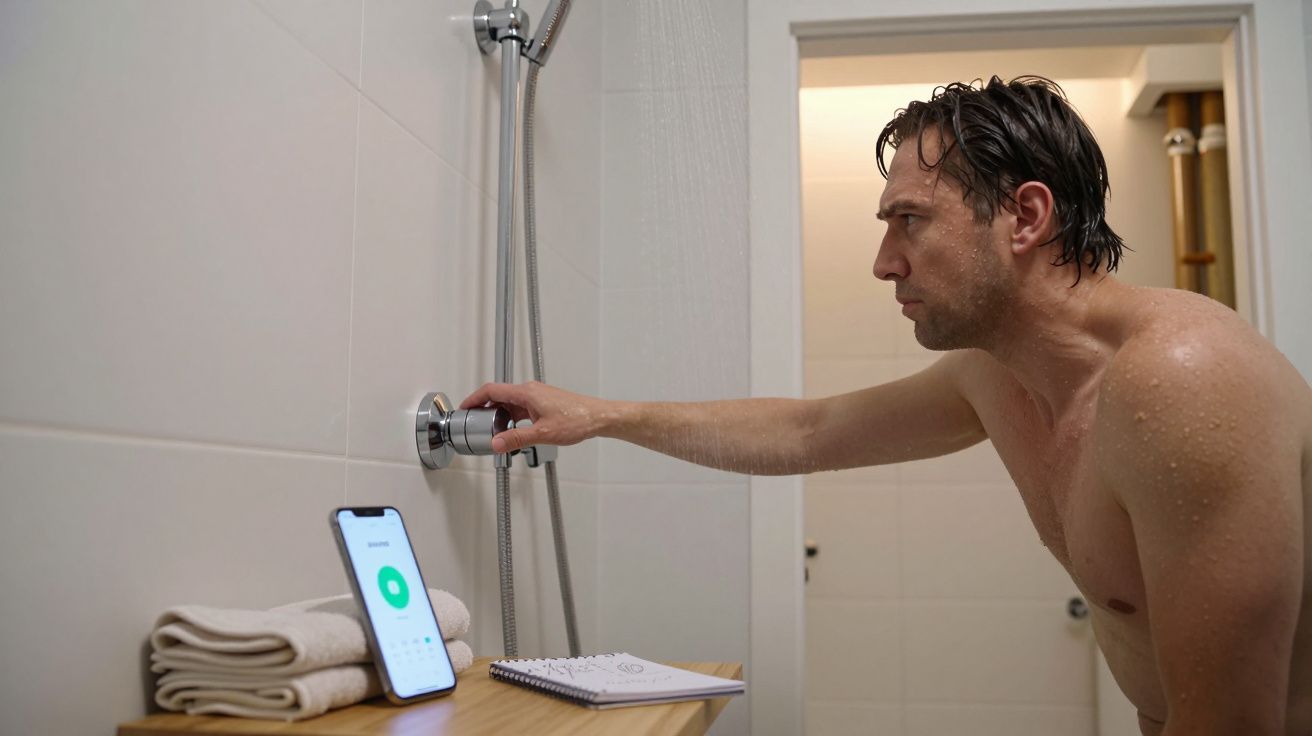
Tuesday evening, 8:11 p.m., upstairs bathroom. You’re halfway through a shower when the stream turns spiteful and lukewarm, and you feel that familiar panic: not again. Hot water cylinders are supposed to give you a predictable store of heat for baths, showers and washing up, but when the recovery time starts creeping longer, the shortage arrives earlier each week - and it matters because it’s usually a symptom, not just bad luck.
At first you blame habits. Someone must be taking longer showers. The teenager must be rinsing hair twice. Then you realise the pattern holds even when the house is quiet, the routine is the same, and you’re still rationing like it’s a campsite.
There’s a specific kind of irritation to this problem. It’s not a dramatic breakdown with alarms and leaks. It’s the slow theft of comfort, day by day, until you’re timing your shampoo like it’s a kettlebell interval.
The quiet pattern: same routine, less hot water
When hot water starts running out faster, people often focus on the moment it goes cold. But the more useful clue is what’s happening before that: the cylinder is either storing less usable hot water, losing heat too quickly, or refilling/reheating more slowly than it used to.
Most households don’t change their demand as much as they think. You might add a load of laundry here or a guest there, but “it’s getting worse every week” usually points to a system that’s drifting out of spec - insulation sagging, controls misreading, heating elements scaling up, or a valve letting hot water mix away unnoticed.
If you live in a hard-water area, this decline can feel almost seasonal. The shower still starts hot, but the hot phase shortens. The cylinder sounds a bit different. The cupboard feels warmer than it should. None of it screams “emergency”, but together it’s your system telling you it’s working harder to deliver less.
What’s actually shrinking: stored heat, usable volume, or speed
Think of your hot water like a budget with three moving parts:
- How much heat you store (cylinder capacity and thermostat setting)
- How much you lose (insulation, pipework, heat leak points)
- How quickly you can earn it back (your recovery time)
When people say “the hot water is running out”, they’re usually experiencing one of these in disguise:
- Less usable hot water volume because cold is mixing in early (faulty mixing valve, dip tube issues, unusual plumbing crossflow).
- More heat loss because the cylinder or nearby pipework is bleeding warmth into the airing cupboard.
- Slower reheating because the heat source is less effective (scaled immersion element, boiler issue, undersized coil performance, controls misbehaving).
The annoying part is that two of these can be true at once. A cylinder can be reheating more slowly and losing more heat, which makes the weekly slide feel dramatic.
The usual suspects (and how they show up in real life)
1) Limescale and sediment stealing performance
In hard-water regions, scale builds on immersion elements and inside coils like an invisible duvet - except it insulates the wrong thing. The heater still runs, but more energy goes into warming the scale and metal before it reaches the water.
What you notice: longer heat-up times, sometimes faint kettling/rumbling noises, and a cylinder that seems “hot” near the top but delivers less in the shower.
2) Thermostat drift or control timing that’s quietly changed
Cylinder stats can fail gradually. A thermostat that’s reading high may cut off early, leaving you with a smaller store of genuinely hot water. Off-peak timers can also get nudged, reset after a power cut, or overridden without anyone admitting it.
What you notice: water that feels slightly less hot at taps, and a shortage that arrives earlier even on days with normal use.
3) Heat loss from the cylinder and pipework
Lagging splits, jackets slip, or pipe insulation is missing on the first metre of hot pipework - which is where the heat is most intense. That warmth doesn’t vanish; it warms the cupboard and your towels instead.
What you notice: the airing cupboard is toasty, but the shower doesn’t last. In winter it can feel “nice”; on your bill it isn’t.
4) A tempering/mixing valve misbehaving
Many modern systems blend hot water down to a safer temperature. If the valve sticks or scales up, it can introduce too much cold into the outlet, so you burn through stored hot water faster trying to compensate at the tap.
What you notice: the hot tap needs to be turned further than usual; showers need a higher “hot” setting; temperature is less stable.
5) A boiler or heat source issue showing up as cylinder trouble
With indirect cylinders, the boiler and motorised valves matter as much as the tank. If the boiler is short-cycling, the pump is weak, or a zone valve isn’t fully opening, the cylinder may never get a proper, efficient charge.
What you notice: radiators might be “fine-ish”, but hot water takes ages to recover, especially after a bath.
A quick, calm home check before you call someone
You don’t need instruments to learn a lot in ten minutes. The goal isn’t DIY heroics - it’s getting clear evidence.
- Check the timer/programmer: has hot water been set to fewer hours, different times, or “once” instead of “on”?
- Feel the hot pipe near the cylinder (carefully): is it uninsulated and very hot for a long run?
- Notice cupboard temperature: if it’s warming the house like a small radiator, you’re paying for losses.
- Listen during reheat: loud kettling or popping suggests scale or overheating on the element.
- Compare two days: one day with no baths/laundry - does it still run out quickly?
If you have an immersion heater, it’s also worth noting whether it’s a single element (often bottom) or dual element (top “boost” plus bottom off-peak). A system stuck using only the boost can feel like it’s “working” while never fully charging the cylinder.
Recovery time: the part everyone ignores until it becomes your problem
Recovery time is simply how long your system needs to reheat the cylinder after you’ve used a chunk of hot water. When it gets longer, you don’t just lose comfort - you lose flexibility. One shower starts dictating the next person’s evening.
A healthy setup has a rhythm: use, recover, repeat. When that rhythm breaks, people start “chasing hot water” by boosting more often, turning temperatures up, or running the boiler longer. That can mask the issue for a week, then make it worse through extra scale and extra losses.
A helpful way to frame it is this: if your demand is stable but your recovery time is growing, your heat transfer has degraded or your controls are not delivering the heat you think they are. That’s a fixable statement, which is more useful than “the cylinder’s rubbish”.
What to ask for when you bring in a professional
If you call an engineer, the fastest route is clarity. Instead of “we keep running out”, try:
- “The hot water used to last X showers; now it lasts Y.”
- “The recovery time feels like it’s gone from about A hours to B.”
- “We’re in a hard-water area and the cylinder is (age) years old.”
- “The cupboard is unusually warm / we hear kettling on reheat.”
- “We have an unvented/vented cylinder, indirect/direct, with/without immersion.”
That gives them a diagnostic path: scale check, stat and valve tests, heat-up rate measurement, insulation review, and a look for crossflow or mixing issues. It’s the difference between a targeted repair and weeks of guesswork.
A simple mental model to stop the weekly slide
- If the water is hot but doesn’t last: suspect mixing, usable volume, or heat loss.
- If the water is not as hot: suspect thermostat/controls or tempering valve.
- If the water is hot but takes ages to come back: suspect scale, heat source, pump/valves, or element performance.
You don’t need to become a plumber to use this. You just need to stop treating “running out” as one mystery and start treating it as three measurable behaviours.
| What you notice | Likely direction | Why it matters |
|---|---|---|
| Hot at first, goes cold quickly | Mixing/usable volume or heat loss | You burn through stored heat faster than you should |
| Lukewarm even early on | Thermostat/tempering/controls | The cylinder may never be reaching target temperature |
| Takes much longer to recover | Scale or heat source issue | Recovery time is the bottleneck now, not capacity |
FAQ:
- Why does it feel like we’re using more hot water when we aren’t? Because the system may be delivering less usable hot water (through over-mixing or lower actual temperature), so you compensate at taps and drain the store faster.
- Can limescale really make hot water run out sooner? Yes. It reduces heat transfer, making reheats slower, and can contribute to poor temperature control on elements and valves.
- Is turning the thermostat up a good fix? Usually it’s a temporary mask. Higher temperatures can increase heat loss and scale formation; it’s better to find out why performance dropped.
- How do I know if it’s the cylinder or the boiler? If radiators are fine but hot water recovery is poor, it can still be boiler-side (pump/valve/control). The quickest answer comes from timing a full reheat and checking whether the cylinder is actually receiving proper heat.
- When should I replace rather than repair? If the cylinder is very old, heavily scaled, poorly insulated by design, or parts are becoming uneconomical, replacement can be the cleaner long-term answer - but a diagnosis first prevents unnecessary spending.





Comments (0)
No comments yet. Be the first to comment!
Leave a Comment