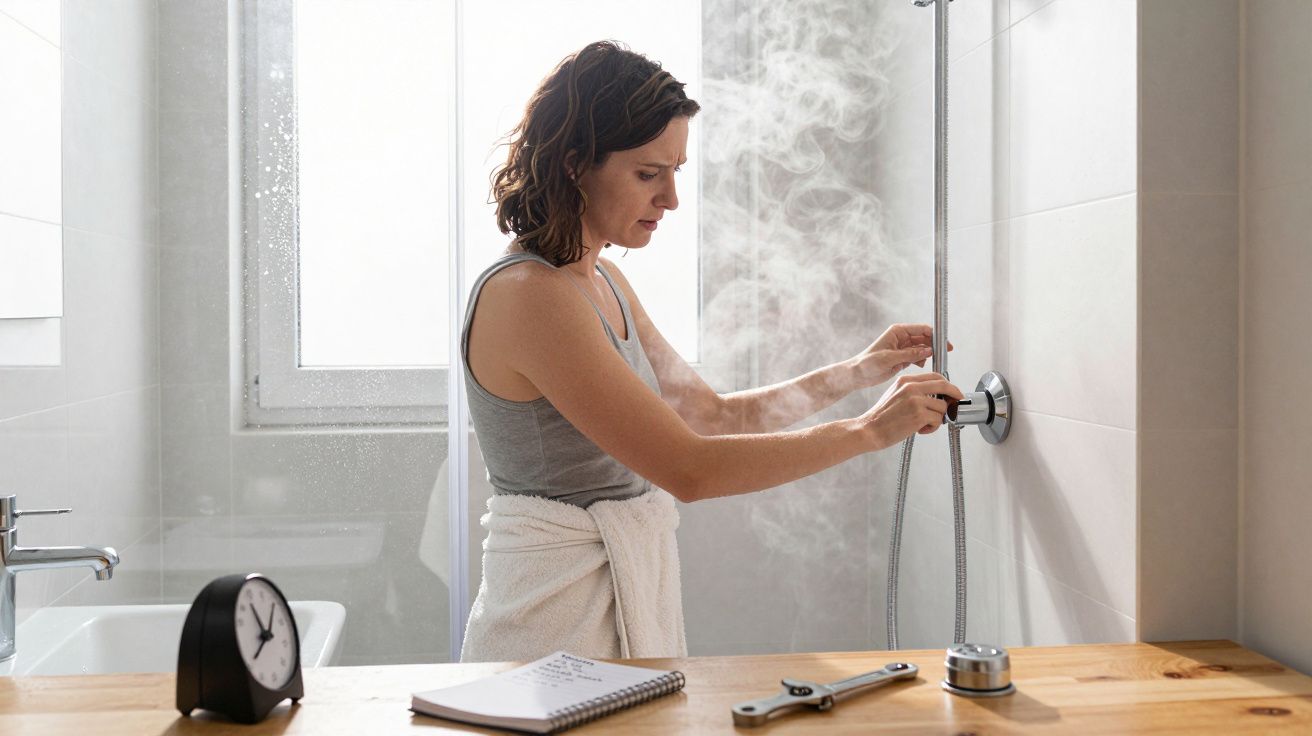
The shower does that thing where it turns brave for ten seconds, then sulks into lukewarm. In homes and small commercial buildings, hot water systems are supposed to make hot water feel boringly dependable, yet demand surges - the school-run showers, the kettle, the dishwasher, the sudden guest - expose every weak link at once. It matters because inconsistency isn’t just annoying; it’s a signal, and signals become failures when you ignore them.
Engineers notice it in the way you do, but quieter. They don’t stare at the shower head; they watch temperatures, flow rates, recovery time, and the awkward little gaps between “should” and “is”. A system can look fine on paper and still behave badly in a real house where people live at the same time.
The moment hot water stops feeling automatic
Most hot water problems aren’t dramatic. There’s no bang, no smoke, just a growing sense that you need to “time” your shower like it’s a shared laundry room. The sink runs hot, the bath runs tepid, and the third person in the morning learns to like brisk water.
That’s the clue: inconsistency often shows up first as patterns, not total failure. Tuesday is worse than Sunday. Evenings are fine, mornings are chaos. You start making excuses for it, which is exactly when engineers start getting interested.
Because hot water is a system behaviour problem. And systems fail at the edges.
What engineers quietly check first (because it’s usually not mysterious)
When demand surges hit, the question isn’t “why is the boiler broken?” It’s “what part of the chain can’t keep up?”
The usual suspects are boring, physical, and slightly unfair:
- Stored volume vs reality. A “150-litre” cylinder isn’t 150 litres of shower-ready hot water once mixing, stratification, and thermostat settings are involved.
- Recovery rate. How fast the system reheats matters more than how hot it starts. A big bath can empty a tank; a slow reheat keeps it empty.
- Flow rate. A powerful shower can outpace the heat source, especially in combi setups where hot water is made on demand.
- Pressure imbalances. If cold pressure dominates at a mixer, the temperature can hunt and swing when someone flushes a loo or starts a tap.
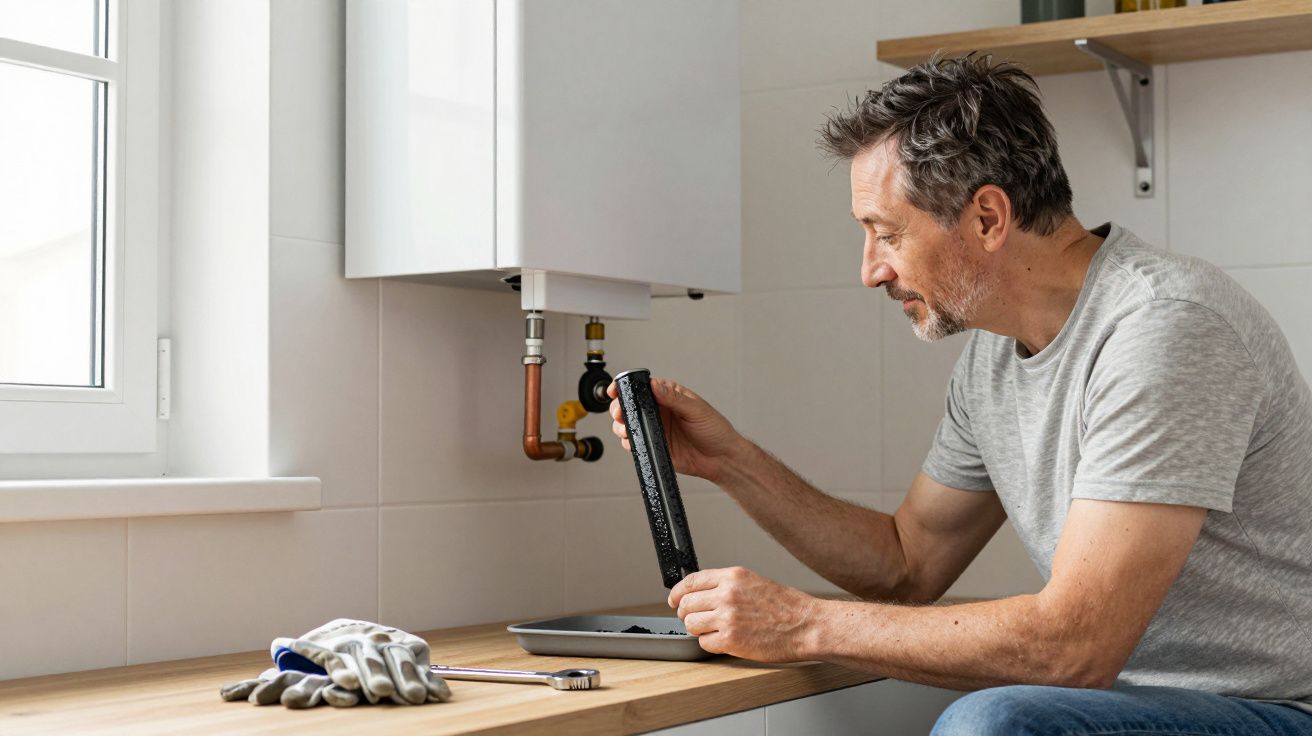
- Scale and restriction. In hard-water areas, heat exchangers and inlet filters slowly choke, reducing heat transfer and flow without obvious leaks.
None of these are glamorous faults. They’re wear, maths, and timing.
The weird truth: “Hot” is a moving target during a surge
In steady use, your system can look brilliant. Then you stack normal behaviours on top of each other - shower, washing-up, laundry, handwashing - and it becomes a different test entirely.
During a surge, three things change at once:
- Incoming cold water temperature drops the effective output. In winter, the same settings yield less comfort because the cold feed is colder, so more hot is needed to mix.
- Flow becomes the enemy of temperature. Higher flow reduces contact time in a heat exchanger and strips heat from stored water faster.
- Controls lag behind reality. Thermostats measure where they are, not where you feel it. The system reacts late, then overreacts, then hunts again.
That’s why the problem feels like moodiness. It’s not mood; it’s feedback delay.
Simple observations that save you a call-out (or make the call-out faster)
You don’t need gauges to spot the shape of the issue. You just need to notice the same things an engineer will ask you anyway, and write them down while you’re mildly annoyed.
Try this for two days:
- Note the time hot water “goes off” (morning, post-dinner, after a bath).
- Check whether the kitchen tap stays hot when the shower goes lukewarm (points to shower/mixer/pressure rather than the heat source).
- Notice if it’s worse when another tap is opened or a toilet flushes (pressure/flow interaction).
- If you have a cylinder, feel whether the hot water runs out (volume/recovery) or never quite gets hot enough (temperature/control/scale).
- Listen: kettling, whistling, or a struggling pump can be a clue, especially in hard-water areas.
This isn’t busywork. It turns “sometimes it’s rubbish” into a useful story.
“Inconsistency is data. Give me the pattern and I can usually tell you the category of fault.”
The common mismatches that cause “fine yesterday, awful today”
A lot of inconsistent hot water is a mismatch between how the home now uses water and what the system was designed for.
Examples engineers see all the time:
- A combi boiler asked to feed a high-flow rain shower as if it’s a hotel plant room.
- A cylinder that’s the right size, but set too cool, so the usable hot water volume is smaller than expected.
- A thermostatic mixer valve scaled up internally, causing temperature swings that feel like “the boiler’s playing up”.
- A home that added a second bathroom, but not the storage or recovery to match.
It’s not that any one component is “bad”. It’s that the system is now living a different life.
What tends to fix it (without turning your house into a plant room)
Big upgrades exist, but the first wins are often modest and targeted. The aim is to make hot water boring again.
Depending on your setup, an engineer might recommend:
- Service and descale the heat exchanger or cylinder coil if you’re in a hard-water area.
- Clean inlet filters on mixers and showers; partial blockage can destabilise temperature control.
- Check and set cylinder thermostat and boiler flow temperature sensibly (hot enough for capacity, safe enough with mixing where needed).
- Balance pressures or fit/replace a pressure-reducing valve where cold pressure overwhelms hot.
- Fit a thermostatic mixing valve (TMV) correctly for stability and scald protection, especially with stored water.
- Add storage or increase recovery if the household’s demand has genuinely outgrown the system.
The quiet art is doing the smallest thing that changes the behaviour during demand surges, not just the idle temperature at midday.
| What you notice | Likely category | What’s often checked first |
|---|---|---|
| Hot then cold in one shower | Flow/recovery limit | Boiler output, shower flow restrictor, cylinder reheat |
| Temperature swings when taps/toilets run | Pressure interaction | PRV, mixer valve condition, pipework balance |
| Gradually worse over months | Restriction/scale | Filters, heat exchanger/cylinder coil, limescale signs |
FAQ:
- Why is it worse in the morning? That’s when demand surges stack up: multiple showers, taps, appliances. It’s the highest-load test your hot water systems face.
- Is it always the boiler if the shower goes cold? Not always. A scaled or failing thermostatic mixer, a blocked shower filter, or pressure imbalance can make the shower misbehave even when the kitchen tap stays hot.
- Can I just turn the temperature up? Sometimes it helps (especially with stored hot water), but it can mask scale or recovery issues and may introduce scald risk. If you increase temperatures, do it with proper controls and mixing where appropriate.
- How do I know if it’s a storage problem? If hot water genuinely “runs out” after a predictable amount of use and takes ages to return, it’s usually volume or recovery. If it never gets properly hot, it’s more likely control, scale, or heat source output.
- When should I stop DIY and call someone? If you smell gas, see leaks, notice electrical issues, or the system is making new loud noises, stop and call a qualified engineer. For persistent inconsistency, a good log of times and symptoms makes diagnosis quicker and cheaper.



Comments (0)
No comments yet. Be the first to comment!
Leave a Comment