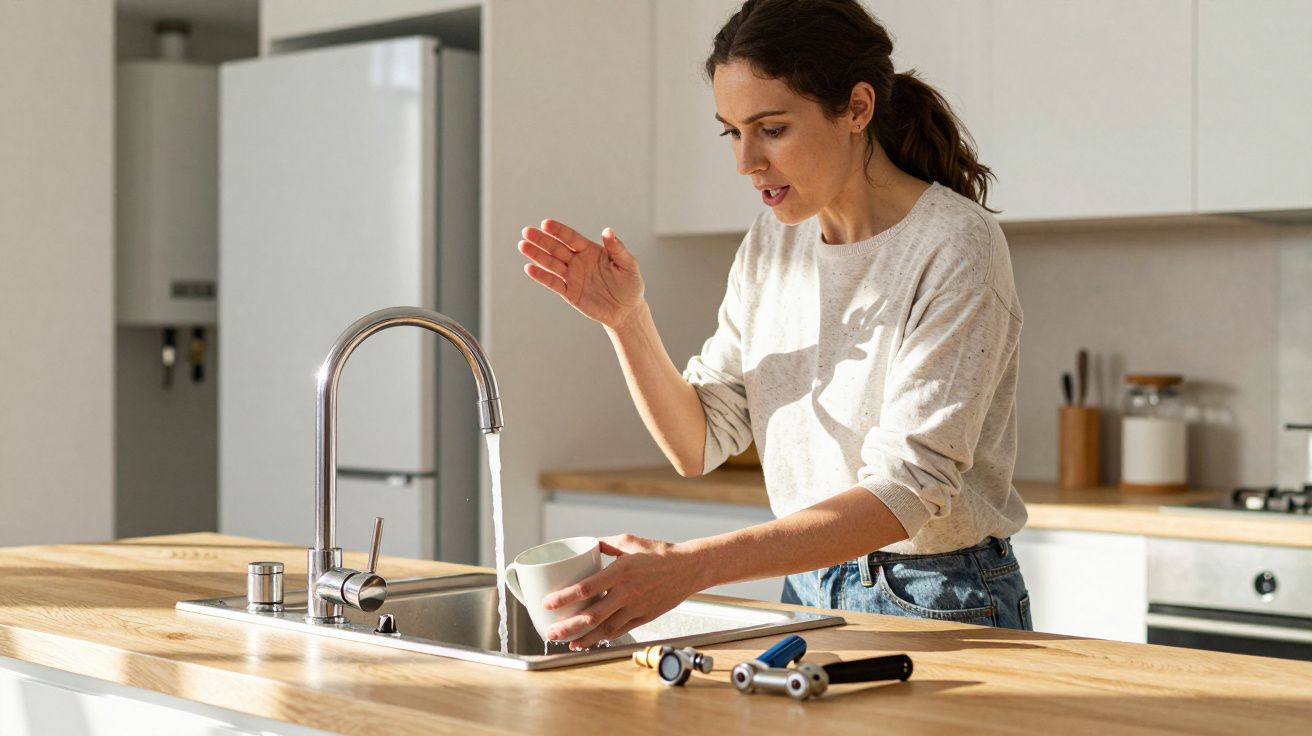
The kettle clicked off and Hannah turned the hot tap to rinse a mug. The stream hit her fingers like a slap, and she yanked her hand back on instinct. In many UK homes, unvented hot water cylinders sit in airing cupboards quietly storing mains‑pressure hot water, and the prevention of scalds matters because a “normal” tap can deliver dangerous temperatures in seconds.
Most days, nobody thinks about it. Hot water is just there, strong and steady, until the one time it isn’t just comfort.
The kind of hot water engineers don’t romanticise
Unvented cylinders are popular for a reason. They give powerful showers, they don’t need a cold‑water tank in the loft, and they make modern bathrooms feel like hotels. The system does the hard work behind a cupboard door, while the rest of the house gets on with life.
But “unvented” also means “pressurised”. When water is heated and contained under mains pressure, safety isn’t a nice extra; it’s the whole design. Engineers tend to watch these installs in a particular way: not because they expect drama, but because the consequences of missed details are real.
The quiet danger: scalding is fast, boring, and common
Scalds don’t arrive with warning noises. They happen in ordinary moments: washing hands, running a bath, filling a sink. If your hot water is stored at high temperature (often for hygiene reasons), the risk shifts to where people actually touch it: taps and showers.
A rough rule of thumb that gets repeated in training because it sticks: the hotter the water, the less time it takes to injure. Children, older people, and anyone with reduced sensation are hit hardest, because they can’t react as quickly or may not recognise danger until it’s too late.
So the prevention of scalds is not about making your home “less hot”. It’s about controlling where that heat shows up.
What keeps an unvented cylinder safe (and what quietly breaks it)
Think of an unvented hot water cylinder as a small, sealed pressure system with multiple layers of control. No single part is meant to be a hero. The safety comes from stacking measures that each catch the problem early.
Here’s what that stack usually includes:
- Thermostat control to stop normal overheating.
- High‑limit cut‑out (a second “stop” if the main thermostat fails).
- Temperature and pressure relief valve (T&P valve) as a last‑ditch vent path.
- Expansion vessel or internal air gap to cope with water expansion.
- Tundish and discharge pipework to safely show and carry away any relief discharge.
Where it goes wrong is rarely “everything failed”. It’s more often one missing piece, one misrouted pipe, one blocked route for pressure relief, or one component that nobody has tested since installation.
Engineers notice the same red flags again and again because they’re quiet and easy to ignore.
The warning signs people live with for months
- Dripping from the tundish (often “only when it heats up”).
- Hot taps that suddenly run far hotter than they used to.
- Banging, kettling, or unusually long reheats.
- A relief pipe outside that steams or drips and then “stops again”.
- A history of “someone adjusted the thermostat because the shower felt weak”.
None of these automatically means danger, but they’re reasons to stop treating the system like a sealed mystery box.
Scald prevention isn’t the cylinder’s job alone
A cylinder may be set hot to reduce bacterial risk, but that does not mean your taps should deliver that same temperature. This is where scald prevention actually gets done: at the point of use, with controlled mixing.
Many homes rely on a simple reality: people fiddle with taps until it feels right. That works until it doesn’t-especially with unvented systems, where flow is strong and heat recovery can be quick.
Common approaches include:
- Thermostatic mixing valves (TMVs) on baths, basins, or whole‑house hot feeds.
- Thermostatic shower valves that limit maximum temperature.
- Bath tap temperature limiting (because baths are a classic scald scenario).
If you have young children or vulnerable occupants, a controlled maximum at the bath outlet is one of the most practical, non‑negotiable improvements you can make. It turns an unpredictable moment into something that behaves the same way every day.
The “it’s been fine for years” trap
Safety issues love stable routines. A system can run for years with a compromised component because the exact conditions that trigger failure don’t appear often: a stuck valve, a scale‑affected thermostat, a blocked discharge route, a DIY alteration that seemed harmless.
Like sealing up a draughty room without thinking about air supply, small changes can stack. New taps, a bathroom refit, a replaced stopcock, a “temporary” cap, a discharge pipe boxed in and forgotten. None of it feels dramatic at the time.
Then one day the cylinder heats hard, pressure rises, and the system needs its safety path to be clear. Engineers quietly watch because they’ve seen what happens when it isn’t.
What to do this week if you have an unvented cylinder
You don’t need to become a heating specialist. You just need a few checks that keep you from normalising the wrong things.
- Find the cylinder and look for the tundish. If it’s wet, stained, or regularly drips, don’t ignore it.
- Check bath and basin hot temperatures subjectively. If it’s “too hot to keep your hand under”, treat it as a scald risk to fix, not a quirk.
- Don’t adjust cylinder thermostats casually. “Hotter” isn’t a comfort setting; it changes safety margins.
- Book a qualified service (unvented cylinders require specific competence). Ask for confirmation that safety valves and discharge arrangements have been checked.
- If there’s discharge from the relief pipe, reduce demand, avoid heating cycles, and get it assessed promptly.
If your household includes children, consider adding or upgrading a TMV as a targeted scald-prevention step. It’s one of the few changes that directly alters outcomes at the tap.
A calm way to think about “hot water safety”
Most homes don’t need to fear their cylinder. They need to respect it in the same way they respect a car: it works reliably, until maintenance is skipped and small warnings are shrugged off.
Unvented hot water cylinders are designed with safety in mind, but the design assumes the safety devices can actually do their job-and that people won’t live with warning signs as background noise. The prevention of scalds, meanwhile, is best handled where hands and skin meet water, not where water is stored.
Engineers quietly watch because the system is quiet. The goal is to keep it that way.
FAQ:
- Is a higher cylinder temperature always more dangerous? Higher stored temperatures increase scald risk at outlets unless mixing/temperature limiting is in place. Stored temperature settings should follow manufacturer and hygiene guidance, not guesswork.
- What does water dripping from the tundish mean? It often indicates the system is relieving pressure or temperature during heat-up, which should be investigated rather than ignored. Persistent dripping is a clear “check me” signal.
- Do thermostatic mixing valves reduce shower performance? Good-quality, correctly sized valves usually maintain strong flow on an unvented system, while limiting maximum temperature. Poor sizing or installation can cause issues, so specification matters.
- Can I DIY repairs on an unvented cylinder? Routine DIY around pipework can accidentally compromise safety devices or discharge routes. Servicing and safety-critical work should be done by someone qualified for unvented systems.
Comments (0)
No comments yet. Be the first to comment!
Leave a Comment