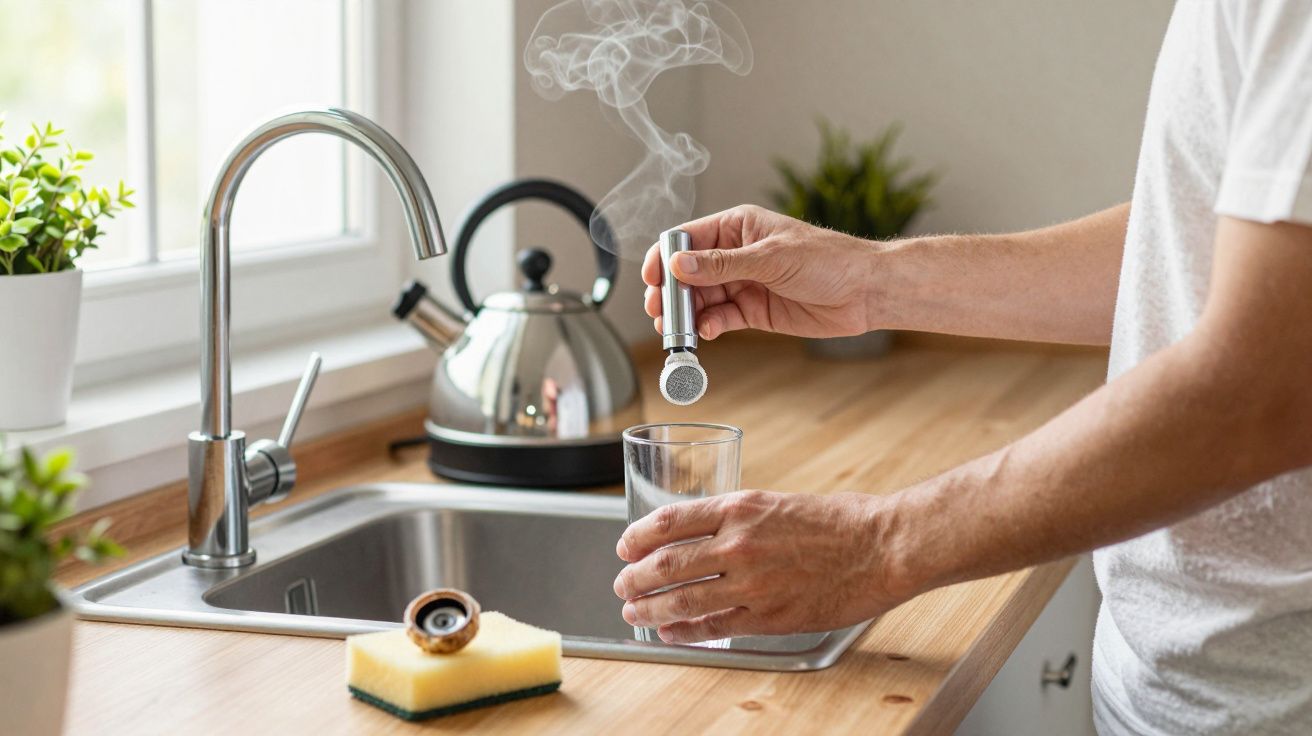
The kettle clicks, you fill a glass, and something in it tastes… flat. Water quality is the invisible factor that decides whether your tea sings or sulks, and it quietly controls system longevity in everything from combi boilers to coffee machines. Ignore it long enough and the bill shows up as limescale, corrosion, weird smells, and appliances that give up early.
Most of the time it’s not dramatic. It’s just a chalky rim in the bathroom, a shower that loses pressure, or a dishwasher that never quite gets glassware clear again.
The issue isn’t “bad water”. It’s water that doesn’t match your system.
People talk about “hard” versus “soft” as if that’s the whole story. In reality, the same tap water can be perfect for drinking and still be punishing for heating elements, valves, seals, and anything that boils, sprays, or cycles. You don’t need to fear your water-you need to understand what it’s carrying and what your kit is asking it to do.
Hardness (calcium and magnesium) gets the headlines because it leaves the evidence behind. But other pieces-chlorine, sediment, iron, pH-can be the reason a system feels “tired” long before it fails.
The tell-tale signs you’re paying for in slow motion
You usually notice the nuisance first, not the damage. That’s the trap: everything still works, just worse, until it doesn’t.
Look for these patterns around the home:
- White crust on taps and showerheads that returns fast after cleaning
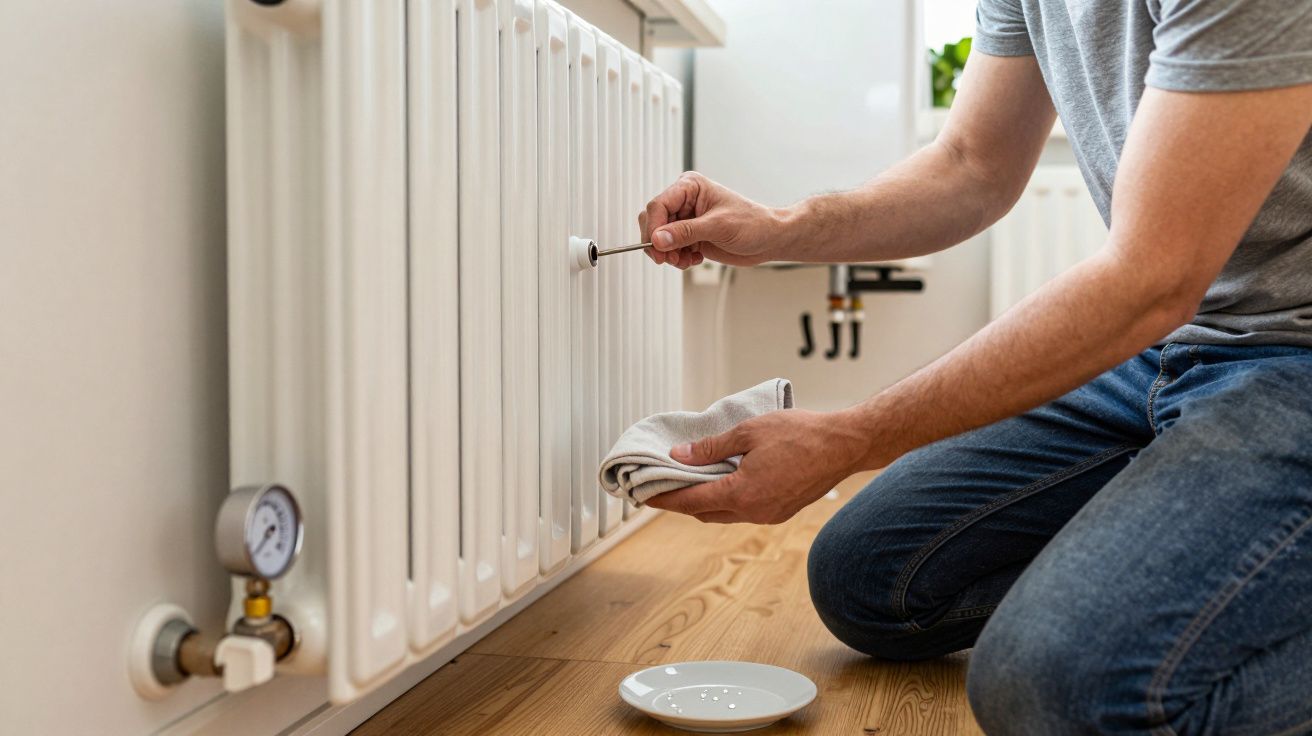
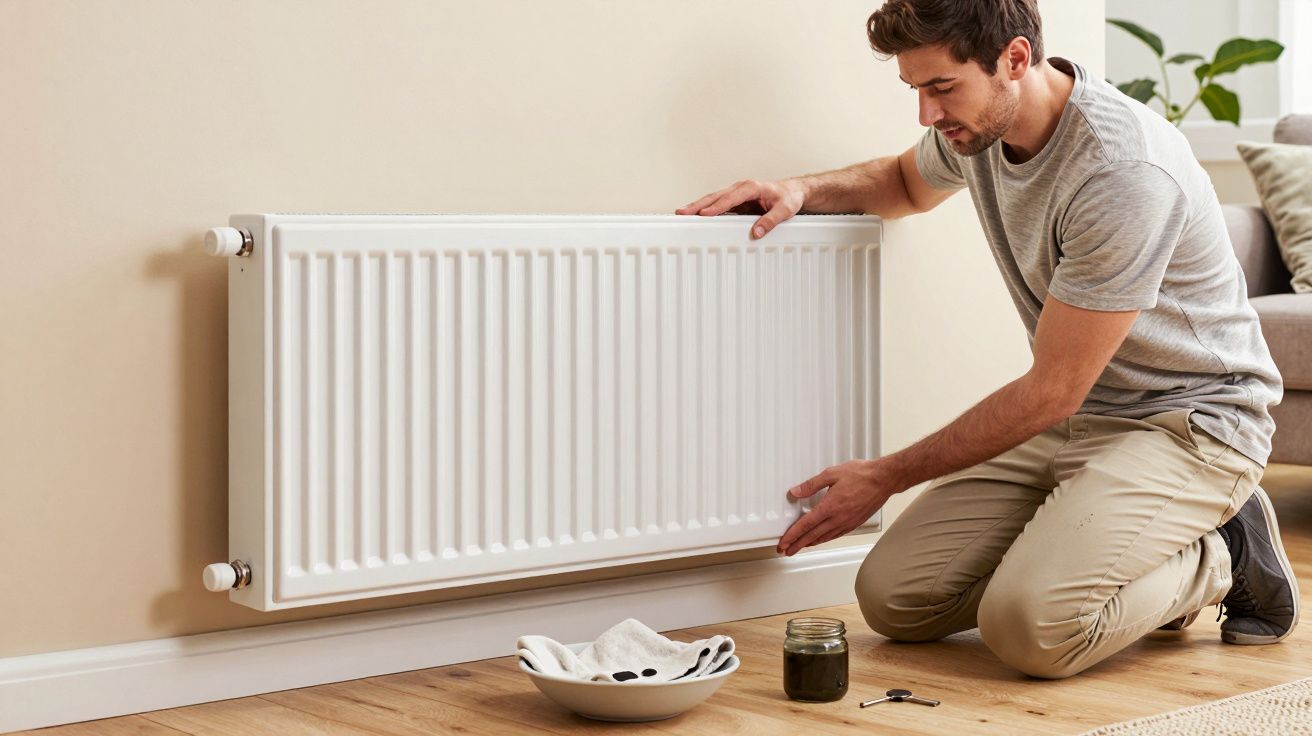
- Boiler noise (kettling/rumbling) when the heating kicks in
- Hot water running out sooner than it used to, even with the same habits
- Cloudy glassware and gritty residue in the bottom of the dishwasher
- Kettle taking longer to boil, or a chalky film floating after a while
- Metallic taste or orange staining (often iron/sediment issues)
If you’re nodding at three of those, you’re not “unlucky”. You’re seeing a mismatch between your water and your equipment.
What’s actually happening inside (and why system longevity takes the hit)
Limescale isn’t just cosmetic. In a hot-water system it forms an insulating layer on heat exchangers and elements, which means the appliance has to work harder to deliver the same heat. That extra effort shows up as longer run times, higher energy use, and components running hotter than they were designed to.
Sediment is sneakier. Tiny particles act like sandpaper in valves and flow sensors, and they clog aerators, shower cartridges, and small channels in modern taps. Chlorine and aggressive water chemistry can slowly attack rubber seals and certain metals, especially where water sits still.
None of this fails loudly at first. It fails as “everything feels a bit off”.
The 15‑minute check that tells you what you’re dealing with
You don’t need a lab coat. You need a quick read on hardness and a couple of simple observations.
- Check your postcode hardness (your water supplier usually publishes a map).
- Do a soap test: if hand soap struggles to lather and leaves a slippery film, hardness is likely high.
- Look in one place you never clean: unscrew a tap aerator or check the kettle base. Grit and white crust are your clue.
- Notice the smell: a light chlorine smell is normal; a strong “swimming pool” hit can mean higher dosing or stagnation in pipework.
- If you have a boiler, ask at the next service whether there’s evidence of scale or magnetite/sludge.
Let’s be honest: nobody does this every day. But once per season is enough to stop guessing.
Fix the cause, not the symptom: three upgrades that change everything
The goal isn’t to turn your house into a filtration showroom. It’s to protect the things that cost real money to replace.
Start with the most common, most effective options:
Limescale control (hard water areas):
A properly sized water softener (or a scale-reducing device where softeners aren’t suitable) helps boilers, taps, showers, dishwashers, and washing machines run cleaner for longer.Sediment filtration (grit, older mains, renovation dust):
A whole-house sediment filter before appliances can stop the “sand in the valves” problem and reduce blockages in small channels.Targeted drinking water filtration (taste/odour):
If the main issue is chlorine taste, a small carbon filter at the kitchen tap often fixes the daily annoyance without altering the whole supply.
A good rule: treat where the problem happens. Protect the boiler and hot water first, then improve taste if you want to.
Small habits that protect systems without buying anything
Not glamorous, but these are the moves that keep performance steady:
- Descale little and often (kettles, showerheads) rather than doing a brutal deep clean twice a year.
- Don’t ignore slow flow from taps and showers-clean aerators and heads before scale bakes in.
- Run hot water regularly in rarely used bathrooms to reduce stagnation.
- Use the right salt and settings if you have a softener; “set and forget” is how softeners quietly stop softening.
- Book boiler servicing on time, and ask for a straight answer on scale/sludge evidence.
You’ll feel it in small ways: steadier pressure, quieter heating, cleaner glassware, and fewer “why is it doing that?” moments.
A small shift that changes your whole home
Water quality is easy to dismiss because it’s everywhere, so it feels ordinary. But it’s also the one input that touches your kettle, your boiler, your shower, your laundry, your coffee-and the lifespan of the expensive boxes hidden in cupboards. When you match your water to your systems, system longevity stops being a hope and starts being the default.
You don’t need perfect water. You need water that lets your home run without fighting itself.
| Point clé | What to check | Why it matters |
|---|---|---|
| Hardness and scale | Chalky build-up, kettling boiler, cloudy glassware | Protects heating efficiency and parts |
| Sediment and grit | Tap aerators, shower cartridges, dishwasher residue | Prevents wear, blockages, low flow |
| Taste/odour (chlorine) | Strong pool smell, flat tea/coffee | Improves daily use without big changes |
FAQ:
- Can hard water actually damage appliances, or is it just ugly? It can reduce efficiency and shorten component life by insulating heating elements and clogging small waterways, which increases heat stress and wear.
- Do I need a whole-house filter to improve water quality? Not always. Sediment issues benefit from whole-house filtration, but taste/odour is often solved with a simple carbon filter at the kitchen tap.
- Will a water softener make my drinking water unsafe? In the UK, softeners are widely used and typically safe when installed correctly, but many homes keep an unsoftened drinking tap if preferred.
- What’s the fastest sign my boiler is suffering from scale? Rumbling/kettling noises, slower hot water recovery, and higher energy use for the same comfort can all point to scale on heat-transfer surfaces.
- How often should I descale small appliances like kettles? In hard water areas, a light descale every few weeks to monthly is usually easier (and gentler) than leaving it until the build-up is thick.



Comments (0)
No comments yet. Be the first to comment!
Leave a Comment