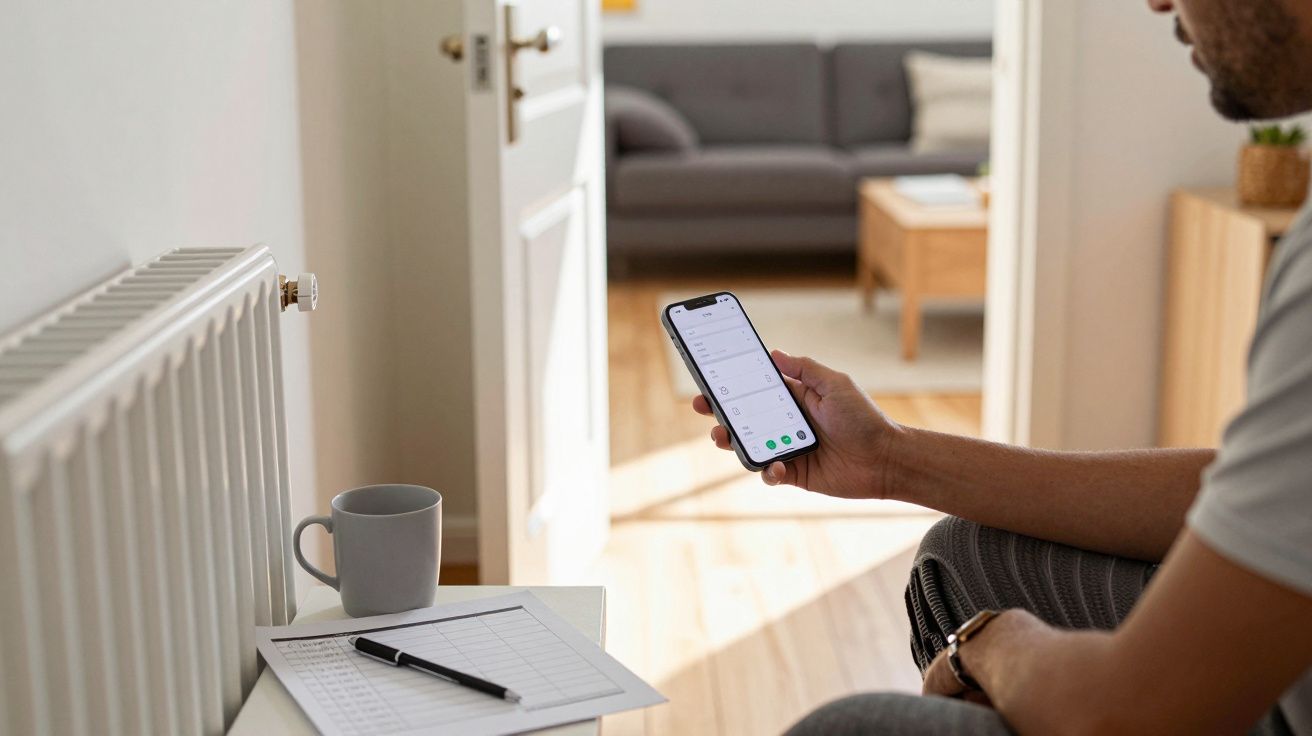
By the time you’ve padded downstairs and the kettle’s on, heating controls have already made a dozen decisions on your behalf. The twist is that user behaviour - the little choices you repeat without thinking - can either help those decisions land perfectly, or quietly sabotage them for weeks. If your home swings from “too cold” to “stuffy” and you’re forever fiddling with the dial, this is why it matters: comfort isn’t just about the boiler, it’s about the rules you set.
Most people assume the fix is bigger radiators, a newer thermostat, or “just turning it up for a bit”. But in a lot of UK homes, the fastest change comes from one adjustment that stops your system chasing its own tail.
The comfort problem isn’t temperature - it’s timing
You can have a perfectly decent boiler and still live in a house that feels emotionally unreliable. Cold toes at 7am, sweaty bedrooms at 10pm, a living room that takes ages to feel human and then overshoots into sauna. When you’re in it, you blame the weather, the insulation, the age of the place. Sometimes you’re right. Often, you’re living with a control strategy that’s fighting your day.
A common pattern is this: the heating comes on “just in case”, stays on because it feels safer, then gets knocked off when the house is too warm. Later, it comes back on because it dipped again. The system isn’t broken; it’s reacting to you reacting to it. It’s user behaviour as a feedback loop, and it’s exhausting.
The goal isn’t to be stricter. It’s to make the system predictable enough that you stop micromanaging it.
The single adjustment: stop using one big schedule - use temperature targets by zone (or room)
If you do one thing, do this: switch from a single whole-house “on/off” routine to temperature targets that vary by area and time. In plain English, that means letting your heating controls aim for different temperatures in spaces that do different jobs, instead of trying to make the entire house feel the same all day.
This can look like:
- A thermostat schedule with lower setpoints overnight and during work hours, higher for the morning and evening.
- Smart TRVs (thermostatic radiator valves) or room sensors so the spare room isn’t heated like the lounge.
- Even basic TRVs set sensibly, so the bathroom can be warmer without forcing the rest of the house to overheat.
What changes is not just the number on a screen. The system stops heating empty spaces “because it’s on”, and starts maintaining comfort where you actually live.
Why it works so fast
A single setpoint for the whole home encourages a blunt cycle: heat everything, then stop, then chase the drop. Zoning and targets soften that into steadier control. You get fewer peaks and troughs, which is what your body notices as comfort.
It also removes the daily negotiation. When the bedroom is meant to be cooler at night, you don’t interpret cool sheets as failure. When the lounge warms before you sit down, you stop panic-boosting the temperature and overshooting.
How to set it up without buying a whole new system
You don’t have to turn your house into a space station. Start with what you already have, and make one clean plan.
Step 1: Decide what “comfortable” means in each space
Write it down like a small contract with yourself:
- Living room: comfortable when you’re sitting still.
- Kitchen: comfortable when you’re moving about.
- Bedroom: comfortable for sleeping, not lounging.
- Hallways/landing: “not cold”, but not a priority.
Most homes need fewer warm rooms than we heat by habit. That’s not deprivation; that’s accuracy.
Step 2: Use your controls to match reality, not optimism
Pick one of these routes:
If you have a programmable thermostat:
Set different temperatures for morning/evening vs overnight/daytime. Keep the number changes modest; wild swings invite more fiddling.If you have TRVs on radiators:
Set higher in rooms you occupy, lower in rooms you pass through. Leave the main thermostat in a representative area (often the hall or living room), and don’t let one sunny room “win” for the whole house.If you have smart TRVs / smart thermostat:
Create zones (even if it’s just “lounge” and “bedrooms”). Give each zone a schedule that fits how you actually use it.
There’s a boring truth here: the best setup is the one you will leave alone long enough to learn the house.
Step 3: Make one behavioural rule: stop chasing the feeling
This is where user behaviour makes or breaks the plan. Choose one rule and stick to it for a week:
- Don’t crank the thermostat up as a “boost” unless you genuinely need it for a set time.
- Don’t turn the heating off completely because you feel warm for five minutes.
- Don’t change three things at once; you won’t know what helped.
Let your controls do their job. Your job is to give them a stable target.
“The house didn’t need more heat,” a friend told me after finally zoning their system. “It needed fewer arguments.”
The common traps (and how to dodge them)
The mistakes are rarely technical. They’re human.
- Heating the spare room out of guilt. You’re not being rude to a room by letting it sit cooler. Close the door, turn the TRV down, and move on.
- Using the thermostat like a tap. It’s not “more heat faster”; it’s “aiming higher than you want to live at”, which usually ends in a window cracked open in January.
- Assuming one schedule fits weekdays and weekends. If your controls allow it, split them. Your Saturday morning is not your Tuesday morning.
If you want the simplest check: if you’re touching the controls multiple times a day, the system design is wrong for your life.
A quick comfort plan you can run this weekend
Pick a normal day and do this in under an hour:
- Walk the house and set TRVs: higher where you sit, lower where you sleep, lowest where you store coats.
- Set two temperature periods on the main thermostat: a “wake” block and an “evening” block, with a lower setpoint the rest of the time.
- Decide your one rule (no boosting, no panic-off, or no constant tweaks).
- Live with it for seven days and only adjust at the end of the week, based on what actually happened.
Comfort improves when your system is allowed to be consistent. Consistency is a design choice, not a personality trait.
| Shift | What you change | What you feel |
|---|---|---|
| From on/off to targets | Different temps by room/time | Fewer hot/cold swings |
| From whole-house to zones | Heat where you live | Less waste, more comfort |
| From fiddling to feedback | Weekly tweaks, not hourly | A home that feels predictable |
FAQ:
- Will zoning make my bills go up? Not usually. Heating fewer rooms to lower targets often reduces demand, but results depend on insulation, tariffs, and how extreme your previous settings were.
- What if I only have one thermostat and no TRVs? You can still improve comfort by using a sensible schedule with modest setpoint changes, and by keeping internal doors managed to reduce draughty imbalances.
- Should bedrooms be heated to the same temperature as the lounge? Typically no. Many people sleep better in cooler rooms; the lounge often needs a higher target because you’re sitting still.
- How do I stop the house feeling cold when the heating is “down”? Focus on warm-up timing rather than higher temperatures. Bringing heat on a little earlier is often better than running hotter for longer.
- Is “boost” ever a good idea? Yes, when it’s time-limited and intentional (e.g., 30–60 minutes after coming in soaked). The problem is using boost as a daily habit instead of fixing the schedule or zoning.




Comments (0)
No comments yet. Be the first to comment!
Leave a Comment