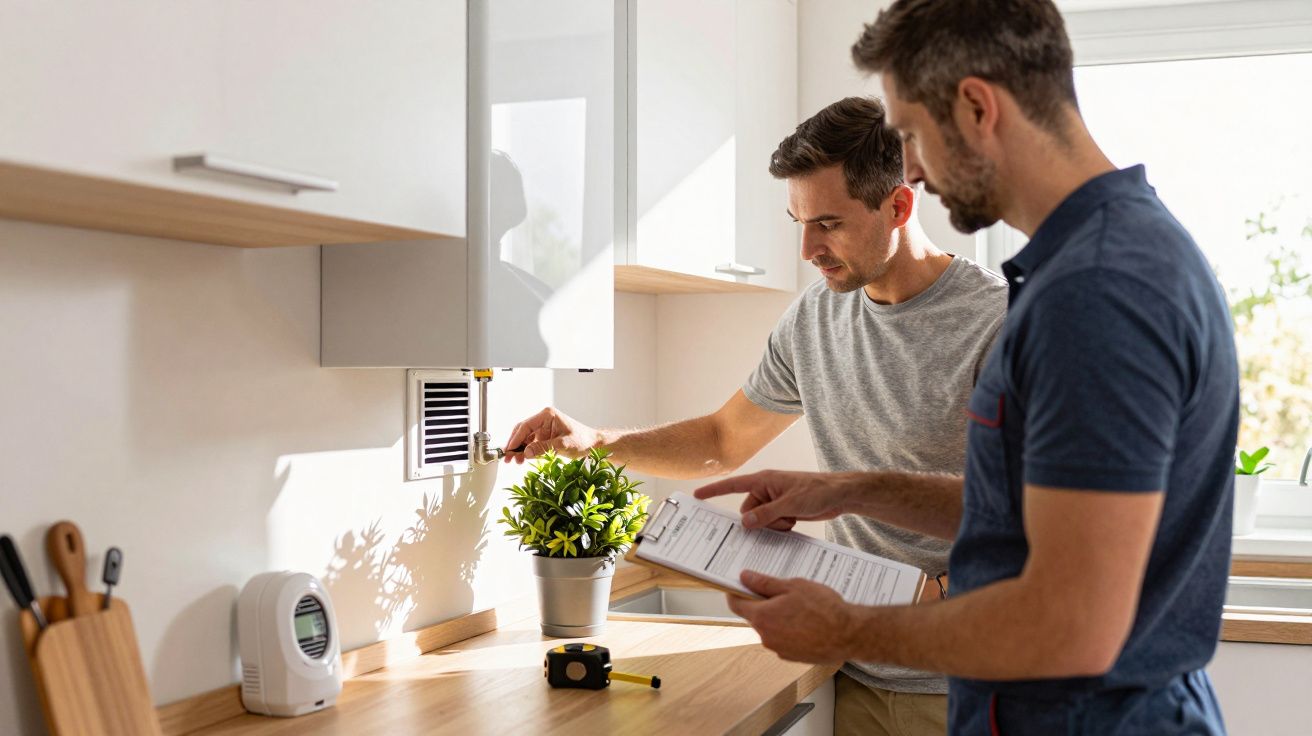
Gas safety inspections can feel like a tick-box visit: an engineer arrives, tests the boiler, checks the hob, signs something, leaves. But if you care about long-term safety - the kind that holds at 2am on a windy Tuesday, not just at 2pm when everything’s warm - one inspection detail matters more than most people realise.
It isn’t the fancy analyser, or how quickly they work, or even whether they’re friendly. It’s what gets written down, clearly, in the right place, while they’re still standing in your kitchen.
The detail that keeps working after the van pulls away
The most protective “detail” in a gas safety inspection is a properly completed record of ventilation and flue performance - with the actual results and any limitations noted - not just a vague “OK”.
Because this is the bit you live with. Ventilation and flues don’t only affect whether an appliance fires today; they affect whether it keeps clearing products of combustion safely through seasonal changes, altered airflow, blocked vents, and DIY “improvements” that slowly strangle a room.
A home can look perfectly normal and still be one extractor fan, one sealed-up air brick, or one bird’s nest away from a problem. The paperwork doesn’t prevent that by magic, but it does two crucial things: it makes the risk visible, and it creates a baseline you can act on later.
What “good” looks like (and what “fine” is hiding)
A good record doesn’t read like a shrug. It tells you what was checked, how it was checked, and what the engineer observed about the environment the appliance depends on.
Look for specifics such as:
- Whether permanent ventilation is required for the appliance and if it’s present/clear
- Any signs of spillage or poor draw at the flue (and what test was used)
- Flue route and terminal location noted if relevant (especially on room-sealed appliances)
- Any warning labels or advisory notes if something is borderline but not immediately dangerous
- A clear classification if something is unsafe (and what was done next)
What you don’t want is the domestic equivalent of “seems alright”. If a record doesn’t say what was measured or observed, it can’t protect you later, because it can’t teach you what would count as “different”.
Why ventilation notes beat most other checks for long-term safety
Gas appliances are surprisingly honest. When something is off, they often tell you - yellow flames, sooting, odd smells, nuisance shut-offs. The problem is that people are even better at ignoring slow changes when they arrive in small doses.
Ventilation and flue performance are the slow-change territory. A vent that was clear last winter can be blocked by paint, dust, furniture, or that well-meaning draught excluder you forgot you installed. A flue that drew well during an inspection can struggle when kitchen extraction is upgraded, windows are swapped for tighter units, or a loft conversion changes pressure paths.
The inspection record becomes your “before” photo. If you ever need a second visit, a landlord’s follow-up, or you’re selling and someone asks awkward questions, that baseline stops the situation becoming a guessing game.
Long-term safety isn’t a vibe. It’s a trail of small truths that make it harder for problems to hide.
A quick way to use the record like a homeowner, not a file clerk
When you get the certificate or report, don’t just check the date and shove it in a drawer. Read two sections as if you’re looking for future-you’s confusion.
1) Find the ventilation and flue notes
If it’s blank, overly generic, or impossible to interpret, ask (politely) while the engineer is still there. Not because you want to challenge their competence, but because you want the information to survive the moment.
Useful prompts that don’t start a fight:
- “Can you note whether the air vent is required and whether it’s clear?”
- “Was there any spillage test or draw check you did that you can record?”
- “If we change windows/extractor fans later, is there anything we should re-check?”
2) Translate one line into a household rule
Pick one action that protects the conditions the appliance needs. Make it boring and specific.
Examples that actually stick:
- “That vent stays uncovered.”
- “If we redecorate, we don’t paint over vents.”
- “If we change the cooker hood, we book a check afterwards.”
This is the home version of the potato-box idea: fix the environment, not the object.
Common ways people accidentally undo a safe setup
Most homes don’t become unsafe because someone makes a dramatic mistake. They become unsafe because comfort and tidiness slowly win.
The usual culprits:
- Blocking a permanent air vent because it “lets the cold in”
- Boxing-in pipework or flues for aesthetics without considering access/clearances
- Upgrading extraction (kitchen/bathroom) without thinking about air replacement
- Sealing up drafts after new doors or windows, changing how air moves through the house
- Storing items against a boiler cupboard vent or louvre
None of these choices look like a gas decision. That’s why the inspection detail matters: it links your everyday home improvements to the invisible systems they affect.
If you rent: the one thing to ask for, every time
Landlords must arrange checks, but tenants still live with the consequences. If you get handed a certificate that tells you almost nothing, it doesn’t help you notice changes.
Ask for:
- A copy of the gas safety record promptly
- Clear notes on any ventilation requirements and any advisories
- Confirmation of what was classified as safe/at risk/unsafe, if anything was flagged
If something is noted as “not to current standards but safe”, treat that as information, not reassurance. It can mean: safe in today’s conditions, but less forgiving if those conditions change.
The small check you can do between inspections (without playing engineer)
You don’t need to test combustion or dismantle anything. You just need to protect the assumptions the inspection was based on.
Once a month, take one minute to:
- Look at vents and make sure they’re unobstructed and not painted over
- Check the flue terminal outside (if accessible and safe to view) for obvious blockage or damage
- Notice new drafts being sealed, new extraction installed, or rooms being reconfigured
If anything has changed - renovations, new fans, new windows, a blocked vent you “fixed” by covering - book advice. Long-term safety is often about revisiting a safe setup after the house has been “improved”.
A gentle note on alarms and responsibility
Have a carbon monoxide alarm where it should be and keep it in date. It’s not a substitute for good inspection detail; it’s the backstop when real life deviates from the perfect conditions described on a form.
And if an engineer marks something as unsafe, don’t bargain with it. The point of those categories is to make the decision boring: stop, fix, then carry on.
Because the best outcome of a gas safety inspection isn’t the signature. It’s a home that stays safe when no one is watching - and a record that still makes sense when you need it most.




Comments (0)
No comments yet. Be the first to comment!
Leave a Comment