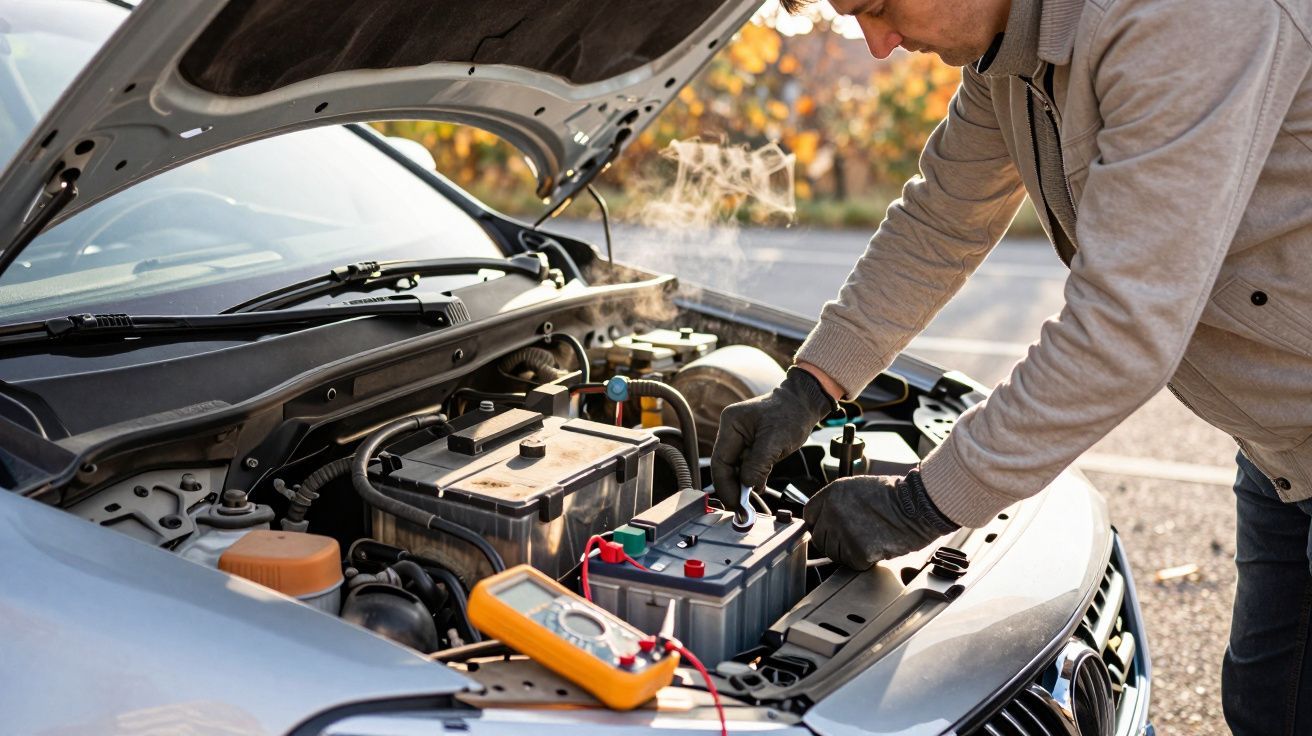
The first cold morning always starts the same way: you turn the key, expect the usual cough-then-catch, and instead get a sluggish churn that feels like your car is thinking about giving up. Preventive maintenance is the dull, five-minute habit that stops that moment from becoming a tow truck story, and it sits at the heart of seasonal preparedness because winter doesn’t “break” cars so much as expose what was already borderline.
Most winter breakdowns aren’t dramatic engineering failures. They’re ordinary parts pushed past their comfort zone by low temperatures, short trips, condensation, and darkness, until something simple finally says “no”.
The one step that prevents most winter breakdowns
Check and protect your battery connections - then test the battery itself.
That’s it. Not glamorous, not a £600 gadget, not something you need a ramp for. It’s the small maintenance step people skip because the car “was fine yesterday”, right up until it isn’t.
Cold weather thickens engine oil and increases the power needed to crank. At the same time, a battery’s available capacity drops as temperatures fall. If your terminals are lightly corroded, your clamps slightly loose, or your battery already ageing, winter turns “nearly fine” into “won’t start”.
Why batteries fail in winter (and why it feels sudden)
A battery rarely dies out of nowhere. It fades quietly, then winter makes the fading obvious.
- Lower temperatures reduce chemical activity inside the battery, so it delivers fewer amps.
- More electrical load shows up at the same time: lights, heaters, heated screens, wipers, fog lights, phone charging.
- Short journeys don’t recharge enough, especially if you do a quick commute with lots of stop-start and demisting.
That’s why you can drive all autumn with a weak battery and get away with it. Then one frosty morning arrives, the starter draws hard, voltage dips, and the dash lights do that sad little flicker.
A five-minute battery routine you can actually stick to
Pick a dry day. Open the bonnet. Pretend you’re doing this for someone you care about, because future-you in the dark car park definitely counts.
1) Look first, then touch
Before you grab anything, look for obvious problems: powdery blue/white crust on the terminals, frayed cables, or clamps that don’t sit square. Corrosion is resistance, and resistance is heat and voltage drop - the exact opposite of what you want when it’s freezing.
If anything looks cracked or swollen, stop and get it checked professionally. Batteries can be dangerous when damaged.
2) Tighten, clean, protect
If the clamps move by hand, they’re too loose. Tighten them carefully (you don’t need brute force), then clean off corrosion.
A simple method:
- Switch the engine off and remove the key.
- Loosen and remove the negative (-) terminal first, then the positive (+).
- Clean the posts and clamps with a battery terminal brush (or fine emery cloth).
- Refit the positive (+) first, then the negative (-).
- Apply a thin layer of petroleum jelly or dedicated terminal grease to slow future corrosion.
This is the boring bit that prevents the “everything died” feeling when, in reality, the battery had power - it just couldn’t deliver it through a crusty connection.
3) Test the battery, don’t guess
A battery can look clean and still be tired. If it’s older than three to five years, or you’ve had even one slow start, get it tested.
Options that work for normal people:
- A £15–£30 multimeter: quick voltage check at home.
- A proper load test at a garage: tells you how it performs under strain.
- Many motor factors will test for free because they sell replacements.
As a rough guide, a healthy resting battery often reads around 12.6V. If you’re seeing 12.2V or lower consistently, that’s a warning sign - especially in winter.
“But my car turns over fine”… until it doesn’t
Winter breakdowns love complacency. You get away with a slow crank for a week, then you park up after a short drive with the heater on full and the rear demister blazing. Overnight, the temperature drops, the battery cools, and the margin disappears.
The next morning you do what you always do: one twist of the key, expecting obedience. The car answers with that soft, humiliating clicking sound that makes you instantly late.
Preventive maintenance is mostly about removing that thin edge of risk before winter sharpens it.
What to check next (fast) if you want to be properly winter-ready
Once the battery is sorted, the rest of seasonal preparedness becomes a short list, not a weekend project. Keep it simple and specific:
- Tyre pressures and tread depth: cold air drops pressure; tread matters for standing water and slush.
- Screenwash rated for freezing temperatures: diluted summer mix will let you down.
- Wipers and lights: visibility failures cause more stress than mechanical ones.
- Coolant strength (antifreeze): protects against freezing and corrosion.
None of these are complicated. They’re just the small things that become big things when the weather turns.
| Quick check | Why it matters in winter | How often |
|---|---|---|
| Battery terminals + test | Prevents no-start mornings | Before first cold snap, then mid-winter |
| Tyres (pressure + tread) | Grip and braking in wet/ice | Monthly |
| Screenwash + wipers | You can’t drive what you can’t see | Fortnightly |
FAQ:
- Is it really “mostly the battery”? For no-start winter call-outs, yes - batteries and poor connections are among the most common culprits. Cold reduces capacity, and corrosion increases resistance, so the weakness shows up fast.
- Can I just jump-start and ignore it? You can, but it’s a warning, not a fix. Jump-starting gets you moving; it doesn’t restore a failing battery or clean a high-resistance terminal.
- Do I need a new battery every winter? No. A good battery lasts several years, but age, short trips and previous deep discharges shorten its life. Testing is the cheap way to avoid guesswork.
- What if I don’t feel confident working under the bonnet? Book a quick battery check and terminal clean at a garage or reputable mobile mechanic. Ask them to load-test it, not just “check voltage”.






Comments (0)
No comments yet. Be the first to comment!
Leave a Comment