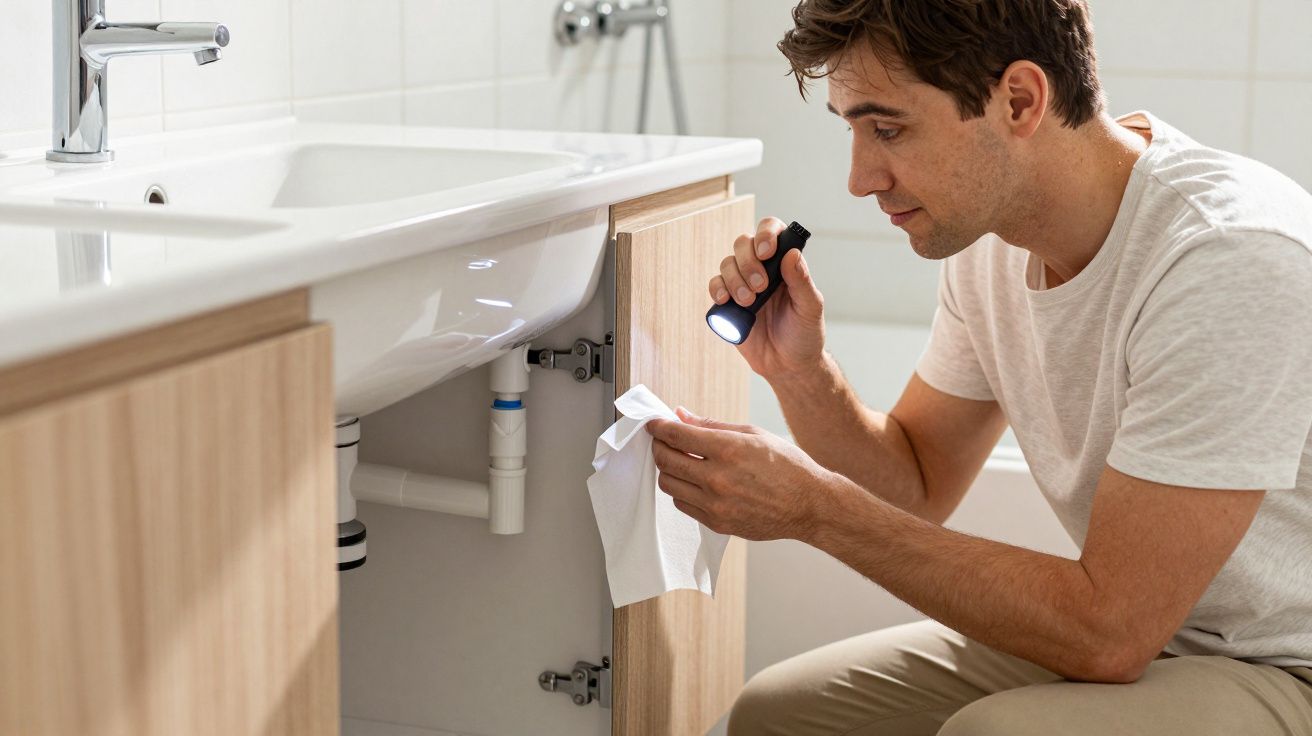
A persistent “sewage” or rotten-egg smell in a bathroom often isn’t about cleaning at all. It’s frequently a problem with trap assemblies under a basin, shower or bath, where air leakage lets sewer gases slip past the water seal and into the room. That matters because the odour is a warning sign: something in the plumbing’s meant-to-be-airtight chain has stopped doing its job.
People tend to blame drains, detergents, or damp towels first. Those can add musty notes, but sewer-gas smells have a sharper edge and often appear after non-use, windy weather, or when another fixture is discharged elsewhere in the house.
Why that smell is a plumbing signal, not a fragrance problem
Trap assemblies are designed to hold a small amount of water that blocks gases from the soil stack. When that seal is missing, disturbed, or bypassed, the bathroom becomes the easiest escape route for odours.
Air leakage can come from surprisingly small faults: a loose slip nut, a perished washer, a cracked trap, or a failed seal where the waste pipe meets the wall. The smell may come and go because pressure in the pipework changes throughout the day.
A clean bathroom that suddenly smells “drainy” is often telling you the air barrier has failed, not that the room needs more bleach.
The most common causes (and what they look like)
Start with the simplest explanations. Most smell issues trace back to one of these patterns.
1) The trap has dried out
Guest bathrooms, floor drains, and seldom-used showers are classic. Water evaporates, the seal disappears, and the room vents straight into the pipe.
Clue: the smell is strongest after the room has been unused for days, then improves after running water.
2) A leak at the trap or waste connection
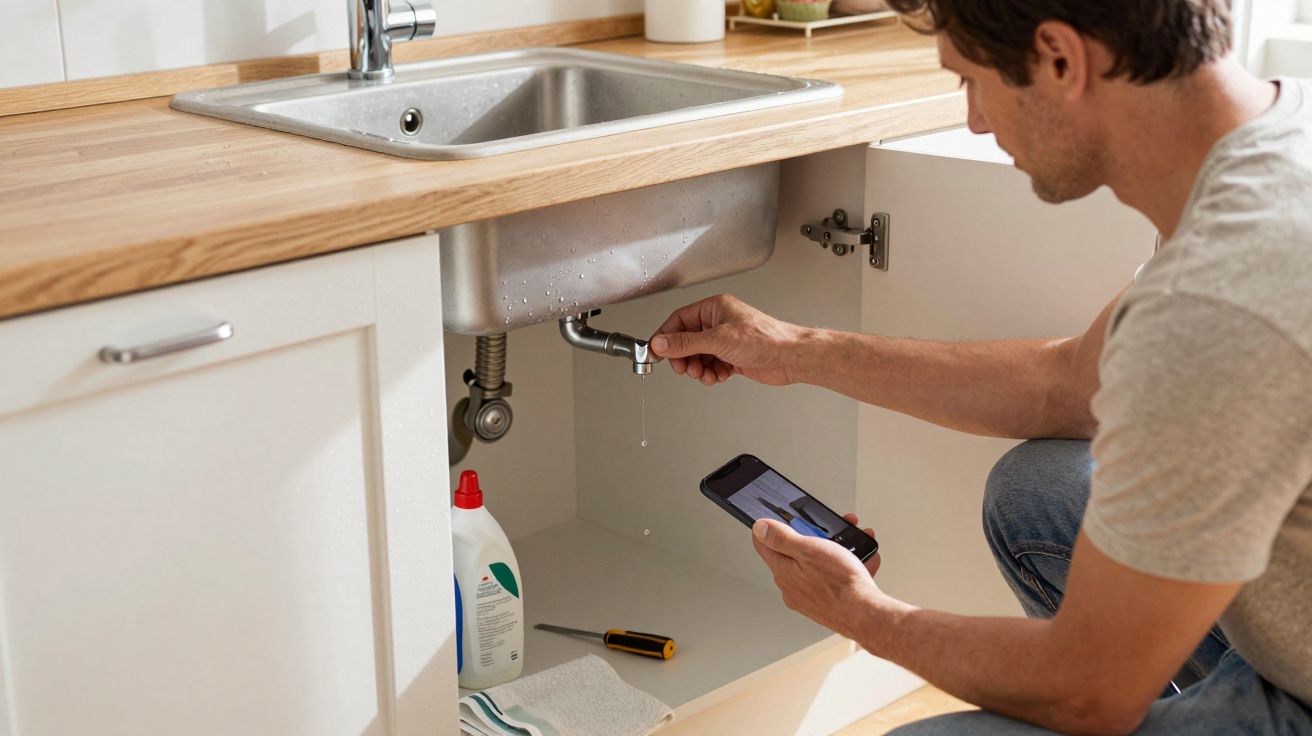
A very small leak can create big odours, especially if it’s leaking air rather than water. You might not see drips, but you’ll notice a faint damp ring, white limescale marks, or grime stuck to the joint.
Clue: smell is strongest near the vanity unit or under the basin, and worsens when the bathroom is warm.
3) Negative pressure siphoning the trap
Poor venting, blocked vents, or an internal pressure issue can pull water out of a trap when another fixture is flushed or drained. That leaves the seal too low to block gases.
Clue: you hear gurgling from the basin or shower after a toilet flush or washing machine discharge.
4) A hidden air path around the waste pipe
If the pipe passes through a wall or floor with gaps, odours can travel through voids and appear “in the room” even when the trap is fine. The smell often feels like it’s coming from behind the toilet, under the bath panel, or along skirting boards.
Clue: odour doesn’t localise neatly to one drain, and can be stronger on windy days.
A quick check routine that finds most faults
You don’t need to dismantle the bathroom to narrow it down. Work methodically and you’ll usually identify whether it’s evaporation, a seal failure, or a venting problem.
- Run water for 20–30 seconds into every fixture: basin, bath, shower (and any floor drain).
- Wait 10 minutes, then sniff-test low and close to each drain and inside the vanity unit.
- Flush the toilet while listening at the basin and shower for gurgles.
- Check beneath the basin trap with dry tissue around each joint; look for dampness or staining.
- If there’s a bath panel, remove it and sniff near the waste and overflow connections.
If the smell improves immediately after water use, a dried trap or siphoning is likely. If it’s constant and strongest in a cupboard or under a bath, suspect air leakage at a joint or a cracked component.
What to fix first (safe, low-effort steps)
Focus on restoring the gas barrier before reaching for harsh chemicals. Deodorisers mask the symptom and can delay the real repair.
Refill and stabilise the water seal
For a dry trap, the fix can be as simple as regular use. For little-used fixtures, a small routine helps:
- Run the tap or shower weekly for 20–30 seconds.
- For a floor drain, pour in a jug of water.
- In very dry homes, a teaspoon of mineral oil can slow evaporation in an infrequently used drain (don’t do this where it could affect pumps or specialised systems).
Tighten and reseal obvious joints
If you can access the trap assemblies, check that slip nuts are hand-tight and aligned. Don’t over-tighten: you can distort washers and make leaks worse.
If you see cracks, warping, or persistent staining at a joint, replace the washer or the trap. Plastic traps are inexpensive, and a fresh seal often removes the smell immediately.
Seal gaps where pipes pass through walls or floors
If odours are drifting from voids, sealing around the waste pipe can help. Use an appropriate sealant for the location (and keep it neat-this isn’t a “fill everything with foam” job).
When the smell means “call someone”
Some signs point beyond a DIY trap swap. Don’t ignore them, because the issue may be repeated siphoning, vent failure, or a partial blockage.
- Strong gurgling and repeated loss of water seal in multiple fixtures
- Smell that returns within hours of refilling traps
- Slow draining plus odour (possible build-up or partial obstruction)
- Odour strongest near boxed-in pipework you can’t access
A plumber can smoke-test or pressure-test for air leakage, check venting, and confirm whether the problem is local (one trap) or systemic (vent/stack).
Prevention that actually works
Once the smell is gone, keep the barrier intact with a few small habits:
- Use little-used fixtures briefly each week to maintain the water seal.
- Avoid aggressive “unblockers” as routine maintenance; they can damage seals and fittings.
- After any DIY work under the basin, recheck alignment so trap assemblies aren’t twisted under stress.
- If a bathroom is renovated, insist on proper venting and accessible trap connections.
The goal is simple: keep a stable water seal, and remove any air leakage paths that let the system breathe into your bathroom.



Comments (0)
No comments yet. Be the first to comment!
Leave a Comment