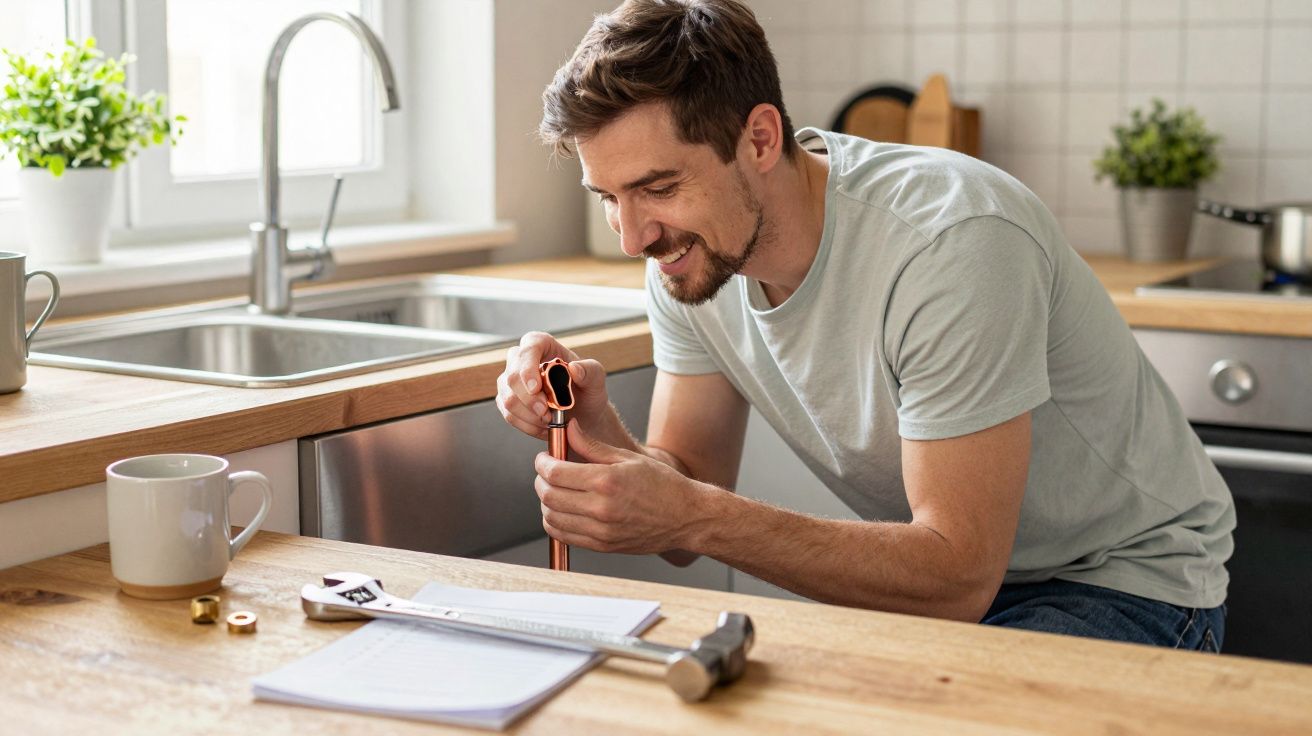
It usually arrives as water hammer noise, not as a leak. A hard, metallic thud in the wall the moment a tap snaps shut, followed by a tiny shiver through the house that feels like it shouldn’t be possible. Sound engineers and plumbers both clock it quickly because it often points to pipe stress: a pressure spike doing invisible work on joints, brackets, and valves long before anything drips.
Most people notice it at night. The heating has settled, the street is quiet, and then someone runs a bath upstairs and the pipework answers like it’s being tapped with a spanner. You don’t need tools to start diagnosing it; you need ears, timing, and a bit of honesty about how your home actually gets used.
The noise that tells you more than the stain ever will
Water hammer is a pressure surge. Water is moving, a valve closes fast, and the momentum has to go somewhere, so it pushes back into the system. That “somewhere” is the pipe walls, the fittings, and the nearest change in direction.
The sound is the headline, but the story is mechanical. Repeated pipe stress can loosen clips, fatigue soldered joints, rattle washing-machine hoses, and exaggerate any weak point that was already marginal. It’s why experienced trades will ask about the sound before they even ask where your stopcock is.
What it usually sounds like (and what it usually isn’t)
People describe it in a few consistent ways:
- A single loud bang when a tap is shut quickly
- A machine-gun rattle for one or two seconds after a toilet fills
- A thump that seems to travel-kitchen to airing cupboard to upstairs bathroom
- A “drum” sound when the washing machine valve snaps on and off
It’s rarely the boiler “about to go”. It’s rarely “air in the system” in the vague, catch-all sense people mean. It’s more often speed, pressure, and unsupported pipework combining into a sound you can’t ignore.
Where the bang starts: the two-minute listening test
Before you touch anything, do what the pros do: isolate the trigger. Pick a quiet moment and run a deliberate set of checks.
- Close taps slowly, then quickly. If the bang only happens on a fast close, you’re looking at valve shut-off speed and pressure spikes.
- Flush toilets and listen at the end of the fill. A thud as the cistern stops refilling often points to the fill valve or high incoming pressure.
- Run the washing machine/dishwasher and wait for the valve “click”. Solenoid valves close fast by design; they’re common culprits.
- Stand near visible pipe runs (under the sink, in an airing cupboard) and listen for a secondary rattle, not just the main bang.
Write down which fixture triggers it and when. That small map saves time and prevents the classic mistake: “fixing” the wrong section because it’s the loudest.
The loudest point isn’t always the source. Sound travels along copper and plastic like a message down a line.
Why it matters: pipe stress is a slow bill, not an instant fine
A one-off bang is annoying. A bang that happens ten times a day becomes wear. With repeated pressure shock, clips loosen, pipes start to move, and movement makes more movement. The system becomes noisier over time, and the stress concentrates at elbows, tees, and valves-exactly where you least want it.
It can also show up as knock-on problems that feel unrelated: a tap that starts to weep at the base, a toilet fill valve that needs replacing sooner than it should, a washing machine hose that bulges. None of these scream “water hammer” on their own, which is how the sound gets dismissed until a ceiling stain forces the conversation.
The common causes (and the fixes that match them)
1) High mains pressure
If your incoming water pressure is high, every fast closure hits harder. In many UK homes, the pressure can be perfectly “legal” and still unfriendly to older pipework or modern quick-closing valves.
- Clue: bangs across multiple fixtures, not just one.
- Typical fix: a pressure reducing valve (PRV) fitted on the incoming main, set appropriately.
2) Loose or poorly supported pipes
Pipes need to be clipped so they can’t accelerate and smack timber, plasterboard, or each other.
- Clue: you can hear a rattle after the initial thud; noise seems worse where pipes pass through joists.
- Typical fix: add/replace pipe clips, use cushioning where appropriate, and secure long runs-especially near elbows.
3) Fast-closing valves (toilets, appliances, mixer taps)
Solenoid valves and some modern cartridges shut quickly. That speed is efficient, but it can provoke hammer in a system that lacks damping.
- Clue: the bang is tightly tied to one appliance or one toilet.
- Typical fix: service/replace the valve, or add a hammer arrestor close to the appliance.
4) Trapped air or missing air cushions
Older systems sometimes relied on small air pockets to absorb shock. Over time, those pockets disappear as air dissolves into water.
- Clue: the system used to be quieter; the problem crept in without any renovation.
- Typical fix: reintroduce proper damping (arrester/expansion vessel), rather than hoping “bleeding” will magically cure it.
What to do first (in order), before you start buying parts
The temptation is to throw a hammer arrestor at the nearest noisy tap and call it a day. Sometimes that works. Often, it masks a pressure problem and the pipe stress simply relocates.
A better sequence is boring-but it’s how you avoid repeat visits:
- Confirm the trigger fixture(s) with the listening test above.
- Check for obvious movement on accessible pipework while someone else operates the tap (carefully, no fingers near moving valves).
- If the issue is widespread, think pressure first. A PRV can calm the entire house.
- If it’s localised, think valve speed and local damping. An arrester close to the culprit is usually more effective than one metres away.
If you’re in a flat or a converted house with shared risers, note whether the bang happens when neighbours run water. That’s a different conversation, and sometimes a building-wide one.
When it’s time to call someone (and what to tell them)
You don’t need to diagnose the whole system. You just need to give clean information.
Tell a plumber or maintenance engineer:
- which fixtures trigger the bang
- whether it’s a single thud or a rattle
- whether it’s worse at certain times (morning peak, after heating cycles, during appliance use)
- where you’ve heard the loudest section of pipework
That’s enough for them to decide whether to start at pressure, supports, or valves. It also stops the first visit turning into an expensive game of “let’s see if this part works”.
| What you notice | Likely driver | First sensible move |
|---|---|---|
| Bang across several fixtures | High pressure / no damping | Ask about measuring pressure + fitting PRV |
| Bang tied to one toilet/appliance | Fast-closing valve | Service valve or fit local arrestor |
| Rattle in cupboards/joists | Loose pipework | Improve clipping/support and cushioning |
The quiet goal: make the system boring again
A good plumbing system isn’t silent because it’s delicate; it’s silent because forces are controlled. Water hammer noise is the system admitting it’s taking hits it can’t comfortably absorb. If you treat the sound as early information, you usually spend less, replace fewer parts, and avoid the kind of pipe stress that only becomes obvious when water finally finds a way out.
FAQ:
- Is water hammer noise dangerous or just annoying? It’s often a warning sign rather than an emergency, but repeated banging can increase pipe stress and shorten the life of valves and joints. If it’s frequent or worsening, it’s worth addressing.
- Will turning the stopcock down fix it? Sometimes reducing flow helps, but it’s an imprecise workaround and can create other issues. A properly set pressure reducing valve is a more reliable solution when mains pressure is the driver.
- Do hammer arrestors always work? They work best when installed close to a fast-closing valve and when the underlying pressure/support issues are understood. One arrester placed “somewhere near the boiler” often disappoints.
- Why is it worse with a washing machine? Appliances use solenoid valves that shut very quickly, which creates sharper pressure spikes. That speed makes existing weaknesses in support or damping much more audible.
- Can I ignore it if there’s no leak? You can, but the cost tends to arrive later as loosened fittings, failed valves, or intermittent weeps. Treating the noise early is usually cheaper than repairing the aftermath.



Comments (0)
No comments yet. Be the first to comment!
Leave a Comment