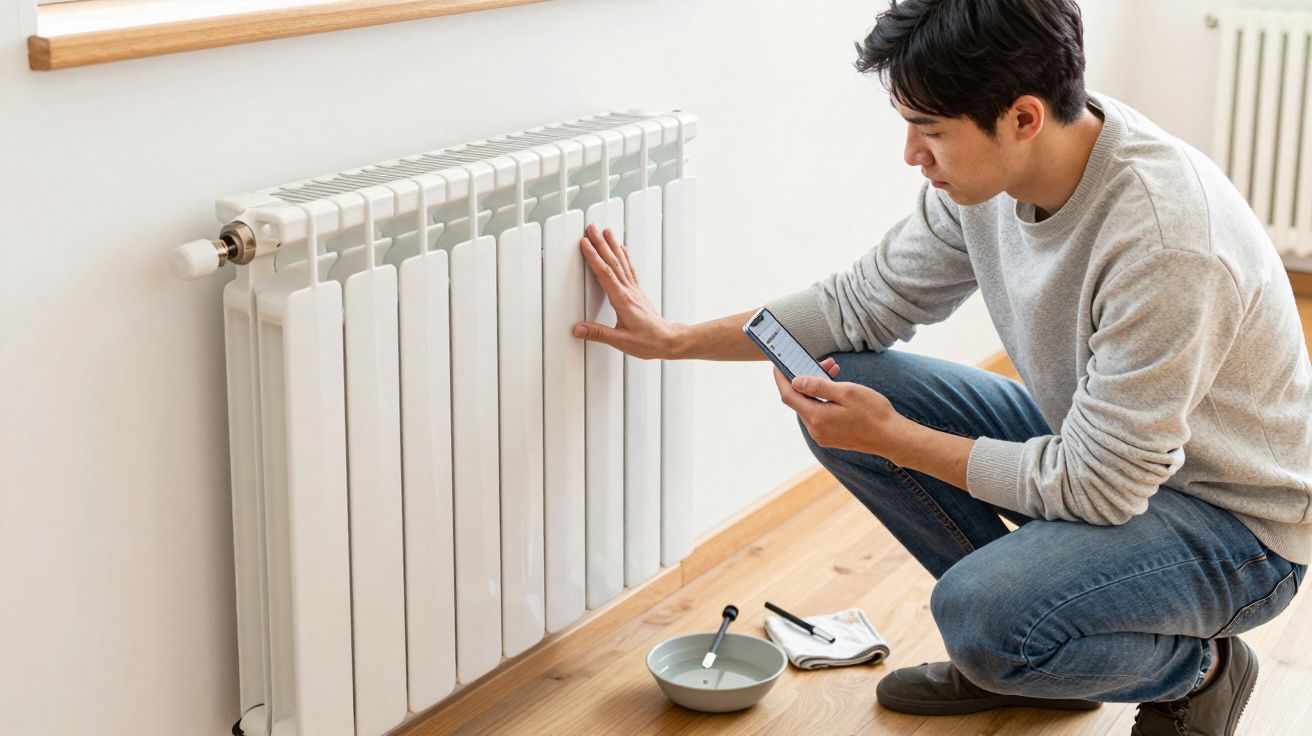
The boiler can be firing, the radiators can be “on”, and the house can still feel oddly reluctant to warm up. That’s where power flushing comes in: a high‑flow clean of your central heating system to shift built‑up sludge and debris, often restoring circulation and heat transfer. The trick is spotting the performance indicators early, before you’re paying for heat you’re not really getting.
It usually starts as a small annoyance you explain away-one radiator that’s always a bit cooler, a faint kettle-like noise you ignore, a room that takes longer every week. Then winter arrives, you turn the thermostat up, and the system answers with effort rather than warmth.
The quiet warning signs people miss
Most heating systems don’t fail with a bang; they fail with drag. Sludge (often magnetite), scale, and corrosion by-products build up in radiators and pipework, narrowing pathways and insulating surfaces that should be transferring heat. You don’t notice the first ten percent loss because you compensate without thinking-another notch on the dial, another hour on the timer.
Common “soft” signs include:
- Radiators taking longer than they used to to get hot, especially at the far end of the house.
- Cold spots on radiators (often bottom sections staying cool while the top warms).
- Needing to bleed radiators more often than normal.
- A boiler that seems to run longer to reach the same comfort level.
What you feel is what the system is failing to move. Not heat production-heat delivery.
The performance indicators that point to sludge
If you want something firmer than vibes, look for patterns that repeat. The system’s symptoms tend to cluster, and when they do, it’s rarely “just one dodgy radiator”.
Watch for these performance indicators:
- Uneven radiator temperatures across the home. Near radiators roasting, upstairs or extensions lagging.
- Noisy boiler or pipework. Knocking, gurgling, or a low rumble as flow becomes turbulent or restricted.
- Frequent pressure drops. Not always sludge, but if topping up is becoming routine, something is off.
- Hot water OK, heating poor. Combi boilers can mask circulation issues because hot water performance stays decent.
- Pump strain. A pump that’s noisy, hot, or failing early can be pushing against resistance.
If you keep turning up the thermostat and the comfort doesn’t follow, don’t assume the boiler is “weak”. Often the boiler is fine; the system is clogged.
What it looks like in a normal house
In a 1930s semi, it’s often the back bedroom radiator that never quite catches up, even after balancing. In a newer build with microbore pipework, it can be a whole zone that warms but never properly fills out with heat. In a flat, it shows up as constant cycling-heat comes fast, then drops, then the boiler fires again like it’s chasing its own tail.
Let’s be honest: most of us only investigate after we’ve bought thicker socks. By then, you’ve already paid for weeks of inefficient running.
When flushing is a good idea-and when it isn’t
Power flushing isn’t a default ritual; it’s a tool. Used at the right time, it can improve flow, reduce cold spots, and cut noise. Used blindly, it’s just an invoice.
It’s usually worth discussing if:
- You have persistent cold spots or multiple slow radiators.
- The system is noisy despite bleeding and basic checks.
- You’ve had repeated component issues (pumps, valves) that suggest debris.
- You’re fitting a new boiler onto an old system and want a clean circuit.
It’s not automatically the answer if:
- One radiator is cold due to a stuck TRV or poor balancing.
- Pressure issues point to a leak.
- The boiler is short-cycling because of controls or sensor faults.
A decent engineer will diagnose first, then recommend-rather than selling a flush as a cure-all.
A quick “before you book” checklist
Do the small, boring steps first. They often reveal whether you’re dealing with sludge or something simpler.
- Bleed radiators and check pressure (then monitor it for a week).
- Feel radiators top-to-bottom: note which ones have cold lower sections.
- Check TRVs and lockshield valves aren’t stuck or fully closed.
- Ask when the system last had inhibitor added (or whether it ever did).
- If you can, ask for a magnetic filter check-what’s in it tells a story.
If multiple radiators show bottom-cold patterns and the filter is catching a lot of black debris, you’ve got a strong case for cleaning the system properly.
Aftercare: how to stop the problem coming back
A flush clears out what’s there; it doesn’t prevent new corrosion by itself. The “after” is where the value is protected.
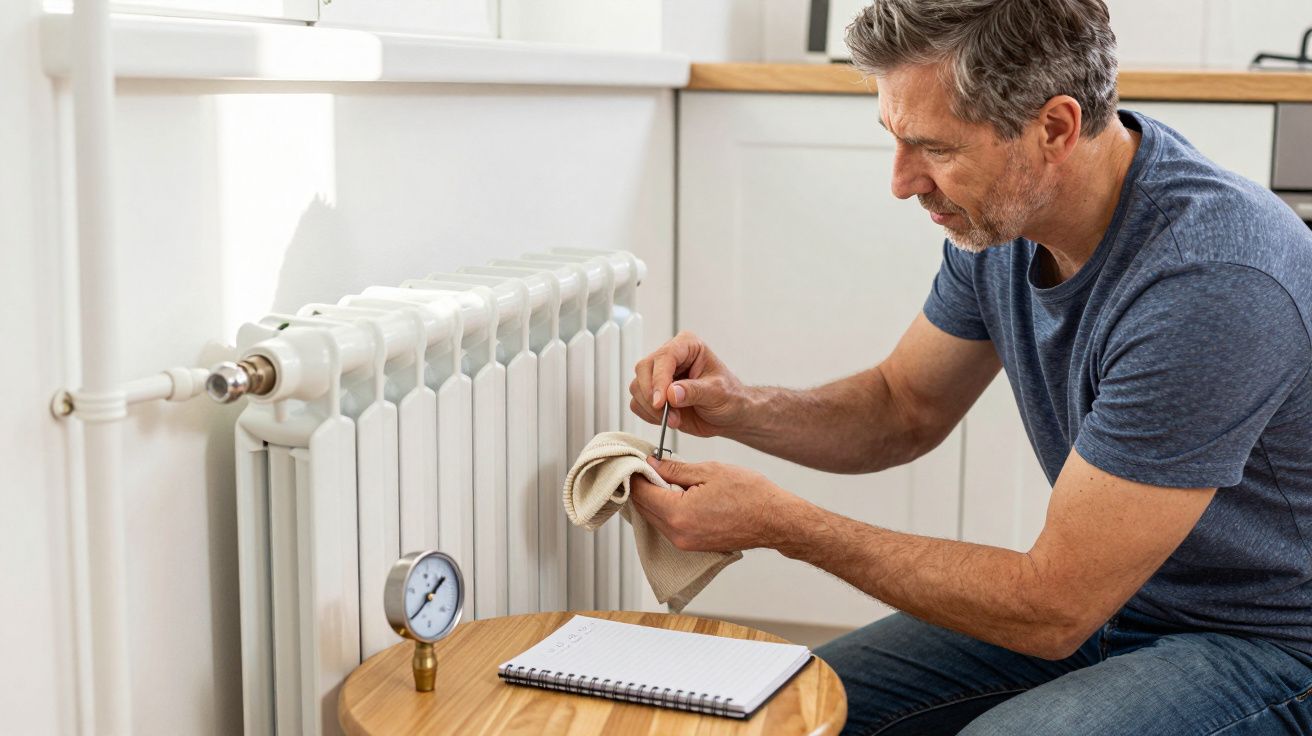
- Add the correct inhibitor and record the date.
- Consider fitting (or servicing) a magnetic filter.
- If you’re topping up pressure often, fix the underlying cause-fresh water introduces oxygen, which accelerates corrosion.
- Have the system checked at service time for signs of recurring debris.
The goal isn’t a perfect system. It’s a system that stays predictable.
| Sign | What it suggests | What to do next |
|---|---|---|
| Cold spots (especially at the bottom) | Sludge collecting in radiator | Diagnosis; consider power flush |
| Noisy boiler/pipes | Restricted flow or debris | Check bleed/balance; inspect filter |
| House heats unevenly | Circulation issues across system | Assess radiators, pump, and pipework |
FAQ:
- Will power flushing definitely make my heating hotter? It often improves heat delivery if sludge is restricting flow or insulating radiators, but it won’t fix issues like incorrect boiler sizing, faulty controls, or hidden leaks.
- How do I know it’s sludge and not balancing? Balancing issues tend to be consistent and solvable by adjustment; sludge often shows as cold bottoms, repeated bleeding, dirty filter debris, and worsening performance over time.
- Is it risky on older systems? It can be if the system is already compromised. A competent engineer should assess condition, discuss risks, and use appropriate chemicals and pressures for the pipework and radiators.
- Do I need a flush when fitting a new boiler? It’s commonly recommended when connecting a new boiler to an older circuit, because debris can damage the new heat exchanger. At minimum, the system should be properly cleaned and inhibited.
- What maintenance prevents sludge after flushing? Correct inhibitor levels, a magnetic filter, and fixing frequent pressure top-ups are the big three.



Comments (0)
No comments yet. Be the first to comment!
Leave a Comment