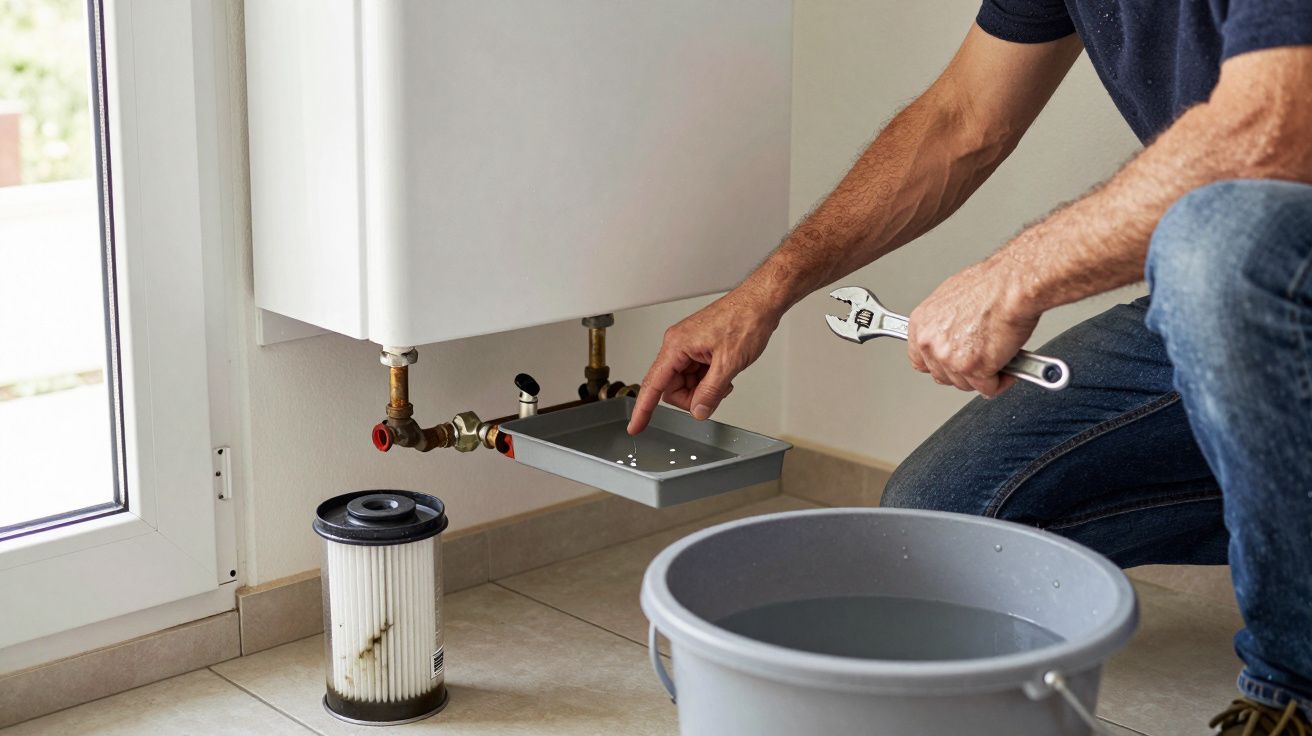
Power flushing is often sold as the hard reset for a tired central heating system: push water at high velocity through radiators and pipework to lift sludge and restore flow. But if your system has weak components-an ageing pump, a sticky zone valve, thin-walled radiators, tired seals-that same force can turn a “clean” into a cascade of leaks and failures. That’s why it matters to understand what flushing can’t fix, and when it can actively expose problems you didn’t know you had.
You can think of it like pulling a loose thread. Sometimes you tidy the jumper. Sometimes you unravel what was holding it together.
What power flushing actually does (and what it doesn’t)
A power flush uses a specialist pump to circulate water and cleaning chemicals through the heating circuit at a faster rate than the boiler’s own pump. The goal is to dislodge magnetite (black sludge), limescale, and debris that restricts radiators and strains components.
It doesn’t replace worn parts, re-line corroded pipes, or magically restore metal that’s already thinned. It also doesn’t guarantee every dead-leg, microbore run, or partially blocked section will be cleared-flow follows the easiest path, and stubborn restrictions can remain.
The hidden reason flushing can make things worse
Heating systems often “stabilise” in a messy way. Sludge settles into low-flow spots, and scale forms where water chemistry encourages it. Over time, those deposits can act like an unwanted sealant-masking pinhole leaks, slowing weeps at valve glands, or blocking a corrosion hole that would otherwise show itself.
Power flushing disturbs that truce. High-velocity flow and chemicals can:
- Lift debris that was plugging a weak radiator panel or a corroded elbow.
- Strip soft deposits from around valve spindles and pump seals.
- Move loosened sludge downstream, where it can lodge in narrow passages.
So the system may end up cleaner, but less “forgiving”. If weak components were already near failure, flushing can be the moment they finally fail.
Where problems usually show up first
Radiators with thin spots
Older steel panel radiators can corrode from the inside, especially in systems that have run without inhibitor. Sludge often accumulates at the bottom, and if metal has thinned there, removing the sludge can reveal pinholes or seams that start to weep.
A classic pattern is a radiator that “worked fine yesterday”, then seeps along the bottom edge after a flush. The flush didn’t create the corrosion; it removed what was temporarily disguising it.
Valves, seals and pump bearings
Zone valves, TRVs, and older pump seals can be sensitive to disturbed debris. Once sludge starts moving, it can score seals, jam valve mechanisms, or clog strainers. The symptoms look like random new faults-sticking valves, noisy pumps, intermittent circulation-when it’s really contamination that has shifted location.
Plate heat exchangers and modern boilers
Combi boilers and system boilers with tight waterways don’t tolerate dirt well. If you flush without proper isolation and filtration, loosened sludge can end up in a plate heat exchanger, causing hot water temperature swings, kettling, or reduced flow.
This is why competent engineers treat the boiler as something to protect during cleaning, not something to punish.
“It improved one radiator… then another went cold”
That’s a common story because the debris doesn’t vanish; it relocates until it’s captured and removed. Power flushing works best when it’s done methodically: one radiator at a time, frequent dumping of dirty water, and magnet filtration working continuously.
If it’s rushed, sludge can break free in sheets and re-settle in the next restriction. You get a brief win in the lounge and a new problem in the back bedroom.
When a flush is the right move
Power flushing can be the right call when there’s clear evidence of system contamination and the pipework and emitters are fundamentally sound. Good reasons include:
- Multiple radiators cold at the bottom with poor circulation.
- Repeated pump failures due to sludge contamination.
- Boiler fault codes linked to flow issues (after other basics are checked).
- Major system work (new boiler, cylinder, or multiple radiator changes) where cleaning protects the new kit.
The key is matching the intervention to the condition of the system, not to a sales script.
How to reduce the risk of flushing-triggered failures
Do a pre-check like you mean it
A quick glance isn’t enough. A decent approach includes checking expansion vessel pressure, looking for existing weeps, bleeding air properly, and assessing radiator age/condition. If a radiator is already showing rusting at seams or bulging, it’s telling you something.
Treat weak components as part of the job, not an “extra”
If the system has known weak points-old valves that don’t shut off, a pump that’s noisy, radiators from the 1980s-budget for replacements alongside cleaning. It’s often cheaper than paying for emergency call-outs after a flush.
Finish with protection, not just “clean water”
A flush without inhibitor is a reset button you forgot to press properly. Once clean, the metal is exposed, and corrosion can accelerate if water chemistry isn’t controlled.
A practical finish usually includes:
- Adding a quality inhibitor at the correct dose.
- Installing or servicing a magnetic filter.
- Checking system pressure and bleeding thoroughly.
- Verifying radiator balance so flow doesn’t stagnate in corners.
A quick guide: clean vs. fragile
| What you see | What it can mean | Sensible next step |
|---|---|---|
| One cold radiator, others fine | Local blockage or balance issue | Balance/check valve first; flush may be excessive |
| Several rads cold at bottom | Widespread sludge | Consider power flush with boiler protection and filter |
| Frequent small weeps, rusty seams | Weak components + corrosion | Replace suspect parts before/with any aggressive clean |
What to ask before you agree to it
A power flush is a tool. In the right hands it’s precise; in the wrong hands it’s a battering ram. Before you book it, ask:
- Will you isolate/protect the boiler and sensitive components?
- Will you flush radiators individually and dump water repeatedly?
- What chemical will you use, and how will you neutralise/rinse it?
- What happens if weak components start leaking-what’s the plan and cost?
- Will you add inhibitor and check system performance afterwards?
If the answers are vague, the risk goes up.
FAQ:
- Is power flushing supposed to cause leaks? No, but it can reveal leaks that were already there and temporarily “sealed” by sludge or scale, especially in weak components.
- Should I power flush every time I replace a boiler? Not automatically. Many systems need a thorough clean, but the method should match pipework condition; sometimes a gentler chemical flush plus filtration is safer.
- What’s a safer alternative if my system is old? Targeted chemical cleaning, replacing suspect radiators/valves, fitting a magnetic filter, and running the system with inhibitor while monitoring can reduce shock to fragile parts.





Comments (0)
No comments yet. Be the first to comment!
Leave a Comment