Most people blame draughts, bad insulation or “that radiator” when one room feels cosy and the next feels bleak. But heating balancing and zoned control are usually the hidden drivers, because they decide where heat goes, how fast it gets there, and who wins the tug-of-war when multiple rooms demand warmth at once.
You can have a modern boiler, a smart thermostat and decent windows and still live with a cold spare room and an overheated lounge. The system might be producing enough heat overall; it’s just distributing it unevenly.
The comfort gap isn’t always the boiler - it’s the flow
Central heating is a circulation problem as much as it’s a heat problem. Hot water takes the path of least resistance, and the radiators closest to the pump or easiest routes often get “fed” first. The rest of the house queues up behind them.
That’s why the same thermostat setting can feel fine downstairs, yet never quite reach the back bedroom. The boiler cycles, the hallway is happy, and the cold room stays stubborn because it’s not getting enough hot water for long enough.
A system can be powerful and still feel patchy if the flow is unbalanced.
What heating balancing actually fixes
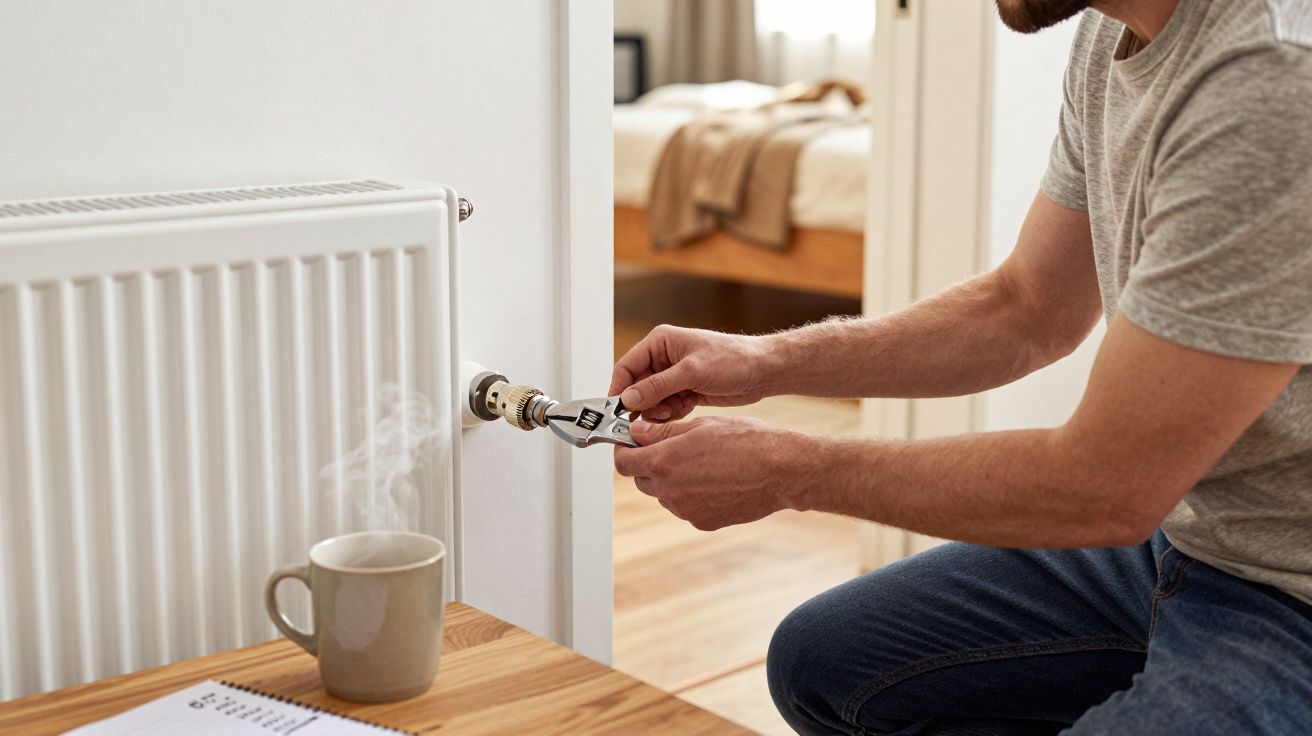
Heating balancing is the practical process of adjusting radiator valves (usually the lockshield valves) so each radiator receives an appropriate share of flow. In plain terms: it stops the easy radiators hogging the heat and gives slower rooms a fair chance.
Done well, balancing does a few things at once:
- Reduces the “first radiator is roasting” effect
- Helps farthest or upstairs rooms warm up in a reasonable time
- Cuts short-cycling, because the system can shed heat more evenly
- Makes thermostat readings more meaningful (less lying-by-location)
The tell-tale sign is timing. If one radiator gets hot within minutes while others take ages to warm at the bottom, you’re not looking at a mystical cold spot; you’re looking at hydraulics.
A quick way to spot imbalance in real life
Pick a cold day and run the heating from fully off. Walk the house and feel the radiators as they start up.
- If a couple go hot quickly while others stay stone cold for 20–30 minutes, the system is likely over-feeding the early ones.
- If some radiators are hot at the top but cool at the bottom, that can be balancing or sludge/air (different fix).
- If the “problem” room is always last to warm, it’s often the one losing the flow contest.
This isn’t about perfection; it’s about narrowing the extremes so comfort doesn’t vary wildly room to room.
Where zoned control helps - and where it can make things worse
Zoned control splits your home into separate areas (zones) that can call for heat independently. That might be two thermostats (upstairs/downstairs), motorised valves, or smart radiator controls acting as room-by-room zones.
When it’s set up properly, zoning does something balancing can’t: it stops unused areas from dragging the whole system on. The guest room doesn’t need to dictate the schedule of the kitchen.
But zoned control can accidentally amplify comfort differences if the system isn’t balanced first. If one zone has a low-resistance path (large radiators, short pipe runs) and another zone is “hard to feed”, the easy zone hits temperature quickly and shuts off, while the difficult zone keeps struggling and calling for heat.
The result feels like this: constant fiddling, uneven warmth, and a boiler that seems busy without the house feeling settled.
The real reason one room feels “never warm enough”
Most room-to-room discomfort comes from a mix of three forces:
- Heat loss differences: an outside wall, a bay window, a chilly loft above.
- Heat emitter differences: radiator size, position, and whether it’s partially blocked by furniture.
- Flow and control differences: how much hot water arrives, and whether the system lets it stay long enough.
People often fix only the first one (draft-proofing) and wonder why the problem lingers. If the room is losing heat and it’s last in the flow queue, it will always feel like it’s “behind” the rest of the house.
A balanced system with sensible zoning doesn’t magically change physics, but it stops you fighting your own plumbing.
What you can do this week (without turning it into a hobby)
You don’t need to become a heating engineer to make meaningful progress. The goal is to get more consistent warm-up times and fewer extremes.
- Check air first: bleed radiators if they’re cold at the top. Air can mimic imbalance.
- Make sure radiator valves are actually open: especially lockshields that may have been knocked.
- Stop blocking heat: long curtains over radiators and sofas pushed tight can steal comfort even when the radiator is hot.
- If you have zoned control, review the schedules: zones that call for heat at the same time can compete if the system struggles with flow.
If you’re planning professional help, ask for balancing as a named task, not a vague “service”. Plenty of callouts focus on the boiler and ignore distribution, which is where comfort lives.
A simple “good vs not good” guide
| Symptom | Likely cause | Best first move |
|---|---|---|
| One radiator scorching, others lagging | Imbalance | Heating balancing |
| Radiator cold at top, warm at bottom | Air | Bleed radiator |
| Room warms, then quickly cools again | Control/schedule or undersized radiator | Review zoned control, then check radiator output |
When balancing and zoning finally click
The nicest outcome isn’t “hotter”. It’s steadier. You stop chasing the thermostat, doors can be left open without wrecking the plan, and the house feels more predictable.
A well-balanced system makes every zone easier to control. And well-designed zoned control means you heat the rooms you live in, not the corridors that happen to hold the thermostat.
FAQ:
- Is heating balancing the same as bleeding radiators? No. Bleeding removes trapped air; heating balancing adjusts flow so radiators warm at similar rates.
- Can zoned control replace balancing? Not really. Zoning decides when areas call for heat; balancing decides whether the heat gets shared fairly when it does.
- Do smart TRVs fix uneven rooms automatically? They can help, but they can’t overcome a system that’s hydraulically biased. You’ll get better results if the underlying flow is balanced first.
- How do I know if I need a bigger radiator instead? If the radiator gets properly hot but the room still won’t reach temperature, that points to heat loss or insufficient radiator output rather than flow.




Comments (0)
No comments yet. Be the first to comment!
Leave a Comment