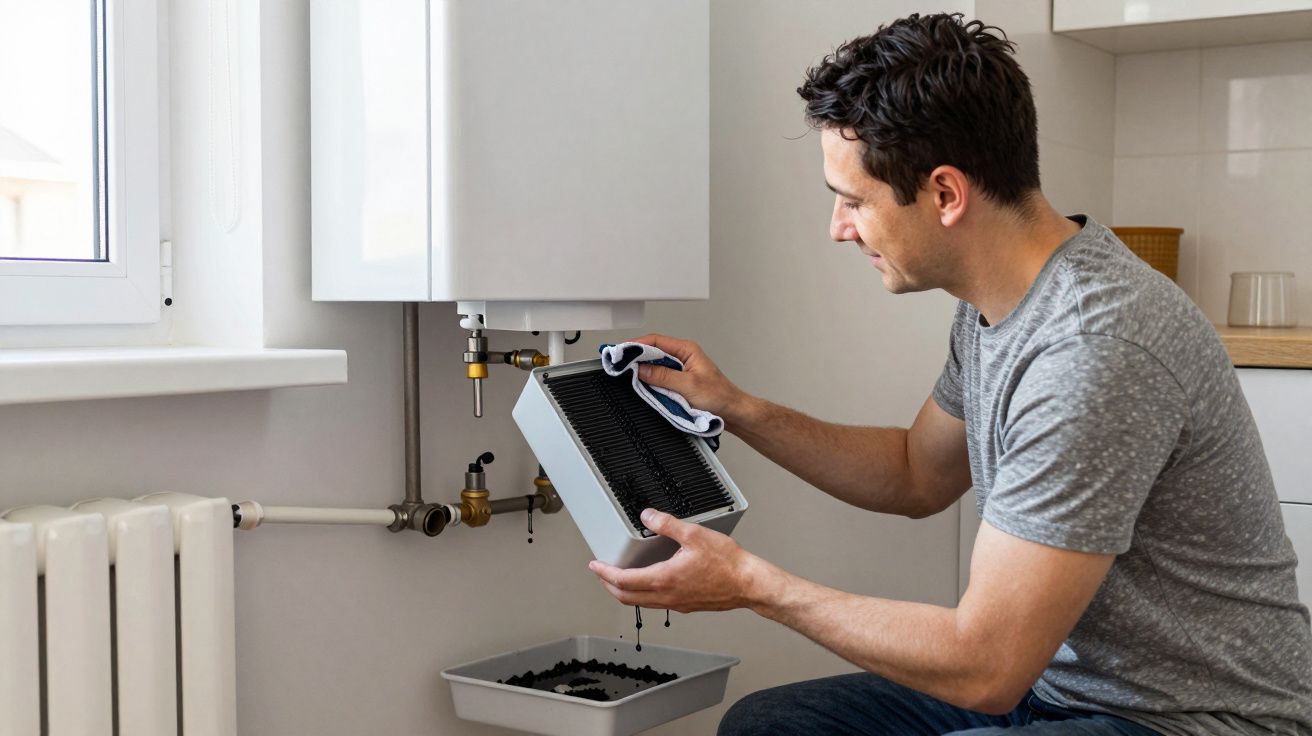
That familiar winter routine goes like this: the house feels chilly, the heating clicks on, then off again, then on again - and you’re left wondering why the radiators never quite settle. Boiler short cycling is when a boiler fires for a short burst, shuts down, and repeats, and it often shows up just when you need steady heat most. It’s tempting to blame the cold outside, but system water quality can be the quiet trigger that turns winter demand into stop–start chaos.
You feel it in the noise first: the abrupt whoosh of ignition, the pump surge, the quick cut-out. You see it in the numbers later: higher gas use, more wear on parts, and rooms that swing between “almost warm” and “why is it cold again?”
The winter myth: “It’s just working harder”
In winter, your home asks for longer, steadier heat. More radiators are open, pipework is colder, and the boiler has to lift the system temperature from a lower starting point. So when short cycling happens in December, it feels logical to assume the boiler is simply struggling.
The twist is that many boilers short-cycle because they’re succeeding too quickly - at least according to their sensors. The appliance reaches its target flow temperature fast, shuts down to protect itself, cools slightly, then fires again. You get lots of starts, not much sustained output.
What short cycling usually is: a control problem, not a “power” problem
Most modern boilers don’t decide based on how cold your living room feels. They react to flow temperature, return temperature, and sometimes the rate those temperatures change. When heat can’t leave the boiler smoothly, the unit overheats locally and hits its cut-off.
That “can’t leave smoothly” bit is where winter exposes weaknesses. The system is under maximum use, so restrictions and imbalance that were invisible in autumn suddenly matter.
Common outcomes look different, but they rhyme:
- Radiators near the boiler get hot quickly, far ones lag.
- The boiler display hits target temperature within a minute or two.
- You hear frequent ignition cycles, especially when several radiator valves are partially closed.
- Hot water might be fine while heating is erratic (or the other way round).
The real reason it spikes in winter: heat transfer gets worse
Short cycling loves anything that reduces heat transfer from the boiler into the system water - and then from that water into your radiators. Winter magnifies those limits because the boiler spends more time operating near its upper output, and any bottleneck triggers temperature spikes faster.
Two culprits often overlap:
- Low effective flow through the heat exchanger (not always “low pressure”, but low circulation where it counts).
- Poor system water quality - sludge, magnetite, limescale, and debris that insulate surfaces and choke narrow passages.
When heat can’t move away from the flame/element efficiently, the boiler’s sensor sees temperature climbing too quickly and shuts the burner down. It’s a safety brain doing its job, but it creates that maddening on–off rhythm.
A quick story: why it “only happens when it’s freezing”
A lot of households notice it right after they crank the thermostat up or after a cold snap. That’s when more TRVs open at once, the boiler ramps up, and the whole system tries to shift a bigger temperature difference.
If the radiators are partially sludged, or the heat exchanger has scale, the boiler can hit its flow setpoint in a flash. So it cuts out, waits, then tries again - like a kettle that keeps switching off because the element is furred up and the heat concentrates in the wrong place.
You don’t necessarily see the dirt. You feel the symptoms.
How water quality causes short cycling (without looking dramatic)
Dirty or chemically imbalanced water changes the system in small, compounding ways. It’s not just “black water = bad” (though that’s a clue). It’s the way deposits behave in modern, tight-tolerance components.
- Magnetite sludge settles in radiators and low points, reducing radiator output and narrowing flow paths.
- Limescale forms on hot surfaces (heat exchangers) and acts like insulation, so the metal gets hotter for the same heat delivered.
- Debris can foul pump impellers, stick diverter valves, and partially block plate heat exchangers in combis.
- Incorrect inhibitor levels allow corrosion to continue, steadily producing more sludge.
In winter, that reduced transfer means the boiler reaches its cut-off temperature quickly, even though the house still needs heat. The appliance reacts to its own internal conditions, not your comfort.
The fast checks that tell you which direction to look
You don’t need to strip the boiler to get useful clues. A few observations can point towards water, flow, or controls.
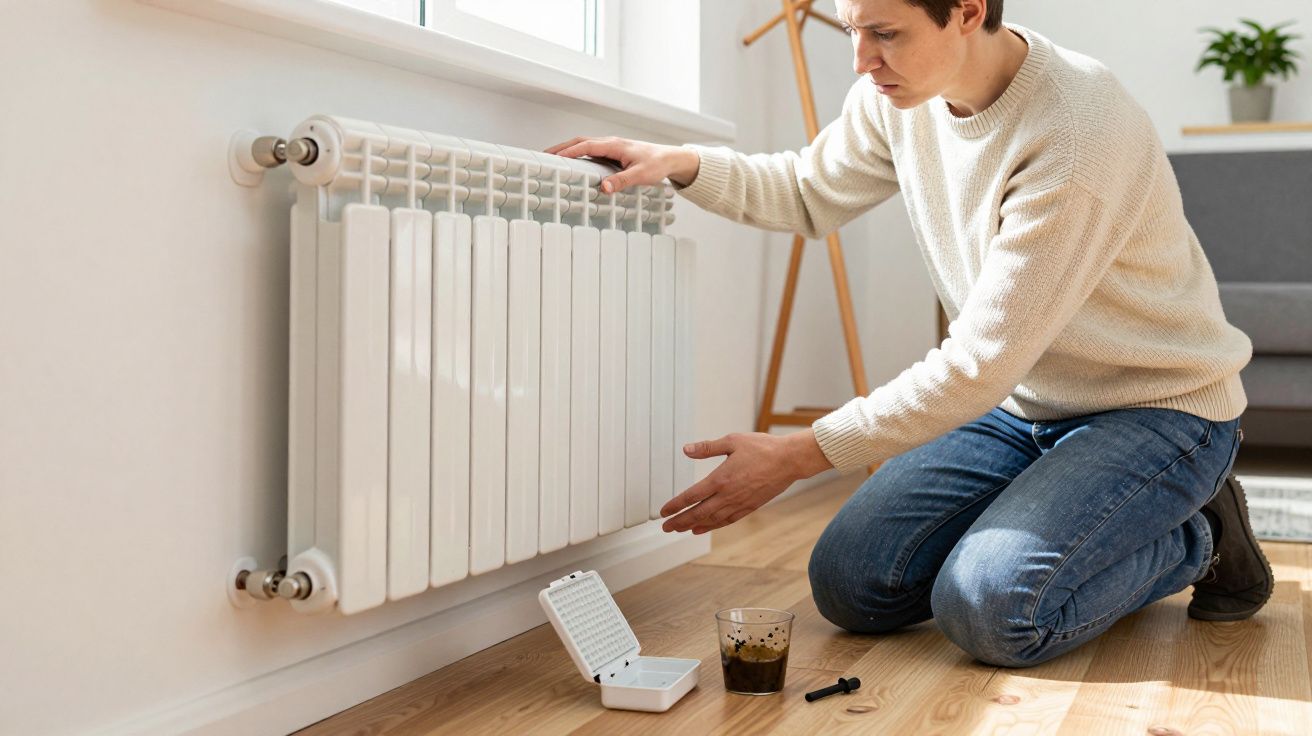
- Are some radiators cold at the bottom but warm at the top? That’s often sludge.
- Do radiators need frequent bleeding but still underperform? That can indicate corrosion and oxygen ingress.
- Is the boiler cycling even when the thermostat is calling for heat and several radiators are open? That hints at flow restriction or heat exchanger issues.
- Do you hear kettling (a rumbling/boiling sound) when the heating runs? Scale and overheating are suspects.
If you have a condensing boiler, also notice return temperatures: a system that can’t move heat effectively often runs hotter than necessary, which hurts efficiency and increases cycling.
How to soften the cycling without “turning everything down”
There’s a temptation to mask the symptom: lower the boiler flow temperature, close radiators, fiddle with schedules. Those can help in the short term, but they can also create new problems (like underheating and condensation issues in the home).
A more stable approach is to widen the system’s ability to absorb heat.
- Open up heat emitters: make sure enough radiators are fully open to provide a steady load.
- Check balancing: if the nearest radiators steal most of the flow, the boiler can satisfy itself quickly while the rest of the house stays cool.
- Confirm pump performance: a tired or incorrectly set pump can mimic blockage.
- Look at controls: weather compensation and load compensation can reduce cycling by modulating more gently.
Then address the thing winter reveals: the water.
The goal isn’t to make the boiler “work less”. It’s to give its heat somewhere to go, smoothly, for long stretches.
The water-quality fix (and what “good” actually means)
Improving system water quality usually means removing what shouldn’t be there and protecting against it coming back. Done properly, it’s less about one dramatic intervention and more about restoring predictable circulation and heat transfer.
Typical steps (a competent heating engineer will tailor these):
- Test the system water (inhibitor level, pH, conductivity, magnetite presence).
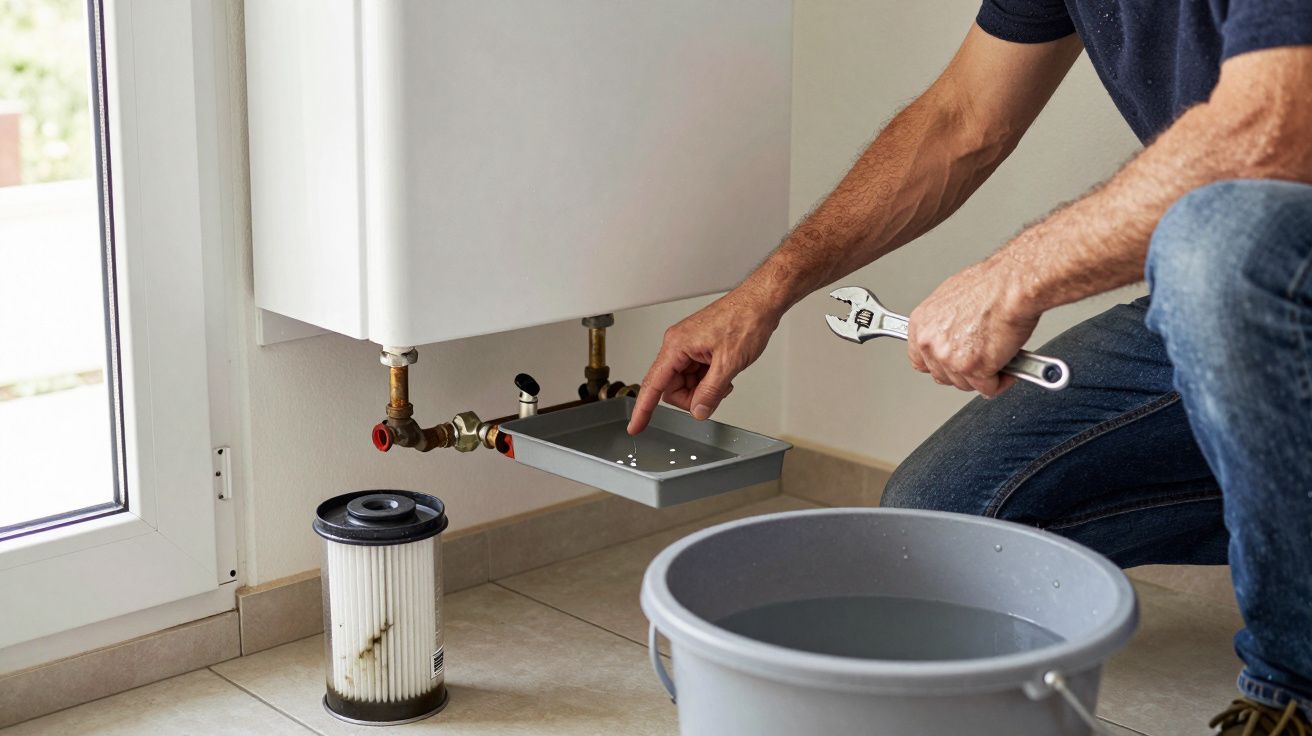
- Clean: powerflush or targeted chemical flush depending on severity and system type.
- Fit/clean a magnetic filter and service it regularly.
- Dose correctly with inhibitor after cleaning.
- Fix oxygen ingress (leaks, failed expansion vessel, frequent top-ups) because fresh water feeds corrosion.
A system can look “fine” and still be undermined by chemistry. Winter is just when the boiler stops tolerating it.
When it’s not water (but water still matters)
Not every short-cycle case is sludge. Oversizing, a stuck diverter valve, a faulty sensor, a poorly placed thermostat, or an incorrectly set minimum boiler output can all produce the same pattern.
But even then, water quality is rarely irrelevant. A scaled heat exchanger or dirty hydraulic block makes every other issue harder to diagnose and amplifies cycling once the weather turns.
A compact guide to causes and next moves
| Symptom you notice | Likely direction | What to do next |
|---|---|---|
| Boiler hits set temp very fast, radiators slow | Heat transfer/flow restriction | Check filter, balancing; assess sludge/scale |
| Some radiators hot top/cold bottom | Sludge in emitters | Consider flush; fit/clean magnetic filter |
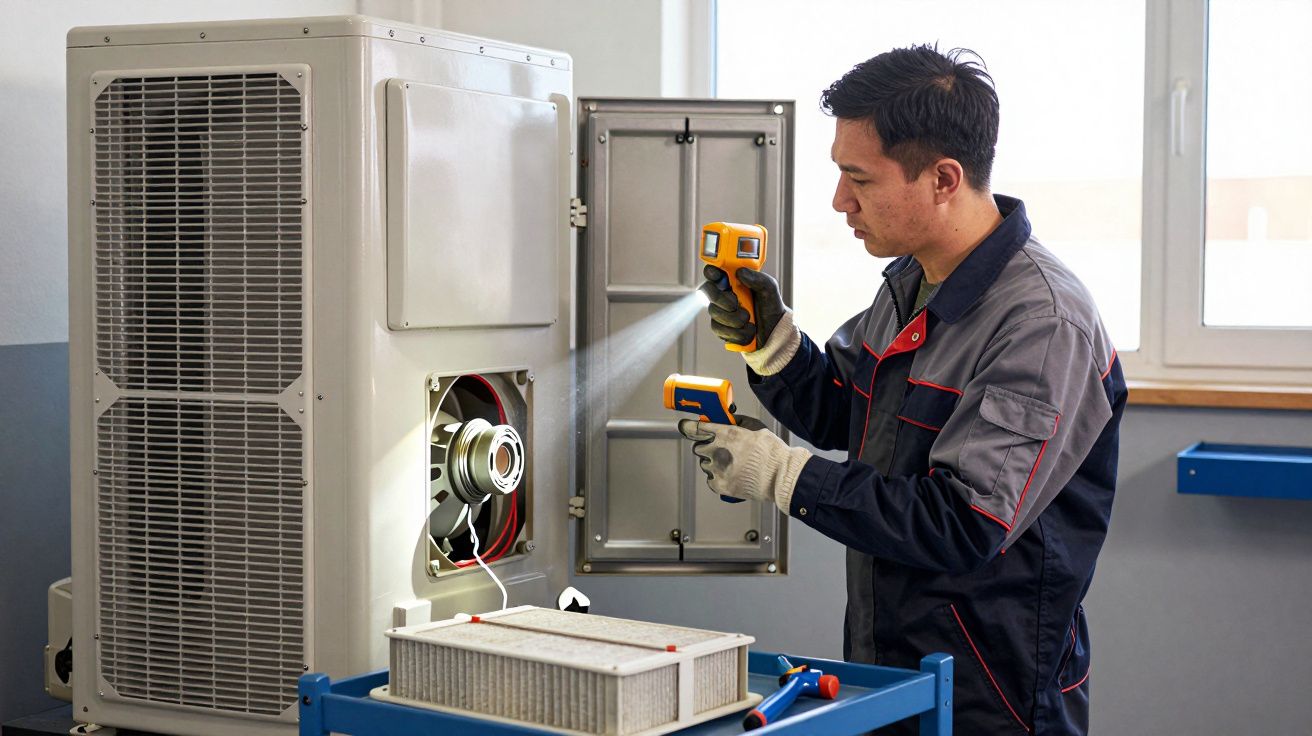
| Rumbling/kettling from boiler | Scale/overheating at exchanger | Engineer inspection; water treatment plan |
A steadier definition of “winter-ready”
A winter-proof heating system isn’t one that blasts hotter water. It’s one that moves heat efficiently: clean internals, good circulation, balanced radiators, and controls that modulate rather than sprint and brake.
If your boiler is short cycling right when temperatures drop, treat it as a signal. The cold weather isn’t the cause - it’s the spotlight.
FAQ:
- What is boiler short cycling, in plain terms? It’s when the boiler repeatedly fires for short bursts and shuts off, instead of running steadily to meet demand. It wastes energy and accelerates wear.
- Can dirty system water really make a boiler cycle on and off? Yes. Sludge and scale reduce heat transfer and restrict flow, so the boiler reaches its safety/target temperature quickly and shuts down even though the home still needs heat.
- Is lowering the boiler flow temperature a good fix? It can reduce cycling in some cases, but it may also reduce comfort and mask the underlying issue. It’s better to confirm circulation, balancing, and water condition.
- How do I know if I have a water quality problem? Cold spots on radiators, frequent bleeding, dirty water from a radiator drain point, kettling noises, and a magnetic filter full of black sludge are common clues.
- Will a powerflush stop short cycling? Sometimes, if sludge/scale is the main bottleneck. It should be paired with a magnetic filter, correct inhibitor dosing, and fixing any cause of fresh-water top-ups.



Comments (0)
No comments yet. Be the first to comment!
Leave a Comment