
Heating maintenance is the boring, slightly awkward job that keeps your boiler, radiators, and controls safe and predictable through a UK winter. Yet many of us dodge it for the same reason we put off the dentist: cost avoidance feels sensible in the moment, until the bill arrives in a louder form. In most homes it’s used as a once-a-year check (or should be), tucked between school runs, work calls, and the first cold snap that makes the house feel older than it is.
It usually starts with a tiny lie you tell yourself. The heating’s “basically fine”, the boiler “sounds the same as last year”, and you’ll “book it after payday”. Then the weather turns, you turn the thermostat up, and you wait for the system to prove you right.
The question no one wants to ask
It’s not “Do I need a new boiler?” and it’s not “What’s the cheapest engineer in my postcode?” The maintenance question homeowners avoid is simpler and more uncomfortable:
If it breaks in January, what’s my plan-money, time, and warmth-until it’s fixed?
Most people have a plan for big, obvious things: a leak, a burst pipe, a broken window. Heating failure is sneakier. It lands on a Sunday night, or the week you’re hosting family, or the morning your child wakes up coughing and the house feels damp around the edges.
And in that moment, “saving” £80–£120 on a service doesn’t feel like saving. It feels like you rolled the dice and lost.
What heating maintenance actually does (and what it doesn’t)
A proper service isn’t a magic shield, and it won’t turn an ageing system into a new one. What it can do is reduce the boring, common failures that cause the dramatic, expensive ones.
Think of it as a set of small checks that stop small problems from becoming big ones:
- Cleaning and inspecting key components so the boiler burns efficiently and safely
- Checking for leaks, corrosion, and early signs of wear
- Confirming pressures, seals, and basic operation so the system doesn’t drift into “weird” behaviour
- Spotting issues before they become an emergency call-out in peak season
What it can’t do: fix poor insulation, solve chronic damp, or make a twenty-year-old boiler immortal. It’s maintenance, not reinvention.
The hidden maths behind “I’ll leave it this year”
Cost avoidance is rarely about being reckless. It’s usually about protecting cash flow: Christmas, a car MOT, a rent increase, a kitchen appliance that dies at the worst time. Skipping the service feels like a harmless pause.
The trap is that heating costs don’t arrive politely. They cluster.
A skipped service can turn into:
- A winter breakdown call-out at peak rates
- Parts delays because everyone else is also broken
- Secondary costs: portable heaters, damp laundry, takeaway because the kitchen is freezing
- Time costs: days at home waiting for appointments, chasing availability, rearranging work
And if there are vulnerable people in the house-babies, older relatives, anyone with respiratory issues-the “soft” costs become the hard priority.
A small, real example: the week the boiler chose
A couple in a two-bed terrace in Sheffield told me their boiler had been “fine for years”, so they skipped the annual service to keep December spending under control. In late January it started cycling on and off, then locked out entirely on a cold Tuesday.
They didn’t just pay for a repair. They paid for speed.
By the time they’d covered an emergency visit, a replacement part, and two days of running electric heaters to keep the bedrooms tolerable, the total was multiples of what a service would have cost. The worst part wasn’t the money. It was the stress of trying to keep the house liveable while work and life carried on.
Nothing about that story is rare. It’s just rarely planned for.
The quiet warning signs people normalise
Homeowners get used to odd behaviours because they creep in slowly. If you notice any of these, treat it as a nudge to book a check rather than a reason to wait:
- Radiators taking longer to warm up than last winter
- Frequent pressure drops or topping up the boiler loop
- Banging, gurgling, or “kettling” sounds
- Rooms heating unevenly even after bleeding radiators
- Boiler short-cycling (on/off in quick bursts)
- Hot water temperature swinging without you touching the controls
None of these automatically mean catastrophe. They do mean your system is asking for attention.
A safe, low-effort routine that helps
You don’t need to become your own engineer. You just need a repeatable habit that stops heating from becoming a surprise.
- Book servicing for early autumn, before engineers’ calendars fill
- Keep a simple note of boiler pressure and any recurring faults (dates help)
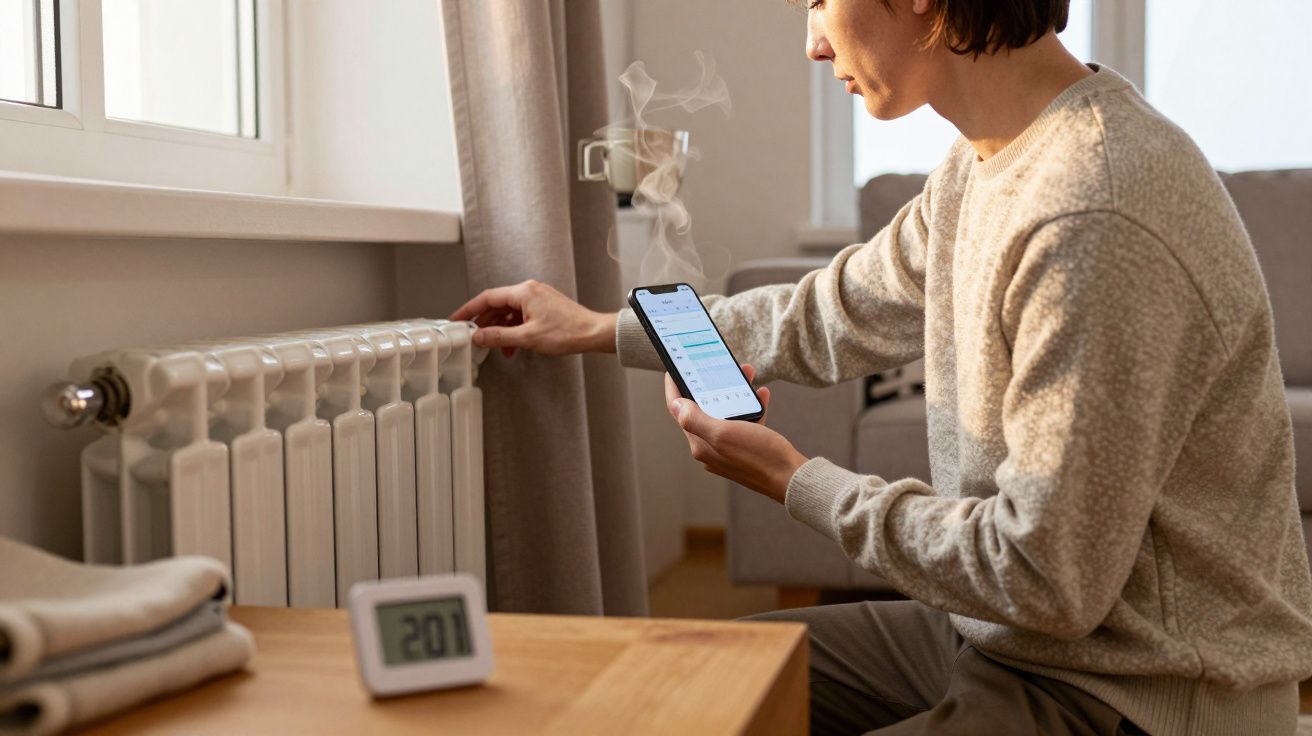
- Check radiator performance room by room once the heating’s on
- If your home is prone to humidity, ventilate after showers and cooking-damp makes homes feel colder
- Know where your main shut-off is, and keep the manual (or a PDF) easy to find
It’s the same principle as every other maintenance ritual: small effort, fewer panics.
The point isn’t perfection-it’s control
Most of us aren’t trying to be model homeowners. We’re trying to keep life moving without sudden disasters. Heating maintenance is less about “doing everything right” and more about reclaiming control over one of the biggest comfort systems in your home.
If you want to practise cost avoidance, do it the smart way: avoid the expensive, urgent version by paying for the calm, scheduled version. That’s not glamorous. It’s just how people get through winter with fewer nasty surprises.
FAQ:
- Do I really need annual servicing if the boiler seems fine? “Seems fine” is the stage where problems are cheapest to spot. An annual service is mainly about safety checks, early detection, and keeping performance steady.
- Is a service the same as a repair? No. A service is preventative inspection and testing; a repair fixes a fault that’s already happened. You can still need repairs even with servicing, but the odds of sudden failure tend to drop.
- When is the best time to book heating maintenance? Early autumn is ideal. You’ll have more choice of appointment times, and you’re less likely to be competing with emergency call-outs.
- What can I do myself safely? You can monitor pressure, bleed radiators if you know how, keep vents and boiler area clear, and watch for leaks or unusual noises. Anything involving opening the boiler casing should be left to a qualified professional.



Comments (0)
No comments yet. Be the first to comment!
Leave a Comment