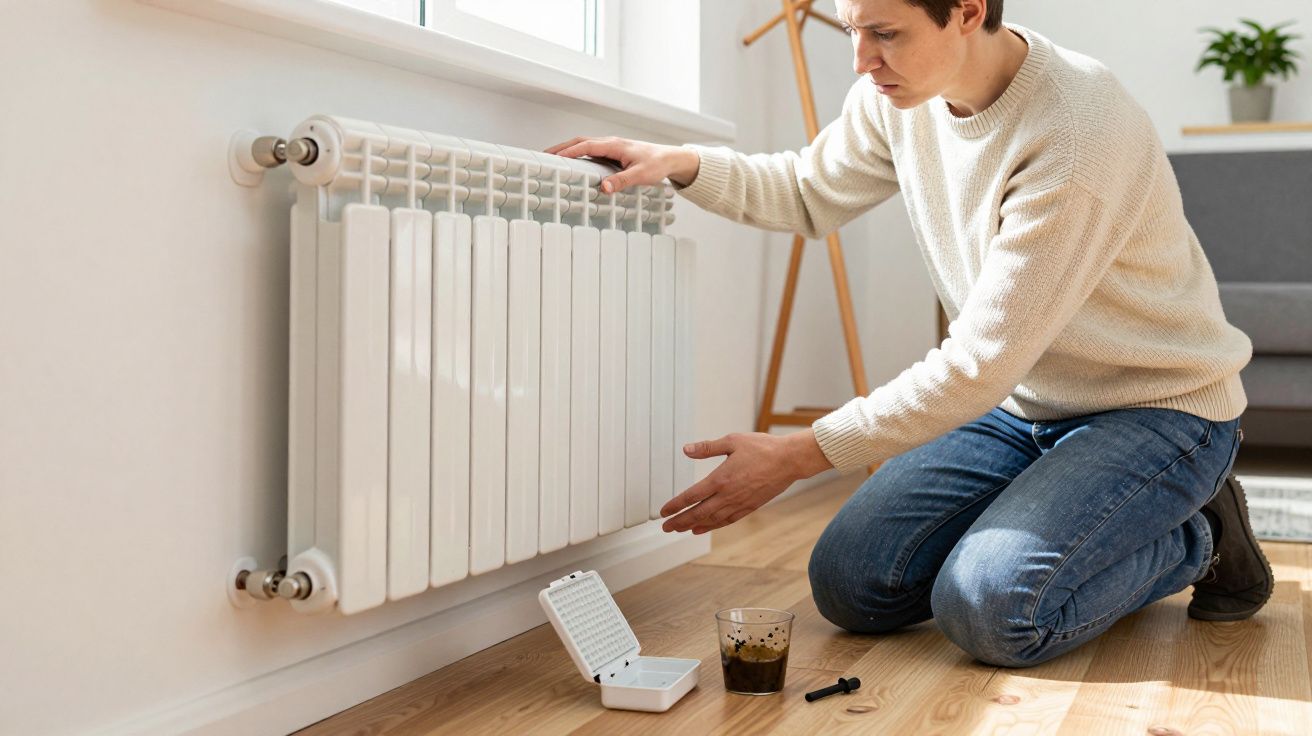
You don’t notice it when the radiators still feel hot and the rooms are technically “warm enough”. But system water quality is the quiet factor that decides whether your boiler is working efficiently or sliding into performance loss, month after month, without making a fuss. In most UK homes, it’s the difference between a heating system that runs cleanly and one that slowly clogs itself from the inside.
It usually shows up on the first properly cold week: you turn the thermostat up, the gas bill climbs, and the house still feels patchy. One bedroom is roasting, the lounge never quite gets there, and the boiler sounds a bit more “busy” than last year.
The problem isn’t always the boiler - it’s what’s moving through it
Heating systems are simple on paper: heat water, pump it around, bring it back, repeat. In real life, the water isn’t just water for long. It picks up oxygen, metals, limescale minerals (especially in hard water areas), and fine debris from radiators and pipework.
That mix doesn’t fail dramatically. It quietly builds up into sludge and scale, and the system gradually becomes harder to circulate, harder to heat, and harder to control.
The frustrating part is that it can still “work”, just badly - right up until you’re forced to pay attention.
The late-warning signs people ignore (because life is busy)
Most households wait for a breakdown. The earlier signs are annoyingly easy to explain away as “old house stuff” or “the weather”.
Look for this cluster:
- Radiators hot at the top, cool at the bottom (classic sludge pattern).
- One or two radiators lagging behind the others, even after bleeding.
- Clicking, kettling or rumbling noises at the boiler.
- Heating taking longer to reach temperature than it used to.
- Hot water fluctuating or taking longer to come through.
- Having to keep nudging the thermostat higher to feel comfortable.
None of these proves a disaster on its own. Together, they often point to compromised flow and heat transfer - which is where performance loss quietly lives.
What “bad system water” actually does inside your home
If you could slice a heating system open (don’t), you’d often see three culprits:
1) Sludge: the black, magnetite mess
Magnetite forms when iron and oxygen react inside radiators and steel components. It settles in low-flow areas, blocks narrow passages, and acts like a blanket that stops heat transferring properly.
The radiator might feel warm on top, but the lower half becomes a storage shelf for muck rather than a heating surface.
2) Limescale: the hard-water tax
In hard-water regions, scale builds where heat is concentrated - typically on heat exchangers. Even a thin layer reduces efficiency because the boiler has to work harder to push heat through it.
This is why two homes with the same boiler model can have wildly different running costs over time.
3) Corrosion debris: the “sand” you never see
As components wear internally, fine particles circulate and abrade pumps, valves, and boiler parts. It’s not dramatic; it’s just constant. Eventually, tolerances go, flow suffers, and the system starts behaving oddly.
Why people notice it too late: it feels like “just winter”
The timing is cruel. Water quality problems are often at their worst when you first ask the system to work hard again - cold snaps, darker evenings, everyone home more, showers back-to-back.
And because the decline is gradual, you adapt. You run the heating longer. You accept one cold room. You keep a jumper by the sofa. You assume it’s energy prices, not efficiency.
Retailers call it “optimising conversion”; your boiler does a similar thing in reverse: it optimises your tolerance until it can’t.
The quick checks you can do before calling anyone
You don’t need to become a heating engineer to spot the basics. You just need a few calm observations.
- Feel radiators top-to-bottom after the heating has been on for 20–30 minutes. Cold bands at the bottom are a red flag.
- Listen at the boiler when it fires. Kettling (a harsh, boiling-kettle sound) often points to scale/flow issues.
- Check how often you’re topping up pressure. Regular pressure loss can indicate leaks, but it also tends to drag fresh oxygen into the system - which accelerates corrosion.
- Look for recent changes: new radiators, a new boiler on old pipework, or a long period with no inhibitor top-up.
If something feels off, it’s worth investigating before you’re paying emergency rates in January.
What usually fixes it (and what doesn’t)
Bleeding radiators helps with trapped air. It does not remove sludge. Turning the thermostat up helps comfort. It does not improve efficiency.
Most solutions fall into a few buckets:
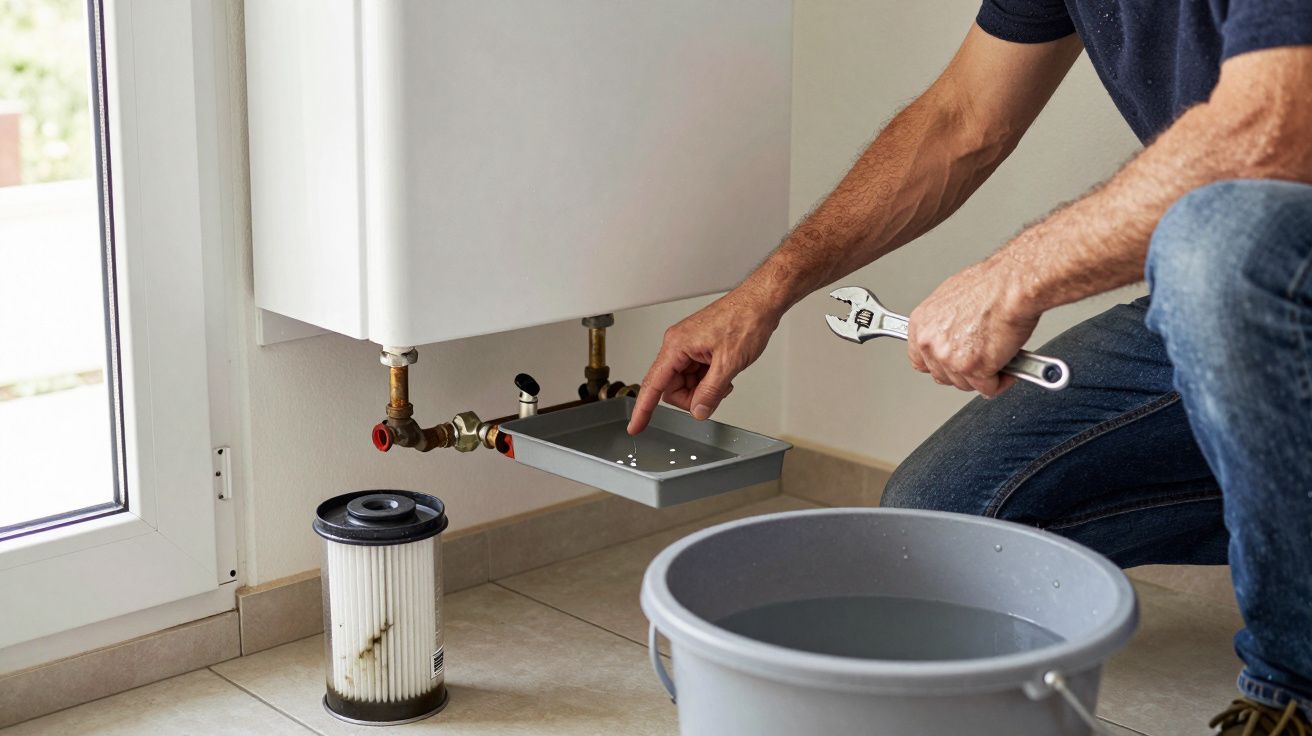
- Magnetic filtration to catch circulating magnetite before it settles elsewhere.
- Chemical clean or powerflush to remove built-up sludge (not always necessary, but sometimes transformative).
- Correct inhibitor dosing to slow corrosion and stabilise system water.
- Targeted radiator balancing so flow is distributed properly across the house.
A decent heating professional will talk about evidence: water sampling, radiator temperature patterns, filter checks, and whether the system has been treated and maintained. If the only plan is “new boiler”, ask why the old one failed - because poor water will happily shorten the life of the next one too.
The boring maintenance habit that saves the most money
The unsexy truth is that system water quality is not a one-off “fix”. It’s a condition you maintain.
A simple baseline to aim for:
- Add and maintain the right inhibitor after any drain-down or significant work.
- Fit and clean a magnetic filter if appropriate for your system.
- Deal with air ingress (leaks, faulty automatic air vents, frequent top-ups).
- Consider hard-water protection where scale is a known issue.
- Get the system checked during servicing, not only when it misbehaves.
It’s the same principle as looking after soil in a garden: cover it, feed it, stop it eroding - and you prevent the dramatic problems later.
A small “too-late” moment: the cold room that becomes the whole house
People often tell the story like this: “It was only the spare room radiator at first.” Then it becomes the upstairs. Then the boiler starts short-cycling. Then the hot water gets temperamental. Then you’re on your third quote, trying to decide whether you’re being oversold.
If you’re reading this while your heating still mostly works, that’s the sweet spot. Because once the system is properly fouled, you don’t get to fix it gently - you get to fix it urgently.
Mini guide: what to ask a heating engineer
- “Can you check the filter and show me what’s in it?”
- “Does the system water need testing or treatment?”
- “If you’re recommending a flush, what symptoms/evidence are you basing that on?”
- “Will you add inhibitor afterwards, and how will you confirm it’s at the right level?”
- “If I replace the boiler, what are you doing about the condition of the existing pipework?”
FAQ:
- Is this only an issue in older homes? No. New boilers on older pipework can suffer quickly if the system isn’t cleaned and protected, but even newer systems can degrade if inhibitor is missing or oxygen keeps entering.
- Do I need a powerflush every time? Not necessarily. Some systems respond to a chemical clean and improved filtration; others with heavy sludge or repeated blockages may need a more intensive flush.
- Can I just bleed radiators and be done with it? Bleeding removes trapped air, which helps heat distribution, but it doesn’t remove sludge or scale and won’t solve underlying water quality issues.
- What’s the biggest hint that water quality is harming efficiency? Having to run the heating longer or hotter for the same comfort, alongside uneven radiator temperatures and persistent boiler noise.




Comments (0)
No comments yet. Be the first to comment!
Leave a Comment