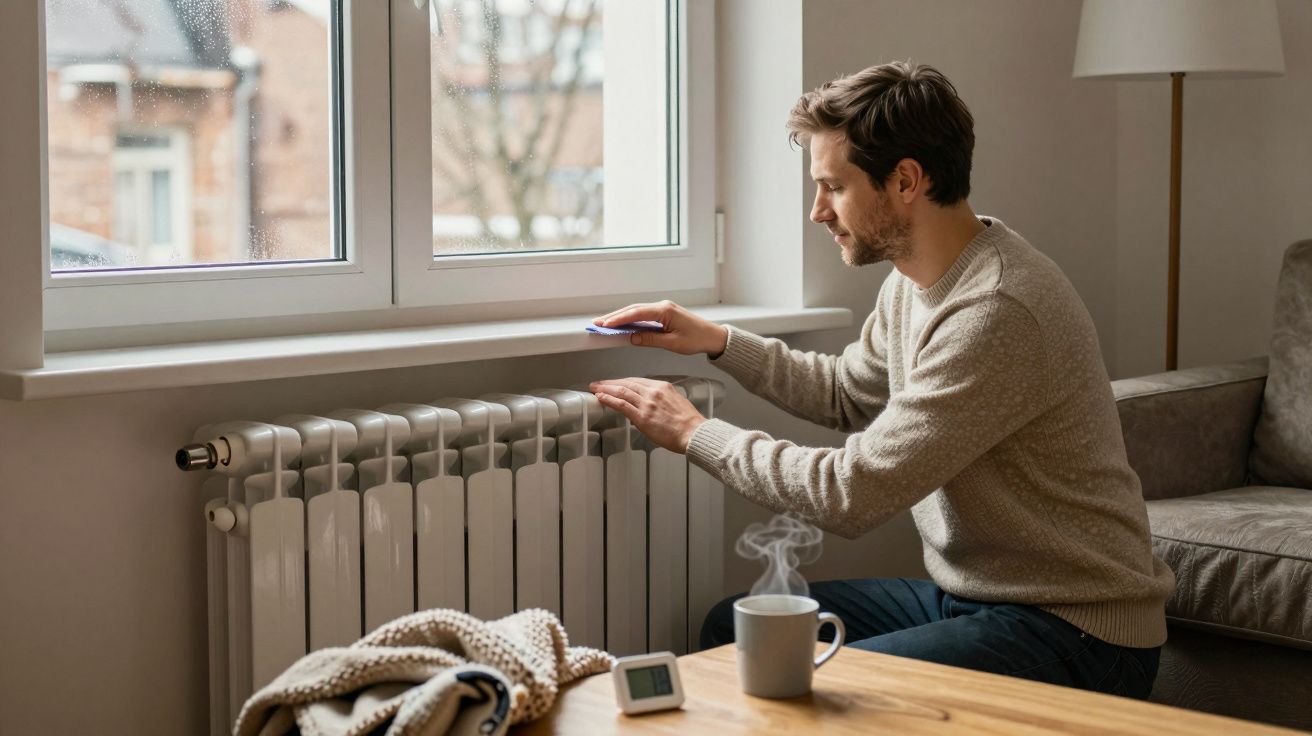
You notice it on the first cold evening: the thermostat creeps up, the radiators hiss, and the house still feels oddly sharp around the edges. Heating efficiency and perception of comfort get tangled here, because what your system is doing and what your body feels are not the same thing. The myth homeowners believe is that “more heat output” automatically means “better performance”, when the real win is how evenly and predictably your home holds warmth.
The giveaway is how people talk about it. “The boiler’s fine - the radiators are roasting.” “If I crank it to 24°C it’ll get warm quicker.” “This room is always cold, so the heating must be weak.” Those sentences sound practical, but they’re usually describing distribution, controls, and draughts, not the actual capability of the system.
The myth: hot to the touch means it’s efficient
A radiator can be scorching and still waste energy, the same way a hairdryer can be loud and still do a poor job. High surface temperature is often a sign the system is running with a big temperature drop and poor control, not that it’s delivering heat in the most economical way.
What matters is how much useful heat ends up where you live, at the times you need it, without overshooting and then letting the room fall cold again. That’s heating efficiency in a domestic setting: not the drama of heat, but the discipline of steady comfort.
The small physics behind why it feels wrong
Your body reads comfort through more than air temperature. It’s watching the mean radiant temperature (how cold the surfaces around you are), air movement (draughts), and humidity, then turning it into a simple verdict: cosy or not.
That’s why a room at 20°C can feel miserable if the external wall is at 14°C and a trickle of cold air is sliding down the glazing. Your perception of comfort is responding to the cold “pull” of surfaces and airflow, even while the thermostat insists everything is fine.
A useful mental model: you’re not heating air, you’re heating a space. Air changes fast; walls, floors, and furniture change slowly. If the fabric of the room is cold, you’ll keep chasing the number.
What “better performance” actually looks like in a home
The good version is almost boring. Rooms warm up predictably. The heating cycles gently rather than slamming on and off. One room doesn’t feel like Spain while another feels like a bus stop.
If you want quick tells that you’re looking at comfort problems rather than “weak heating”, look for these:
- The room warms up, then cools quickly after the heating switches off.
- You feel cold near windows or external walls, but fine in the centre.
- You keep nudging the thermostat up, yet your feet stay cold.
- One radiator is boiling and another is lukewarm on the same circuit.
- The boiler runs for short bursts, repeatedly (cycling), especially in mild weather.
None of those require a new boiler as a first move. They usually require better control of heat delivery and fewer ways for heat to escape.
The thermostat lie we tell ourselves (and why we keep telling it)
Cranking the thermostat doesn’t make most systems heat “harder”; it just tells them to stay on for longer until they reach a higher target. People do it because it works psychologically: it feels like taking decisive action, and we’re desperate for a quick change when we’re uncomfortable.
The trap is that overshooting can create a loop: you blast heat, the room gets stuffy, you turn it down or open a window, the fabric cools again, and you repeat the next day. It’s busywork disguised as control, and it often costs more than steady settings.
“Heat is like light: glare isn’t brightness, it’s poor control.”
The fixes that move both efficiency and comfort (without a full refit)
Start with the things that change the experience fastest. You’re aiming for steadier heat at lower peaks, plus fewer draughts and cold surfaces.
1) Get the system distributing heat properly
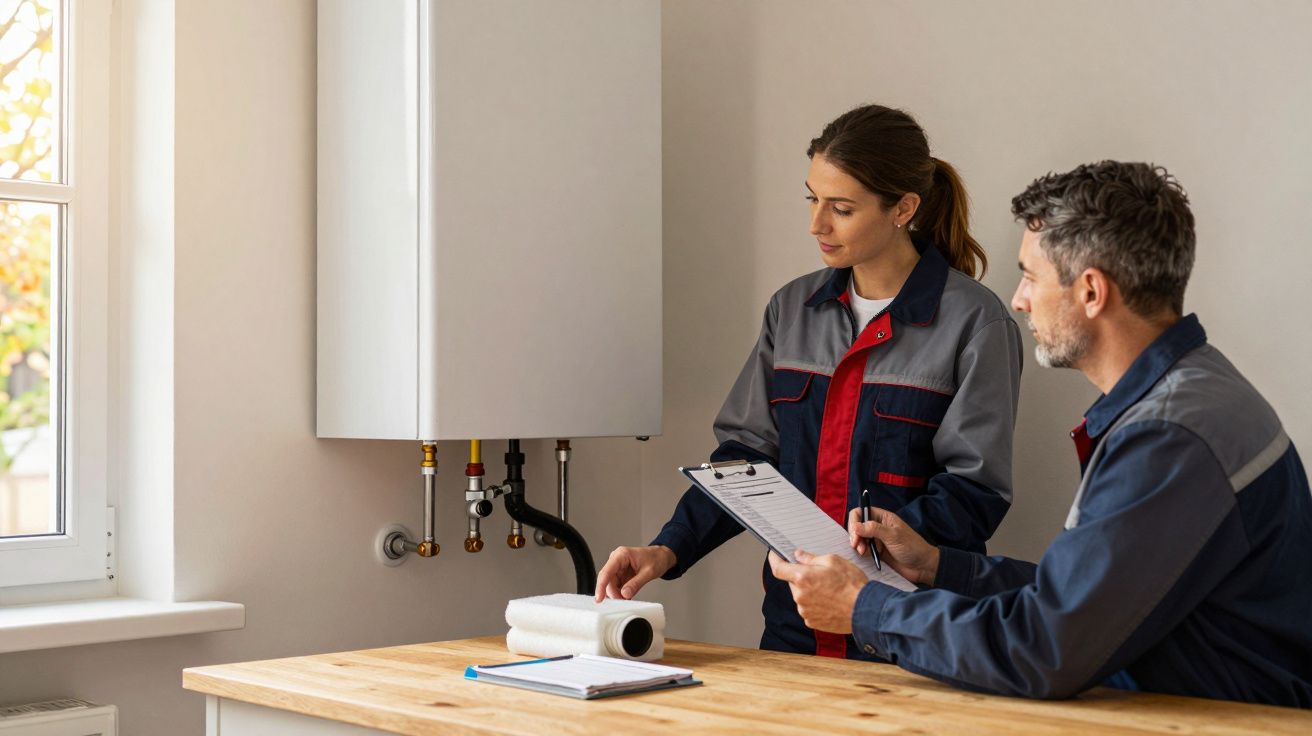
Bleeding radiators is basic, but balance is the grown-up version. If the nearest radiators hog flow, the far rooms never stabilise. A heating engineer can balance the lockshields so each radiator gets its share, and it can transform “cold rooms” overnight.
2) Use controls like you mean it
If you have thermostatic radiator valves (TRVs), set them intentionally rather than randomly. Use the thermostat as the “ceiling” for the main living zone, and TRVs to stop bedrooms or rarely used rooms from overheating. If your thermostat is in a cold hallway, it may be lying on behalf of the entire house.
3) Lower flow temperature where appropriate
Many condensing boilers and heat pumps reward lower flow temperatures with better efficiency, but only if the home can still reach setpoint. The sweet spot is system-specific; go too low and you’ll run long hours without reaching comfort. The move is gradual: adjust, observe over a few days, and aim for steady warmth rather than quick blasts.
4) Stop the draughts that sabotage the “warmth number”
Draught-proofing around external doors, loft hatches, and chimneys can make 19°C feel like 21°C, because you’ve reduced air movement across skin and stopped cold air pooling at floor level.
5) Insulate the surfaces that make you feel chilled
If you can only do one insulation job, do the one that cools the room’s surfaces the most. Loft insulation is usually the cheapest win; wall insulation is more complex but can change the radiant feel of a space dramatically.
A quick self-check: is it an efficiency issue or a comfort perception issue?
Use this as a simple diagnostic when a room “never feels warm”:
- If the air temperature climbs but you still feel cold, suspect cold surfaces or draughts.
- If the air temperature won’t climb, suspect undersized emitters, low flow, poor balance, or control issues.
- If one room is fine and another isn’t, suspect distribution and zoning, not the boiler’s headline power.
You’re trying to separate “the system isn’t delivering heat” from “the room can’t hold heat” from “my body is reading the space as cold”.
| What you notice | Likely cause | Best first move |
|---|---|---|
| Radiators hot, room still feels chilly | Draughts/cold surfaces | Draught-proof + insulation priorities |
| Some rooms roast, others lag | Poor balancing/zoning | Balance radiators; review TRVs/thermostat placement |
| Heating turns on/off in short bursts | Control setup/oversizing | Review thermostat settings; engineer check |
The bottom line homeowners miss
You don’t win by making the system feel more intense. You win by making the home feel more stable. When heating efficiency and perception of comfort line up, you stop chasing the dial, and the house starts behaving like it’s on your side.
FAQ:
- Is a hotter radiator always better? No. Hot radiators can coexist with poor comfort if heat isn’t evenly distributed or the room is losing heat quickly through draughts and cold surfaces.
- Does turning the thermostat up heat the house faster? Usually not; it typically just keeps the heating on for longer until it reaches a higher target temperature.
- What’s the quickest improvement without replacing anything? Draught-proofing and proper radiator balancing often deliver the fastest, most noticeable change in comfort.
- Should I lower my boiler flow temperature to save money? Potentially, especially with condensing boilers and heat pumps, but do it gradually and make sure rooms still reach comfortable temperatures.


Comments (0)
No comments yet. Be the first to comment!
Leave a Comment