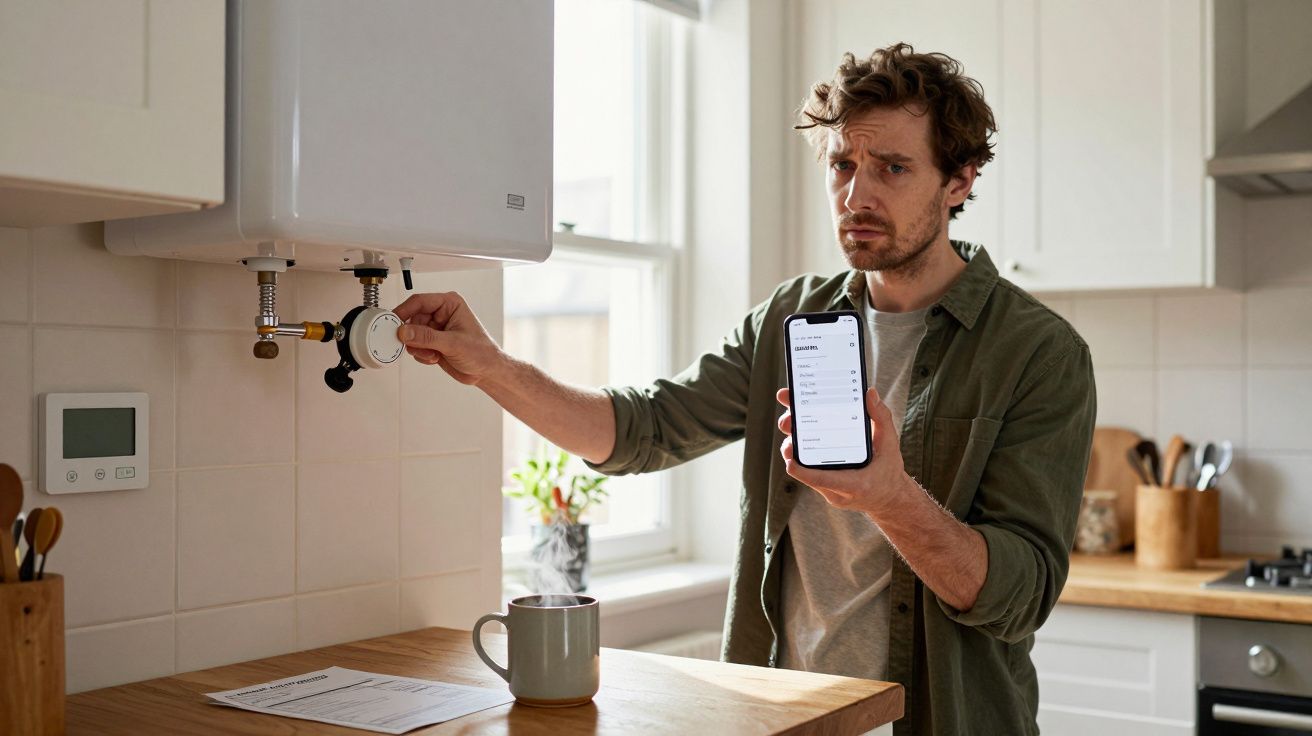
The clue is in the arguments people have about heating performance: they’re not really arguing about warmth, they’re arguing about control. In British homes, common misconceptions get repeated so often they start to feel like rules - the sort you follow for years because “an engineer once said so”. Then one day you realise the engineer stopped correcting it, because the correction takes longer than the call-out.
I noticed it in a draughty terrace where the hallway radiator was always on “to stop the damp”, and in a new-build flat where the owner swore the boiler “works harder” if you let the house cool down. Different properties, same ritual: a thermostat left high, rooms overheated “just in case”, and a monthly bill that feels personal.
There’s one myth that sits underneath most of it. It sounds sensible. It’s also the reason so many systems feel expensive and inconsistent.
The myth: “Leaving the heating on low is always cheaper”
People say it like it’s physics: keep the house “ticking over” and the boiler won’t have to “fight” to reheat it. It’s comforting because it turns heating into a steady background hum rather than a decision you have to make.
In practice, this line blurs three different things: how fast your home loses heat, how your boiler modulates, and how your controls decide when to run. Engineers know the difference. They also know most of us don’t want a lecture when we’re cold.
Here’s the blunt bit: if your home is losing heat all day, keeping it warm all day generally means you’re paying to replace that lost heat all day. The house doesn’t “store” that free warmth like a battery unless you’ve got purpose-built thermal mass and a system designed around it.
What actually drives heating performance (and why it feels like a trick)
Think of your home as a leaky bucket. The warmer it is inside compared to outside, the faster it leaks heat through walls, windows, lofts, gaps, and ventilation. That temperature difference is the pressure behind the leak.
So when you keep the heating on all afternoon while you’re out, you’re not saving the boiler a struggle later. You’re choosing to hold a higher indoor temperature during the exact hours the leak is strongest - and paying for the privilege.
The reason the myth survives is that comfort is real. Coming back to a warm house feels efficient. A cold-to-warm house feels like the system is “working harder”, because you can hear it, feel it, and watch the flame icon stay on.
But “harder” isn’t the same as “more energy overall”. A short, purposeful run can use less gas than a long, gentle run that’s quietly feeding constant losses.
The part no one explains: boilers don’t behave like kettles
Modern boilers aren’t simply on/off. Most can modulate: they ramp the flame up and down to match demand. That’s good for efficiency, but only when the system is set up to let it do that - correct flow temperatures, balanced radiators, decent controls.
Here’s what happens in lots of homes:
- The boiler flow temperature is set high “to make it heat quicker”.
- Thermostat is set high “so it actually comes on”.
- Radiators blast, rooms overshoot, windows crack open.
- The boiler cycles on and off, never settling into an efficient steady state.
That’s not a morality tale about your habits. It’s a control problem. And it’s why two houses with the same boiler can feel totally different to live in.
The quiet correction engineers wish you’d make
If you want better heating performance without turning your life into a spreadsheet, focus on timing and temperature, not folklore.
A practical baseline most engineers would accept:
- Heat the home when you’re in it, and let it drop when you’re not (within reason for your building and health).
- Use the thermostat as a target temperature, not an on/off switch.
- Use schedules so the system starts before you need it, not after you’re already freezing.
Then, if you can do one “nerdy” thing, do this: turn the boiler flow temperature down (especially on combi boilers for space heating) until the house still warms up comfortably. Lower flow temps can help the boiler condense more, which is where a lot of efficiency lives.
The counter-intuitive win is that the house can feel more even, because radiators run gentler for longer rather than scorching hot in bursts.
Common misconceptions that keep rooms cold and bills high
Some myths don’t just waste money - they make the system feel unreliable, which leads to more fiddling, which makes it worse.
- “Cranking the thermostat heats the house faster.” It doesn’t. It only changes the stopping point. Faster heat comes from higher output (flow temp, radiator size, insulation), not a higher target.
- “The hallway thermostat should be where it’s coldest.” It should be where it represents the home’s average, not in a draught tunnel that forces everything else to overheat.
- “One radiator off saves energy no matter what.” Sometimes. Sometimes it just unbalances flow and makes other rooms struggle, especially if you’ve closed too many.
- “Heating helps damp, so leave it on.” Ventilation removes moisture. Heat can help if paired with ventilation, but constant low heat alone can still leave humid air trapped.
A lot of people aren’t “using heating wrong”. They’re using a set of tips designed for someone else’s house, someone else’s boiler, and someone else’s tolerance for waking up to 16°C.
A simple “good enough” routine for most UK homes
If you want something you can set and forget, start here and adjust by feel:
- Pick a comfortable temperature (often 18–20°C for living areas, lower for bedrooms if you prefer).
- Schedule heating in blocks around when you’re home, with a warm-up lead time.
- Use TRVs (radiator valves) to trim rooms, not to compensate for a bad thermostat location.
- Reduce boiler flow temperature for space heating step-by-step, checking comfort over a few days.
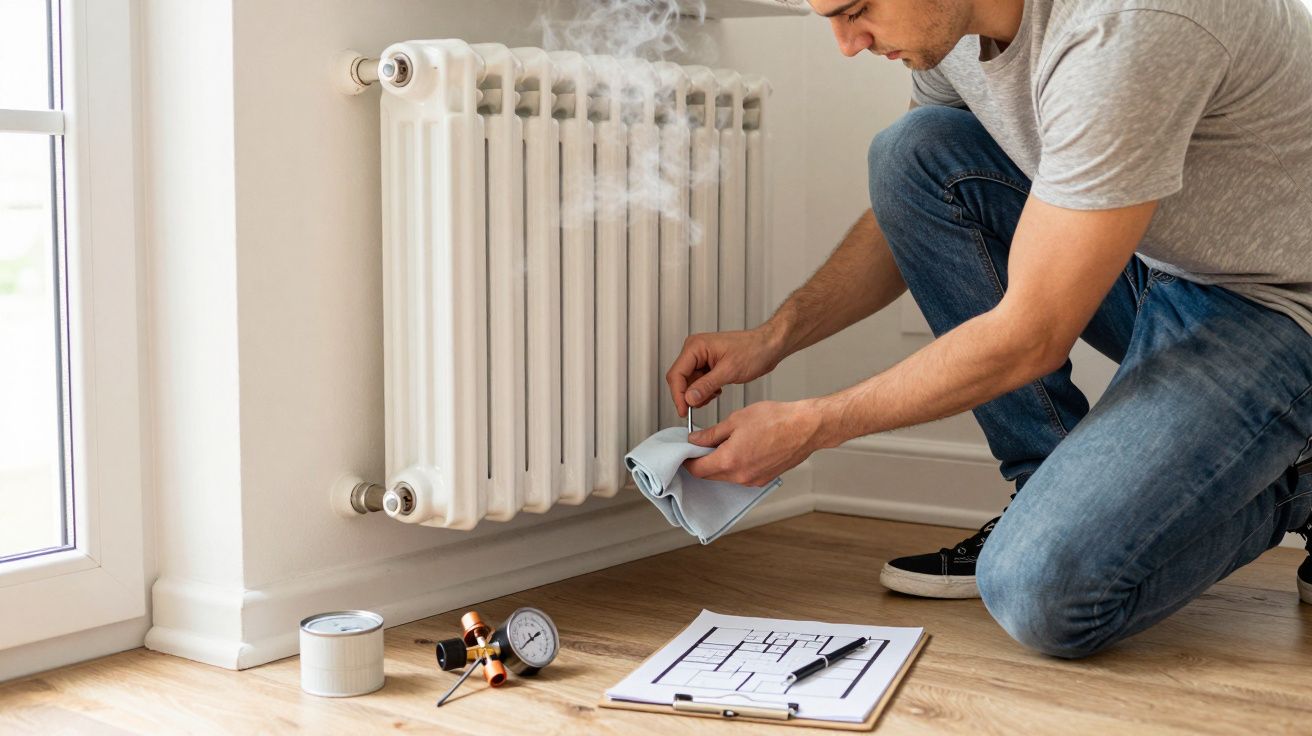
- If one room never behaves, treat it as a system clue (balance, bleeding, insulation, draughts), not a personal failing.
The “myth-free” mindset is boring, which is why it works. You’re not trying to outsmart the boiler. You’re trying to give it a steady, sensible job to do.
What changes when you stop believing the myth
The first thing is psychological: you stop treating warmth like an emergency. Heating becomes a planned service rather than a constant background panic.
The second thing is practical: rooms get more consistent, because you’re not driving huge swings. And when you do need a boost - a sick day, a cold snap, a baby in the house - you can add heat intentionally without locking yourself into an all-day baseline.
Engineers didn’t stop correcting the myth because it’s harmless. They stopped because the real answer is always, “It depends on your home.” The useful part is knowing what it depends on, and making one or two changes that improve the whole system instead of chasing warmth room by room.
FAQ:
- Is it ever better to leave heating on low all day? Sometimes: very poorly insulated homes, households needing stable temperatures for health, or systems with slow response can benefit from smaller swings. Even then, it’s worth testing a schedule rather than assuming.
- Will turning down the boiler flow temperature make my house colder? Not if you do it gradually and your radiators are adequate. It may take slightly longer to warm up, but can improve efficiency and comfort by reducing cycling.
- Do smart thermostats fix this automatically? They help with scheduling and control, but they can’t overcome poor insulation, incorrect boiler settings, or a badly placed thermostat. They’re a tool, not a cure.
- Why does my house feel damp if I heat it less? Moisture needs ventilation to leave. If you reduce heating, make sure you’re still ventilating (extractor fans, trickle vents, brief window opening) to keep humidity in check.



Comments (0)
No comments yet. Be the first to comment!
Leave a Comment