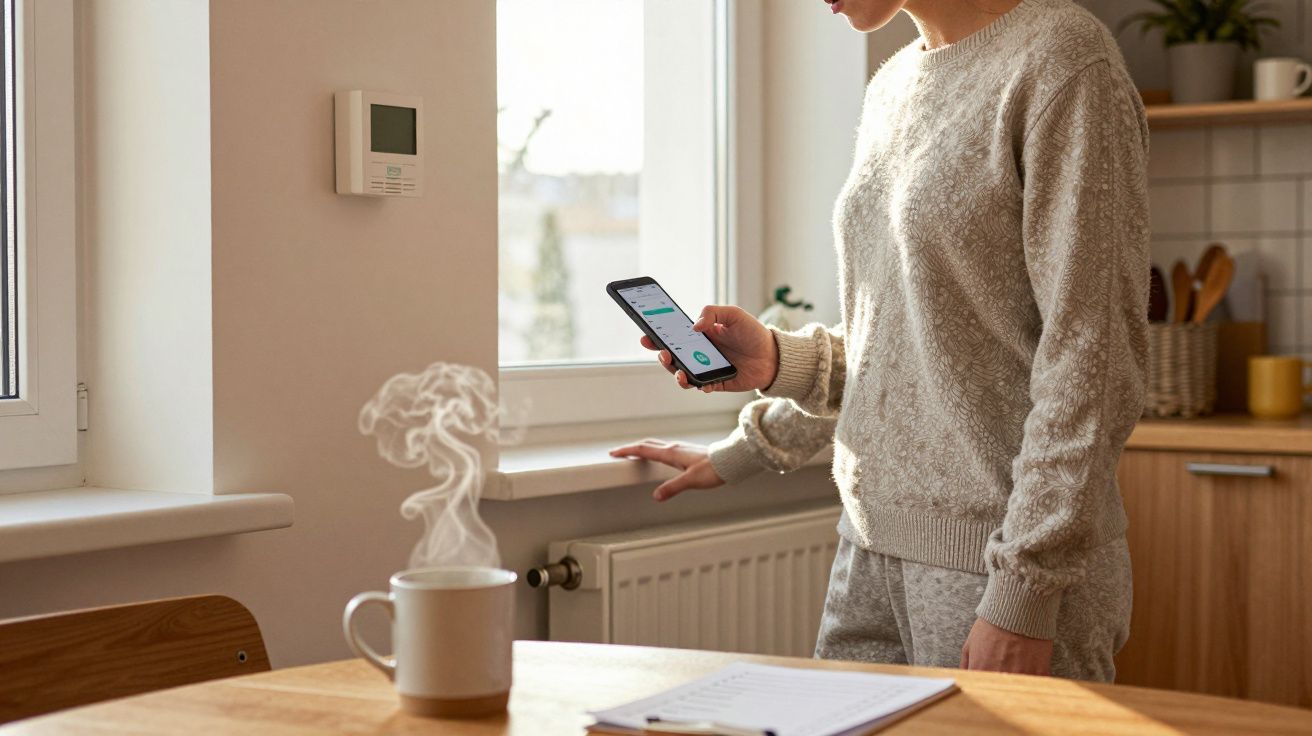
Smart thermostats have become the quiet middle-manager of the modern home: always “optimising”, always learning, always promising comfort. But if your heating timetables are a mess - or a rigid relic you never revisit - you’ll still end up too hot at 3am and cold at 7am, wondering why the radiators feel like they’ve got a personal grudge.
Most discomfort isn’t because your boiler is rubbish. It’s because the setup doesn’t match the way people actually live: late finishes, school runs, WFH days that change weekly, and that one room nobody uses until suddenly it’s “the office” and it’s freezing.
The trick is to stop treating heating like a single on/off event, and start treating it like a set of small, calm decisions you can live with.
1. The “Two-Block Day” (for most households)
A lot of people default to four or five heating periods because it feels responsible. In practice it often creates yo-yo temperatures: warm, then cool, then aggressively warm again, like the house is trying to keep you alert through mild discomfort.
For many homes, two blocks are enough: one to cover the morning rush, one to cover the evening. The house stays more stable, the boiler cycles less dramatically, and you stop chasing comfort like it’s a moving target.
What to do instead
Pick two heat windows and keep them boring:
- Morning: 60–90 minutes before you’re properly up and moving
- Evening: 60–120 minutes spanning “home time” (dinner to sofa)
If you’re out all day, resist the temptation to add a lunchtime blast “just in case”. Heat for people, not for empty air.
2. The “Gentle Baseline + Boost” (when your schedule is chaotic)
Some households can’t stick to predictable blocks. Shift work, kids’ clubs, hybrid work, caring responsibilities - life laughs at neat little time slots. That’s where smart thermostats are genuinely useful, because you can set a sensible baseline and then boost without mentally rewriting the week every Sunday night.
This setup also stops the classic argument: one person is cold and wants to crank it to 24°C, the other is sweating and opening windows in protest. A stable baseline reduces the drama.
What to do instead
- Set a modest base temperature for waking hours (think “not miserable”, not “Mediterranean villa”).
- Use short boosts (30–60 minutes) when you actually need extra heat.
- Turn off “panic heating” habits: if you’re cold, boost briefly rather than raising the target for the rest of the day.
If your smart thermostat has an app, put the boost button on your home screen. Convenience beats virtue.
3. The “Room-First” Setup (for cold bedrooms and hot lounges)
Plenty of homes don’t have a heating problem; they have a distribution problem. The living room gets hammered with heat because that’s where the thermostat lives, while bedrooms feel like Victorian novels. You keep turning the temperature up, and the lounge becomes a sauna while the back room stays bleak.
If you have multi-room control (TRVs, room sensors), use it. If you don’t, you can still mimic it by changing how you schedule and where you measure temperature.
What to do instead
- If possible, measure temperature where you feel it (often not the hallway).
- Give bedrooms a small pre-heat before bed, then let them drop overnight.
- For WFH rooms: schedule a mid-morning warm-up, not an all-day burn.
A good rule: heat the rooms you live in, not the rooms that merely exist.
4. The “Sleep Isn’t a Test” Night Pattern
People love to boast about sleeping in a freezing room like it’s character-building. Then they wake at 4am, can’t get back to sleep, and spend the next day irritable and snacky, which is not the cosy winter fantasy they were sold.
Overnight heating doesn’t need to be “off forever” or “on constantly”. The comfort zone is usually a small safety net that stops the house becoming punishingly cold, especially in older properties.
What to do instead
- Set a lower night temperature rather than a hard off-switch, especially if your home loses heat quickly.
- If you wake cold at the same time each night, schedule a short pre-emptive pulse before that point.
- Keep the bedroom comfortable, but don’t heat the whole house like it’s hosting a conference.
The aim is sleep you don’t have to wrestle for.
5. The “Weekend Reality Check” (the bit everyone forgets)
Heating timetables often assume weekdays are busy and weekends are restful. Then Saturday arrives and you’re up at 6:45 with a child who has the energy of a caffeinated squirrel, while the heating schedule is still asleep until 9.
Or you lie in until 10, the heating blasts at 7 out of habit, and you’ve paid to warm the house for nobody but the kettle.
What to do instead
Create two weekend options and commit to one:
- Early weekend: similar to weekday mornings, but slightly later
- Lie-in weekend: shift the morning block back, shorten it, and accept you’ll wear a jumper for the first cup of tea
Most smart thermostats let you copy schedules across days. Use that feature once, properly, then stop thinking about it.
Common slip-ups, solved
You don’t need a perfect system. You need one that doesn’t annoy you.
- “I keep changing the temperature.” You’re using the thermostat as a mood button. Create a baseline, then use boosts.
- “It’s warm when I leave, cold when I get back.” Your evening block starts too late. Start heating 30–60 minutes earlier and lower the peak.
- “The house takes ages to warm up.” Stop trying to “save” heat by leaving it off for long stretches, especially in leaky homes. Smaller, earlier heat periods usually feel better.
- “One room is always cold.” It’s airflow, insulation, balancing, or radiator sizing more often than the schedule. Don’t punish the whole house for one stubborn room.
A small comfort ritual that actually works
Once a season - not every week, not every time you feel a chill - do a ten-minute check-in. Look at your week ahead and ask one unglamorous question: when am I actually at home, in normal clothes, wanting to feel comfortable? Set your schedule around that, not around who you think you should be.
Heating done well is almost invisible. It’s the absence of fuss: no dramatic blasts, no shivering timers, no scrolling your phone at midnight to “fix” tomorrow.
Warmth is meant to support your life, not become another thing you manage.
FAQ:
- Do smart thermostats really save money, or is it just marketing? They can, but mostly by reducing waste (heating empty hours, overheating rooms) and making it easier to stick to a sensible routine. They don’t magically fix poor insulation.
- How many heating periods should I set in a day? Start with two (morning and evening). Add a third only if you’re home midday and consistently uncomfortable.
- Should I turn the heating off when I go out? If you’re out briefly, a lower “away” temperature often feels better than a full off/on cycle. If you’re out all day, turning it down makes sense - just start the evening heat early enough.
- Is it bad to use the boost button a lot? Not if the alternative is cranking the target temperature for hours. Short boosts are usually a more controlled way to get comfort.
- Why is my hallway thermostat reading fine but I’m still cold? Hallways can be warmer or cooler than living spaces depending on drafts and doors. If you can, move the sensor/thermostat or use room sensors/TRVs to control based on where you spend time.


Comments (0)
No comments yet. Be the first to comment!
Leave a Comment