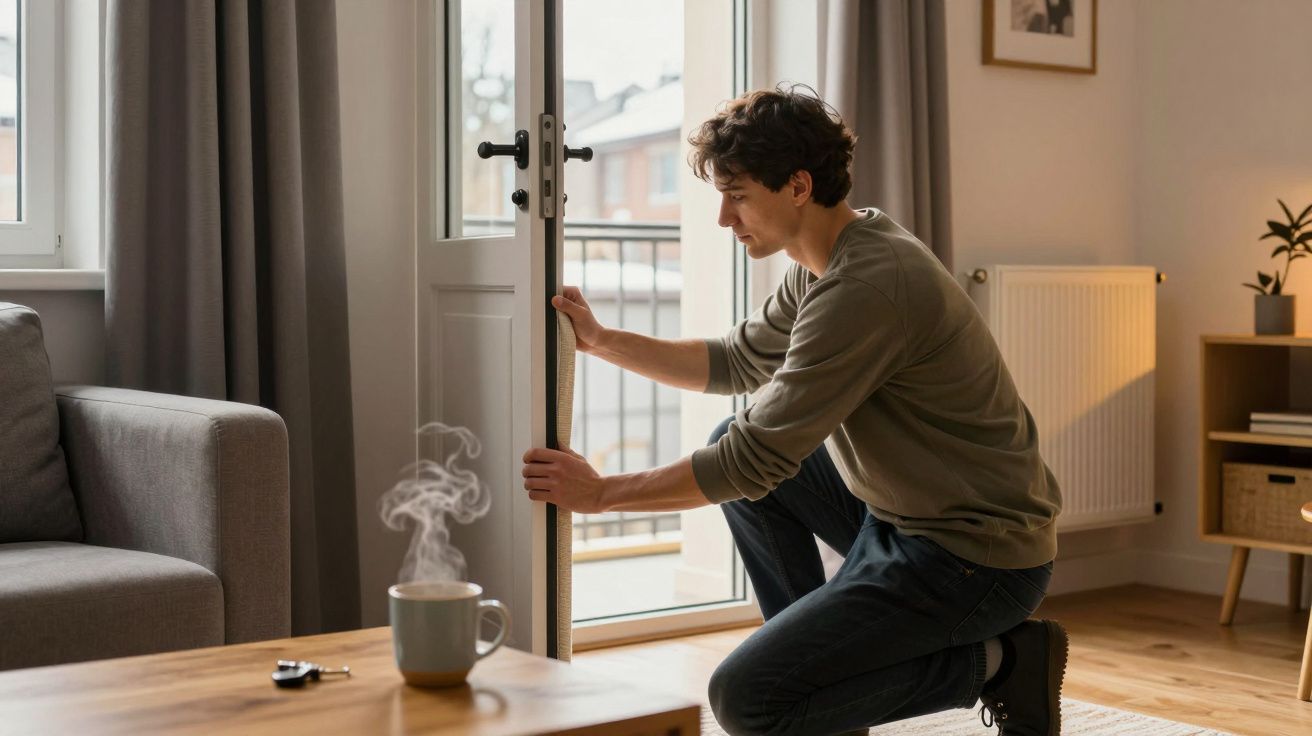
You can feel it the moment you step in from the cold: heating comfort is the promise that your home will hold you-warm feet, calm air, no draughty edges-without you having to think about it. Every winter, user expectations quietly set the thermostat higher than it needs to be, and households keep paying for the gap between “warm” and “feels warm”. The costly myth is that comfort comes from one number on the wall.
It’s not that thermostats don’t matter. It’s that comfort is a whole system: heat distribution, surface temperatures, humidity, airflow, and what your body is doing at the time. When you chase the feeling with a single dial, you often get the bill without the relief.
The myth: “Turn it up and the house will feel better”
Most people repeat a line they learned from somewhere-parents, landlords, old boiler manuals: if you’re cold, put the heating up a couple of degrees and leave it there. The problem is that your body doesn’t experience “air temperature” in isolation. It experiences cold windows, cold floors, a draught at ankle height, and a dry throat from overcooked air.
So you turn the thermostat up. The air warms first, then escapes, while the cold surfaces stay cold and keep pulling heat out of you like a quiet siphon. You can be sitting in 21°C air and still feel chilly because the room is radiating “cold” back at you.
What people actually mean when they say “I’m freezing”
Usually it’s one (or more) of these:
- Cold surfaces: external walls, single glazing, uninsulated floors.
- Air movement: tiny draughts that your skin reads as “cold” even at decent temperatures.
- Uneven heat: one warm corner, one cold corner, and you’re always in the wrong one.
- Low humidity: dry air makes warmth feel thinner and can irritate eyes and throat.
- Timing mismatch: the house warms after you’ve already sat down and cooled off.
The thermostat can’t fix any of that on its own. It can only ask the boiler to keep pushing.
Why the myth survives (and why it costs so much)
The myth survives because it sometimes works-especially in small, well-insulated spaces. But in many UK homes, heat leaks out faster than it spreads evenly. When your expectations are “it should feel cosy everywhere”, you keep nudging the temperature to force a feeling the building can’t deliver efficiently.
There’s also a timing trap. If you come in cold, your body is behind the room by 20–30 minutes. You turn the heating up to catch up, then forget to turn it back down when you feel better. The room keeps running “hot” while you’re already comfortable, and the cost quietly continues.
Comfort isn’t just about warmer air. It’s about reducing the reasons your body loses heat in the first place.
A better model: control the causes of discomfort, not just the temperature
If you want heating comfort without paying for it twice, work in this order: stop the draughts, balance the heat, then fine-tune the temperature. You’re aiming to make “18–20°C feels fine” rather than “21–23°C feels barely enough”.
Step 1: Find and tame the ankle-level cold
Draughts are sneaky because they don’t always feel like a gust. They feel like a persistent coolness around feet, calves, and the side of your face near a window.
- Fit draught excluders on external doors and letterboxes.
- Use thick curtains that actually cover the window recess at night.
- Close gaps around floorboards and skirting (temporary sealant or gap filler helps).
- If a room has an open chimney, consider a chimney balloon (and remove it before lighting anything).
These changes don’t “add heat”. They stop you losing it.
Step 2: Make the heat you already pay for reach you
A radiator can be blazing while the room feels uneven. Often the issue is distribution: trapped air in radiators, poor balancing, furniture blocking convective flow, or the system running too hot too fast.
- Bleed radiators if the top is cooler than the bottom.
- Check TRVs aren’t stuck and that radiators aren’t hidden behind sofas.
- Consider a simple system balance (especially in two-storey homes where upstairs roasts and downstairs sulks).
- If you have a modern boiler, ask whether your flow temperature is set unnecessarily high.
You’re trying to get steadier warmth, not sharper bursts.
Step 3: Set expectations that match how bodies heat up
User expectations often assume comfort should be instant and uniform. Real comfort is usually “steady” and “predictable”. That points to smaller, earlier adjustments rather than big reactive ones.
A practical approach many households find works:
- Warm the person first: a hot drink, a jumper, slippers-ten minutes of body warmth changes what you need from the room.
- Heat earlier, not harder: start the heating a little sooner rather than pushing the thermostat higher.
- Use zones if you can: one warm living space beats overheating the whole house.
This isn’t about suffering through winter. It’s about not using the most expensive method-raising air temperature-to solve the wrong problem.
The “cosy without chaos” settings most homes can live with
There isn’t a magic number, but there are reliable guardrails. If your home is reasonably sealed and your radiators are working properly, many people are comfortable around:
- 18–20°C for active daytime (moving, cooking, working).
- 20–21°C for sedentary evening (sofa, reading, TV).
- 16–18°C for bedrooms at night (often feels better with the right bedding).
If you need 23°C to feel okay, treat that as a diagnostic clue, not a personal failing. Something in the comfort system isn’t doing its job-usually draughts, cold surfaces, or uneven distribution.
A quick self-check you can do tonight
Stand in the middle of the room for 60 seconds, then:
- Move next to the window for 20 seconds. Do you feel the temperature drop on your face?
- Put your hand near the skirting board and sockets on external walls. Any cool airflow?
- Sit where you usually sit. Are your feet colder than your torso?
If the answer is yes, turning the thermostat up is the most expensive “fix” available.
When to call someone in (because comfort problems can be mechanical)
Sometimes the myth persists because the heating system isn’t delivering what you think you’re buying. Call a heating engineer if you notice:
- Radiators that never get properly hot, or only heat in patches.
- A boiler that short-cycles (turns on and off repeatedly).
- One room always cold despite the radiator being on full.
- Strange noises, pressure drops, or frequent bleeding needed.
A small fault can turn “just turn it up” into a recurring monthly overspend.
The takeaway that actually saves money
Heating comfort improves fastest when you reduce heat loss and smooth out heat delivery-then you set a temperature that maintains, rather than battles, the space. The winter myth tells you comfort is bought by degrees. In reality, it’s bought by less leakage, less draught, and fewer cold surfaces.
Once that’s in place, the thermostat stops feeling like a lever you have to keep pulling. It becomes a quiet background setting-exactly what you wanted comfort to be in the first place.





Comments (0)
No comments yet. Be the first to comment!
Leave a Comment