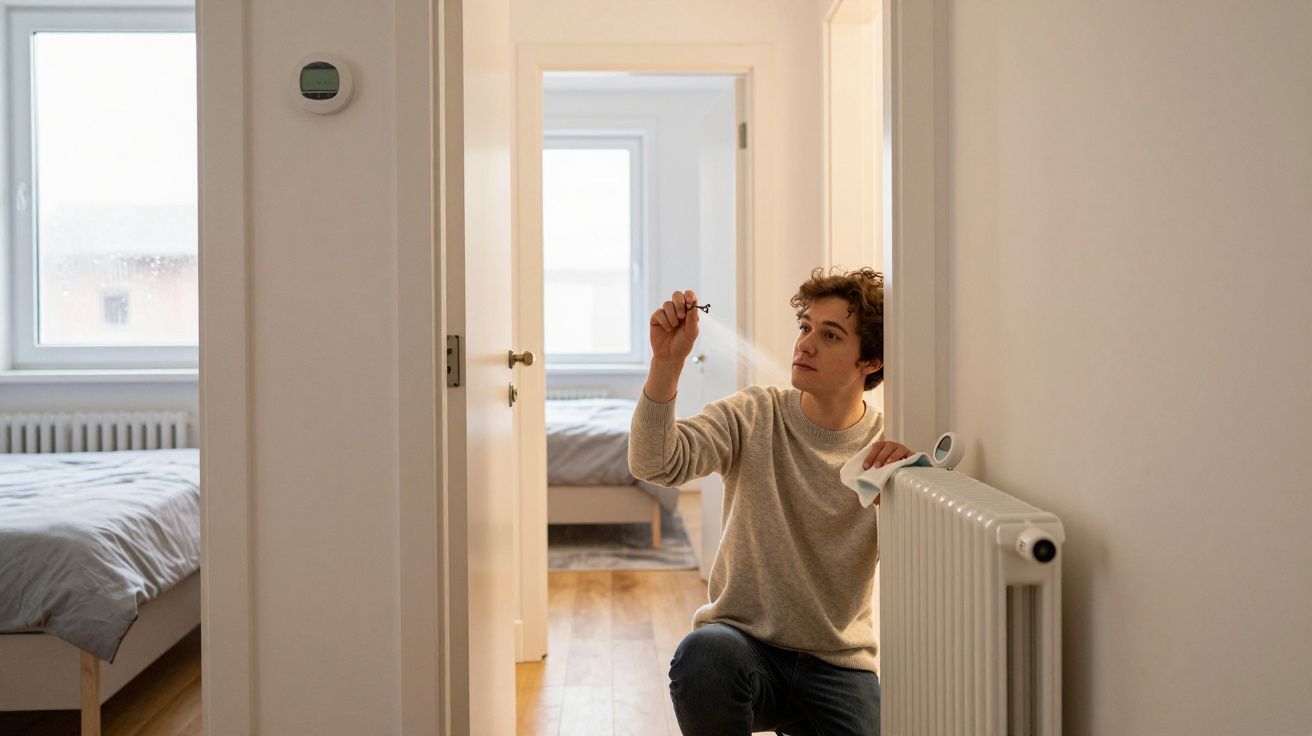
You don’t hear about it in most rental properties until the first comfort complaints land: “The radiators are on, but the bedroom never warms up,” or “It’s roasting by the front door and freezing at the back.” Heating looks like a simple on/off promise, yet tenants live inside the gaps-drafts, damp corners, slow-to-respond systems-long before a landlord feels the urgency.
It usually starts as a small, reasonable message. Then it becomes a pattern: the same time of day, the same rooms, the same tired sentence-“We’re doing everything right and it’s still cold.”
The behaviour that hides in plain sight
Landlords often think of heating as a single decision: set the thermostat, service the boiler, job done. Tenants experience it as a routine made of dozens of tiny behaviours-when you turn it on, where you close doors, whether you bleed radiators, how long you let it “coast”, what you do with trickle vents, curtains, extractor fans.
The trouble is that a heating system will tolerate sloppy habits for weeks, then punish them when the weather turns. Like a dishwasher loaded “almost fine”, everything works until one big tray blocks the spray. In homes, that tray is usually a closed-off room, a stuck valve, or a timer pattern that only makes sense on mild days.
And because the early discomfort is quiet-extra jumpers, a hot shower before bed-nobody raises it until the cold snaps make it undeniable.
“It’s on all day” (and still the cold wins)
One of the most common complaint patterns is counterintuitive: tenants run the heating for long stretches, yet the property never feels stable. Landlords hear “all day” and picture waste; tenants mean “constantly chasing a temperature the building won’t hold”.
This is where behaviour meets physics. If the home loses heat quickly-through drafts, poor loft insulation, leaky windows, an uninsulated floor-long, low heating can become an expensive treadmill. The radiators warm the air, the building leaks it, and the tenant ends up living in a perpetual warm-for-ten-minutes cycle.
A useful reframe is: don’t ask “is the heating on?” Ask “does the property retain heat for long enough to feel calm?”
The 5pm mistake: heating patterns that backfire
There’s a particular routine landlords only notice after a complaint thread has formed: the late-day blast. The heating stays off all morning “to save money”, then goes on full at 5pm to rescue the evening. The home is already cold-soaked-walls, floors, furniture-and the system has to heat the mass of the building, not just the air.
Tenants respond by cranking the thermostat higher, because higher feels like faster. Most systems don’t work that way; it just overshoots later, then cools sharply again. People go to bed in a room that finally warmed up at 9pm, then wake at 3am to that same room turning brittle.
If you want fewer comfort complaints, the question becomes practical: what pattern avoids the daily cold-soak?
A steadier pattern that often works better
- Use shorter, earlier “pre-heat” periods to stop the building dropping too far.
- Aim for consistency in the rooms people actually occupy, not whole-house peaks.
- Treat overnight settings as a safety net, not a freeze-and-rescue strategy.
This is not a guarantee-fabric and system type matter-but it changes the shape of discomfort.
The radiator that’s “on” but not doing its job
Many disputes begin with a sentence that sounds like attitude: “The radiator barely gets hot.” Often it’s not attitude. It’s a small fault or mismatch that only shows up once someone needs the room to be genuinely warm.
Common culprits in rental properties include:
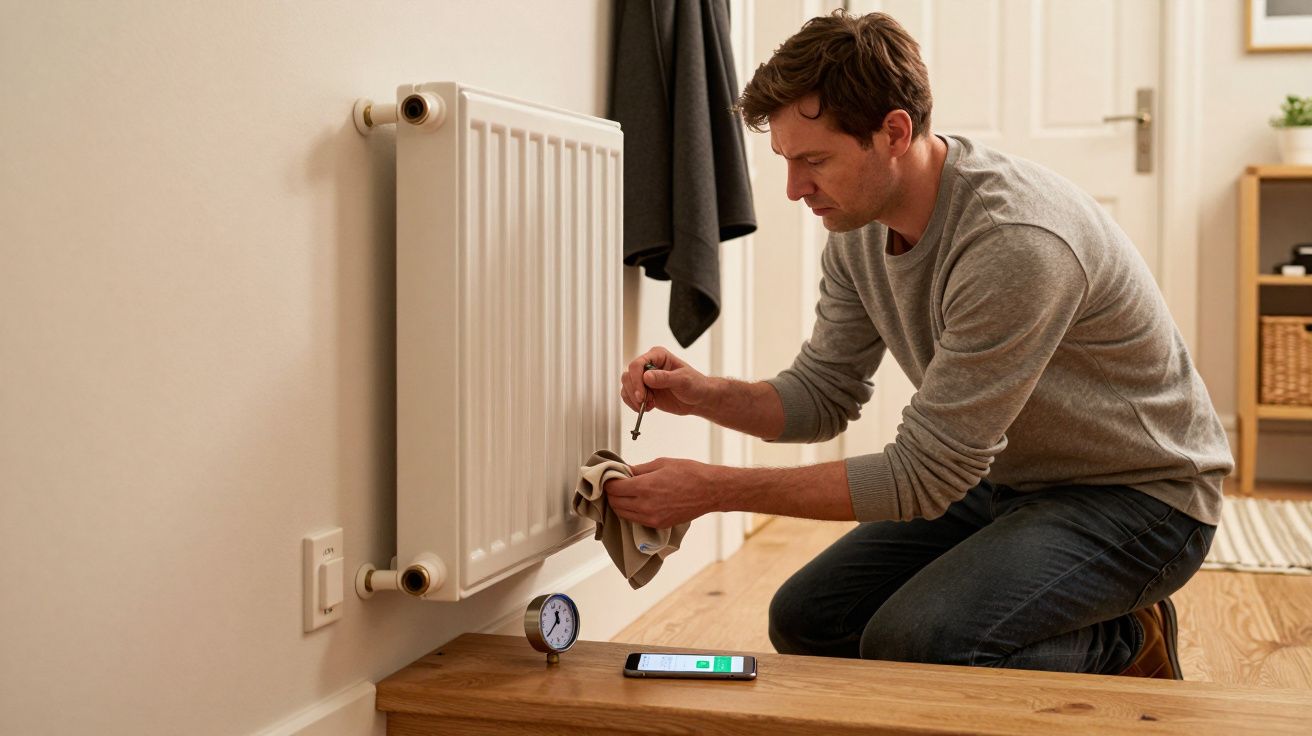
- Air in the system: top of the radiator cold, bottom warm.
- Partially closed lockshield valves after redecorating or maintenance.
- Stuck TRVs (thermostatic radiator valves) after summer.
- Poor balancing: nearest radiators hog the heat, far rooms starve.
- Furniture and curtains trapping heat behind the radiator, warming fabric instead of air.
None of these are dramatic, and that’s the point. They create “it’s sort of working” conditions that don’t trigger action until the tenant’s daily life starts shrinking to one warm chair.
The quiet loop landlords miss: heating, ventilation, damp
Comfort complaints aren’t always about temperature alone. They’re about how the air feels: heavy, wet, sharp, stale. Tenants describe it as “cold” because damp air makes warmth less convincing, and because they’re tired of explaining.
Here’s the loop: a tenant turns heating down to save money, opens windows less, dries clothes indoors, and avoids using extractor fans because “it drags the heat out”. Humidity rises. The property then feels colder at the same thermostat setting, and condensation appears on the coldest surfaces-corners, window reveals, behind wardrobes.
From a landlord’s perspective, it can look like lifestyle. From the tenant’s perspective, it looks like a home that won’t settle.
A small change that helps is treating ventilation as part of heating, not its enemy: brief, targeted extraction after showers and cooking, trickle vents used as designed, and enough steady heat to stop surfaces dropping into the condensation zone.
How to catch it before the complaint email
Most landlords only get data when someone is unhappy. You can pull the problem forward with a short, structured check-in and a few basic observations that don’t accuse anyone of doing it wrong.
Try asking tenants (and checking yourself where possible):
- Which rooms feel coldest, and at what times?
- Does the property feel colder after a shower/cooking/drying laundry?
- Are any radiators noisy, slow, or hot only at the bottom?
- Do windows show morning condensation, and where exactly?
- What’s the timer pattern, and does it match occupancy?
If you manage multiple rental properties, these questions create a pattern. The same answers tend to point to the same fixes: balancing, draft proofing, insulation top-ups, TRV replacements, extractor fan upgrades, and clearer instructions that assume the tenant hasn’t lived with that particular system before.
The landlord’s version of “think like water”
An engineer might say “think like heat”. Heat moves, gets blocked, and takes the easiest route. If a hallway is scorching and the bedroom is icy, the system is telling you where the flow is going-and where it isn’t.
Once you start seeing “shielding” in heating-closed doors with no airflow path, a radiator boxed in, a thermostat in the wrong place, one underpowered emitter in a large room-you stop treating comfort complaints as vague and start treating them as diagnostics.
“If the home can’t hold warmth, the tenant will chase it. If the system can’t deliver it evenly, the tenant will live around it.”
A small, landlord-friendly checklist
- Confirm boiler service, then check radiator balance (especially far rooms).
- Replace sticky TRVs and label controls so they’re usable.
- Tackle obvious drafts before tweaking schedules.
- Ensure extraction works, and explain when to use it without fear.
- If possible, measure: a cheap hygrometer can reveal the damp-cold loop in a week.
| What tenants report | Likely cause | First check |
|---|---|---|
| “Heating’s on but it’s still cold” | Heat loss or poor balance | Drafts + far radiators warming last |
| “Bedroom never warms up” | Stuck TRV / undersized radiator | TRV pin + radiator output vs room size |
| “Feels cold and clammy” | High humidity, low surface temps | Condensation spots + extractor function |
FAQ:
- Why do comfort complaints spike when the boiler is technically working? Because “working” doesn’t mean “delivering heat evenly” or “the building retains it”. Small imbalances and heat loss only become obvious in colder weather.
- Is turning the thermostat higher a sign the tenant is wasting heat? Not necessarily. People do it when warmth is delayed; many systems won’t heat faster, they’ll just overshoot later.
- What’s the quickest fix that makes a real difference? Bleeding and balancing radiators, plus fixing stuck TRVs, often improves cold-room complaints quickly-especially in larger or older rental properties.
- How does damp tie into heating complaints? Higher humidity makes a home feel colder and increases condensation on cold surfaces. Without enough steady heat and targeted ventilation, the space can feel uncomfortable even at “normal” temperatures.
- What should I tell tenants about heating controls? Provide a simple, property-specific guide: how to use the timer, what TRVs do, where the thermostat is, and what to do if a radiator is cold at the top or won’t heat at all.





Comments (0)
No comments yet. Be the first to comment!
Leave a Comment