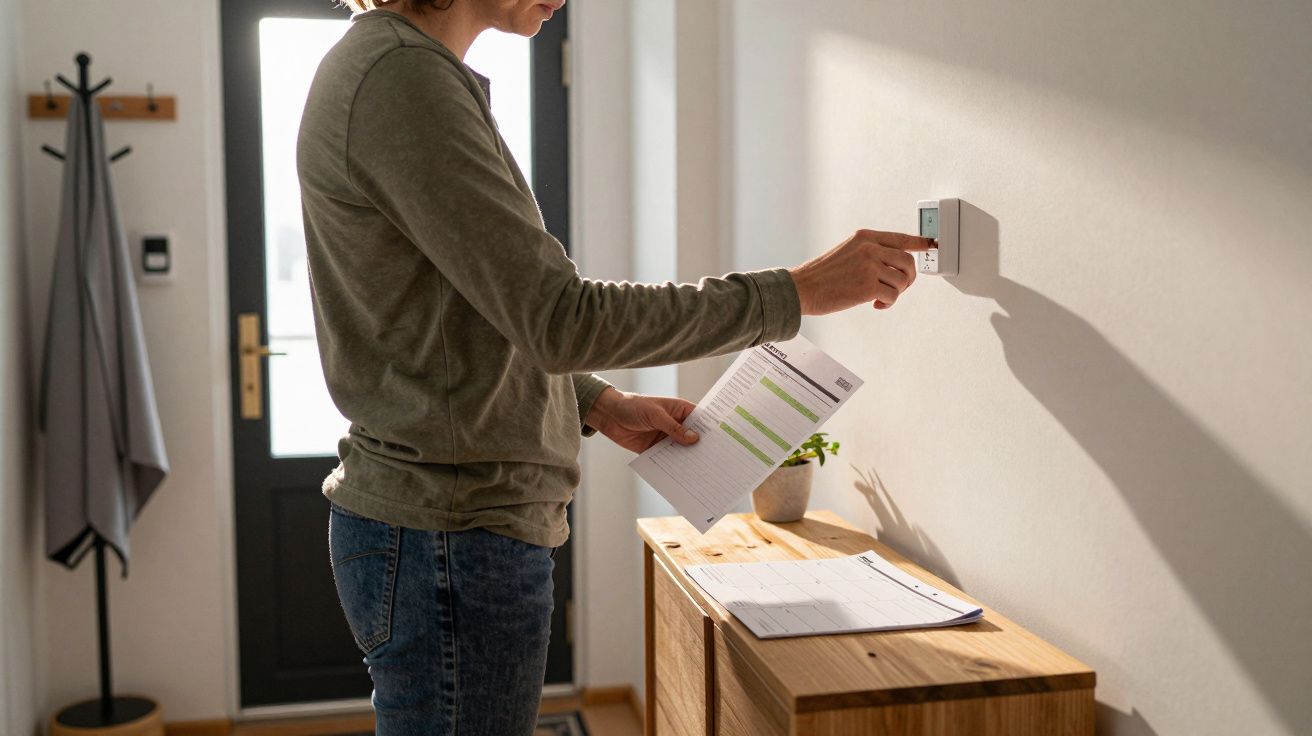
You don’t notice it because it feels like “set and forget”, but heating timers are one of the easiest places for inefficient usage to creep into daily life. They sit quietly on the wall or inside an app, deciding when your boiler runs, even when the house is empty or everyone’s asleep. If your bills feel stubborn, this is often the control setting doing the damage.
Most of us inherit a schedule and never really question it. Someone set it up years ago, seasons changed, routines shifted, and the timer just kept firing on the same slots like a metronome.
The setting that drains you: long “on” blocks
A common pattern looks sensible on paper: heating on from 6–9am, then 4–11pm. It’s comforting because you’re covering “when we might need it”, but that’s where the waste starts. Those long blocks don’t mean constant heat, but they do mean your system repeatedly tops up temperature across hours you’re not actually benefitting from.
The real cost is in the gaps you don’t see. The half-hour when everyone leaves early. The two hours when the oven’s on and the living room is already warm. The late evening when you’re under a duvet but the system is still maintaining the whole house.
If you’re using a programmable thermostat, a boiler timer, TRVs, or app schedules, the principle is the same: wide heating windows invite inefficient usage.
Why “just leave it on” feels efficient (but often isn’t)
There’s a stubborn myth that it takes more energy to reheat a home than to keep it gently warm all day. In real homes, with real draughts and real heat loss, maintaining temperature for hours usually means you’re paying to replace heat that’s constantly leaking out.
Think of your house like a bucket with a small hole. Keeping it topped up all day feels tidy, but it’s a steady drip of energy. Shorter, targeted runs can reduce how long you’re fighting that drip.
That doesn’t mean letting the place go cold and damp. It means stopping the timer from heating for “maybe” moments.
A quick self-check: do your timer periods match your life?
Stand in front of your timer (or open the app) and look at today, not the ideal day.
- Who is actually home during each heating “on” period?
- When do you leave the house, and when do you return?
- Which rooms do you use in the evening, and which are just being maintained out of habit?
- Are you heating past bedtime because the schedule ends late, not because you’re cold?
Be honest: nobody lives exactly like their schedule suggests. The timer should follow your routine, not the other way round.
A better rhythm: heat in pulses, not marathons
You’re aiming for coverage where comfort matters, then letting the system rest.
Try this as a starting point and adjust:
- Morning pulse: start 30–60 minutes before you get up, end shortly after you leave.
- Evening pulse: start 30–60 minutes before you arrive home, end around when you go upstairs or settle for the night.
- One “buffer” slot only if needed: a short midday top-up for colder days, older homes, or people working from home.
The point isn’t perfection. It’s removing those big, vague blocks where the timer runs simply because it can.
The small change that makes a big difference
The easiest win is often the end time. Many homes are heated for an extra 60–120 minutes each night because the final slot runs to a round number (10pm, 11pm, midnight). Pull it back by 30 minutes for a week and see if anyone notices. If nobody complains, you’ve just found free savings.
Common “quiet waste” patterns to look for
These are the timer habits that tend to inflate bills without improving comfort:
- Heating on while you’re out (school run, commute, regular errands).
- Weekend schedules copied from weekdays, even though you lie in later.
- A single long evening slot that heats bedrooms and unused rooms for hours.
- Timers never updated for spring/autumn, so you’re still running a winter pattern in mild weather.
- Multiple short periods scattered across the day, creating frequent warm-ups that don’t line up with occupancy.
If you recognise even one, you’ve got room to tighten things up without living in a cardigan.
“But my house takes ages to warm up”
Some homes do. Solid walls, poor insulation, and older radiators can mean you need a longer lead-in. That’s fine-just be precise about it.
Instead of widening the whole heating window, extend the start time a little and keep the end time tight. Comfort usually depends on arriving to a warm living space, not maintaining the entire house temperature until late.
If your system supports it, keep bedrooms cooler and prioritise the rooms you actually sit in. Timers decide when; room controls decide where.
A simple weekly reset that stops the drift
Pick one calm moment-Sunday evening works-and do a two-minute review.
- Look at next week’s diary (work days, school holidays, days out).
- Adjust the schedule by 30–60 minutes where your routine changes.
- Save it, then forget it again.
It’s the same principle as clearing out subscriptions: the expensive part isn’t the feature. It’s never revisiting the default.
FAQ:
- Do heating timers save money automatically? Only if the schedule matches when you’re home and awake. A timer with long “on” blocks can cost more than a simple, tighter routine.
- Is it cheaper to leave the heating on all day at a low temperature? Often no. Maintaining temperature for long periods usually means paying for ongoing heat loss. Short, well-timed periods can reduce run hours.
- How far in advance should I set the heating to come on? Typically 30–60 minutes, but it depends on your home and system. Adjust in 10–15 minute steps until it feels comfortable without running longer than necessary.
- What if someone is home during the day? Use a short midday slot or split the schedule, but keep it targeted. Avoid an all-day block unless you genuinely need it.
- Should I change the timer with the seasons? Yes. Spring and autumn are where inefficient usage hides-winter schedules often keep running long after they’re needed.




Comments (0)
No comments yet. Be the first to comment!
Leave a Comment