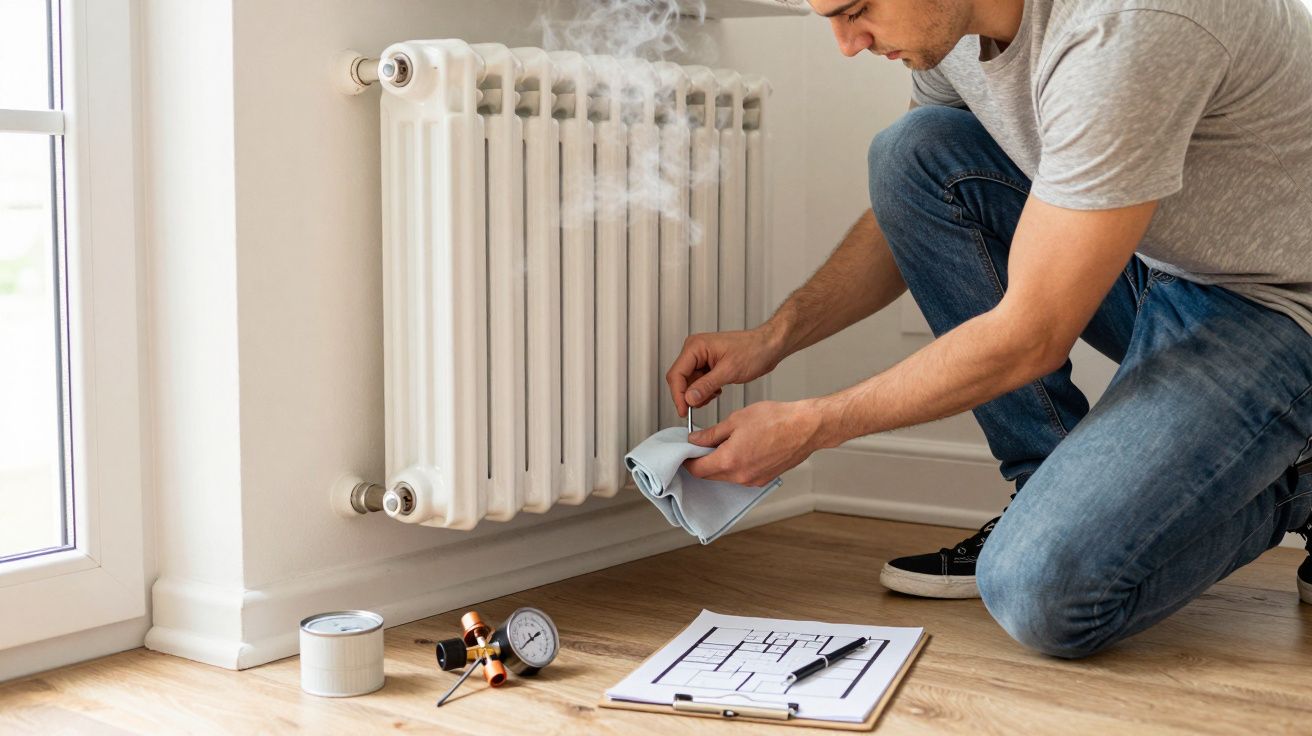
It usually starts with a noise you can’t ignore. A rattle in the airing cupboard, radiators that only warm at the top, the shower going lukewarm when someone turns a tap on downstairs. When that happens, people blame the box on the wall, but heating system design is often the real culprit behind the performance issues you feel in daily life - comfort that comes and goes, bills that don’t match the warmth, and a home that never quite settles.
You can replace the boiler and still keep the same problems, just delivered by a shinier appliance. Because the boiler is only one actor in a bigger script: pipework, radiators, controls, hot water storage, and the way all of it is balanced (or isn’t).
The moment you realise it’s not “a dodgy boiler”
There’s a particular kind of frustration when the engineer says, “The boiler’s firing fine,” and you feel like that can’t possibly be true because your back bedroom is freezing. But both things can be true at once. A boiler can be perfectly capable while the system around it is poorly matched to the house.
The tell is inconsistency. One room roasting, one room stubbornly cold. Hot water that’s fine on Tuesday and pathetic on Thursday. A boiler that cycles on and off like it can’t decide what it’s doing. These aren’t always faults. They’re often symptoms of a system that was never set up to move heat where you need it, when you need it.
What “the system” actually includes (and why it matters)
Most households picture heating as: thermostat → boiler → radiators. Real life is messier. Your comfort depends on:
- Heat emitters: radiators or underfloor loops sized for the room’s heat loss.
- Distribution: pipe diameters, layout, and whether flow actually reaches the far end.
- Hydraulics: pump capacity, pressure drops, bypasses, and balancing.
- Controls: zoning, thermostatic radiator valves (TRVs), weather compensation, timers.
- Hot water: cylinder coil sizing, recovery rate, mixing valves, priority settings.
- Water quality: sludge, magnetite, air, inhibitor levels.
Miss one piece and the rest spend their lives compensating. That compensation looks like higher flow temperatures, longer run times, and the nagging sense that your home is always chasing comfort rather than arriving at it.
The classic performance issues (and the design mistake behind them)
The same complaints come up again and again. They sound like “boiler trouble”, but they’re usually “system trouble”.
Radiators hot at the top, cold at the bottom
Often sludge and poor water quality - but also low flow, wrong pipe routes, or a radiator that’s oversized for the available flow.One cold radiator at the far end of the house
Frequently a balancing issue, but sometimes the pipework simply can’t deliver enough flow because of the layout or undersized runs.Boiler short-cycling (on/off constantly)
Oversized boiler for the load, poor control strategy, or not enough system volume. The boiler isn’t “broken”; it’s bored.High bills even with a new boiler
Flow temperatures set too high, no effective zoning, or radiators too small so the boiler has to run hotter than it should.Hot water goes tepid in busy periods
Cylinder coil too small, settings prioritising heating over hot water, or unrealistic expectations from an underspecified store.
The uncomfortable truth is that you can’t efficiency-upgrade your way out of a layout problem. You can only design your way out.
The quiet maths your home is doing every day
Your house loses heat through walls, windows, floors, draughts, and ventilation. That’s the load. Your system’s job is to meet that load smoothly, without drama.
When heating system design doesn’t match the load, something has to give. Usually it’s comfort. Then it’s efficiency. Then it’s component life, because pumps, valves, and boilers don’t love running in frantic little bursts at high temperatures.
A well-designed system tends to feel boring. Rooms warm evenly. The boiler runs longer and gentler. The thermostat stops being a battleground.
A quick way to tell whether replacing the boiler will actually help
A new boiler helps when the existing one is unreliable, unsafe, or genuinely inefficient and the system can support better operation. But if the underlying symptoms are distribution and control-related, replacement is often a very expensive way to keep the same experience.
Here’s a simple, practical check:
- Do several rooms consistently lag behind, even when others are hot? That points to balancing, pipework, or emitter sizing.
- Do you need a very high flow temperature to feel warm? That hints at undersized radiators or poor insulation assumptions.
- Does the boiler fire for a minute, stop, then fire again? That often suggests oversizing or control mismatch.
- Have you ever had the system properly balanced and commissioned? Many systems never have, especially after piecemeal changes.
If two or more ring true, treat “new boiler” as a later step, not the first.
What good looks like: design choices that stop the chaos
You don’t need exotic kit. You need alignment. The best improvements are often unglamorous:
- Room-by-room heat loss and radiator sizing rather than “that looks about right”.
- Lower flow temperatures enabled by sufficient emitter capacity.
- Zoning that reflects how you live, not just what’s easy to wire.
- Balancing and commissioning that’s documented, not guessed.
- Water quality management (flush if needed, magnetic filter, inhibitor, air removal).
- Controls that prevent waste: weather compensation, load compensation, sensible schedules.
If you’re thinking about a heat pump later, these steps aren’t optional - they’re the groundwork. Heat pumps are less forgiving of sloppy distribution and undersized emitters. They don’t “blast” their way through design mistakes the way boilers often can.
The conversation to have with whoever is quoting the work
If an installer only wants to talk about boiler brand and kilowatts, pause. The quality of the outcome is usually determined before the first spanner turns.
Ask for specifics:
- What flow temperature are you designing around, and why?
- Will you calculate heat loss per room or assume?
- How will you prove the system is balanced at the end?
- What’s the plan for hot water demand at peak times?
- What will you do about sludge, air, and inhibitor levels?
You’re not being difficult. You’re making sure you’re buying comfort, not just a replacement box.
The line that saves money later
When a home feels cold in patches, it’s tempting to chase the obvious culprit. Boilers are visible, measurable, easy to blame. Systems are hidden in floors and walls, and that makes them easy to ignore.
But if your house keeps having the same performance issues, the most cost-effective fix is usually not “a better boiler”. It’s a system that’s finally been designed - and finished - like it was meant to work.





Comments (0)
No comments yet. Be the first to comment!
Leave a Comment