Bathroom installations are meant to be the satisfying bit of a renovation: the tiles are on, the taps gleam, and you finally stop brushing your teeth in the kitchen. But the most expensive problems often come from quiet installation errors hidden behind the wall, under the tray, or inside a “that’ll do” connection. If you’ve recently had work done (or you’re about to), these are the plumbing mistakes that show up weeks later-usually at 2am, usually as a damp patch you can’t explain.
There’s a particular kind of sinking feeling when a brand-new bathroom starts behaving like an old one. The shower runs hot then cold. The waste gurgles. The ceiling below grows a faint bruise. None of it feels dramatic enough to be a “flood”, but all of it is your house telling you something’s off.
The leaks that don’t announce themselves
Most post-renovation leaks aren’t Hollywood gushers. They’re slow, shy, and perfectly designed to rot the bit you can’t see.
One common culprit is a waste connection that’s been “made to fit” with too much sealant and not enough proper alignment. Silicone looks reassuring from the outside, but it’s not a substitute for the right trap, the right fall, and the right compression. Give it a few heat cycles and vibrations, and the tiny gap becomes a persistent drip.
Watch for these early tells:
- A musty smell that returns no matter how much you clean
- Swollen skirting, flaking paint, or a “soft” bit of flooring near the bath or vanity
- A mirror that fogs more than it used to (moisture has to go somewhere)
- A ceiling mark directly under the shower waste area, not under the shower head
If you can, take one panel off and look while someone runs the shower. Ten minutes of awkward crouching beats months of “maybe it’s just condensation”.
The wrong fall on wastes (and the slow-motion blockage)
A new basin or shower can drain badly even when the pipe is brand new, simply because it was installed without enough fall. Everything seems fine at first, then soap scum starts behaving like glue, hair starts collecting, and suddenly you’re standing in a shallow puddle wondering how you ended up here in a pristine bathroom.
The problem is often a battle between aesthetics and physics. You wanted a low-profile tray or a wall-hung vanity with a tight, tidy void. The installer had limited space, ran the waste too flat, and relied on the water’s “force” to shift it along. Water is loyal to gravity, not optimism.
A good rule of thumb: if the drain gurgles, is slow only sometimes, or smells even after cleaning the trap, ask specifically whether the waste run has the correct fall and whether it’s been kinked, flattened, or over-extended to make the furniture fit.
The trap mistakes that let smells back in
Bad smells in a new bathroom feel personal, like you’ve somehow done something wrong. Usually, it’s just the trap.
The classic issues are simple:
- No trap at all on an appliance or auxiliary waste (it happens more than you’d think)
- A trap installed the wrong way round, or not seated properly
- A “space-saving” bottle trap that’s the wrong depth, allowing the water seal to be pulled out
- Two fixtures sharing a waste without proper venting, causing one to siphon the other
If your basin smells after the shower runs, or the shower smells after the loo flushes, you’re not imagining it. That’s pressure and siphonage, and it’s fixable-just not with air freshener.
When water pressure is “fixed” with brute force
Renovations often involve changing pipe runs, adding mixers, moving the shower, or switching to concealed valves. That’s where pressure problems creep in: not because the house “has bad pressure”, but because the system has been created in a way that makes it behave badly.
A common installation error is using undersized pipework to feed a high-flow shower, especially where runs are long or have lots of tight elbows. Another is fitting a powerful thermostatic shower to an older hot water system without checking compatibility, then blaming the boiler when the temperature hunts.
Signs your setup is fighting itself:
- The shower goes cold when someone turns on a tap elsewhere
- The flow is punchy for two seconds, then fades
- The thermostatic valve never quite settles-always chasing the right temperature
A proper fix is boring and specific: correct pipe sizing, balanced supplies, appropriate valves, and (where needed) pressure reducing or boosting done deliberately, not as an afterthought.
The “it’s sealed” shower that isn’t tanked
This one is quietly brutal because you can have flawless tiles and still have a shower that fails.
Tiles and grout are not waterproofing. They’re decoration and wear layer. The waterproofing is behind them: tanking systems, membranes, correct sealing at penetrations, and good detailing around niches, corners, and the tray upstand. Skip that, and the shower becomes a slow feeder of moisture into walls and floors, especially with daily use.
If you’re dealing with a wet room or walk-in shower, ask what tanking system was used and where. If no one can name it, show you photos, or produce a spec, treat that as useful information-not a reassurance.
Hidden isolation valves (or none at all)
A well-installed bathroom isn’t just about how it looks; it’s about how it can be maintained without drama.
One of the most frustrating post-renovation discoveries is that there are no accessible isolation valves for the basin, loo, or shower. That means a dripping tap or a faulty fill valve becomes a “shut off the whole house” situation, which is how small issues become weekend-ruiners.
Good practice is simple:
- Isolation valves on hot and cold feeds to every fixture
- They’re reachable without dismantling furniture or cutting silicone
- They’re labelled or at least obvious when you find them
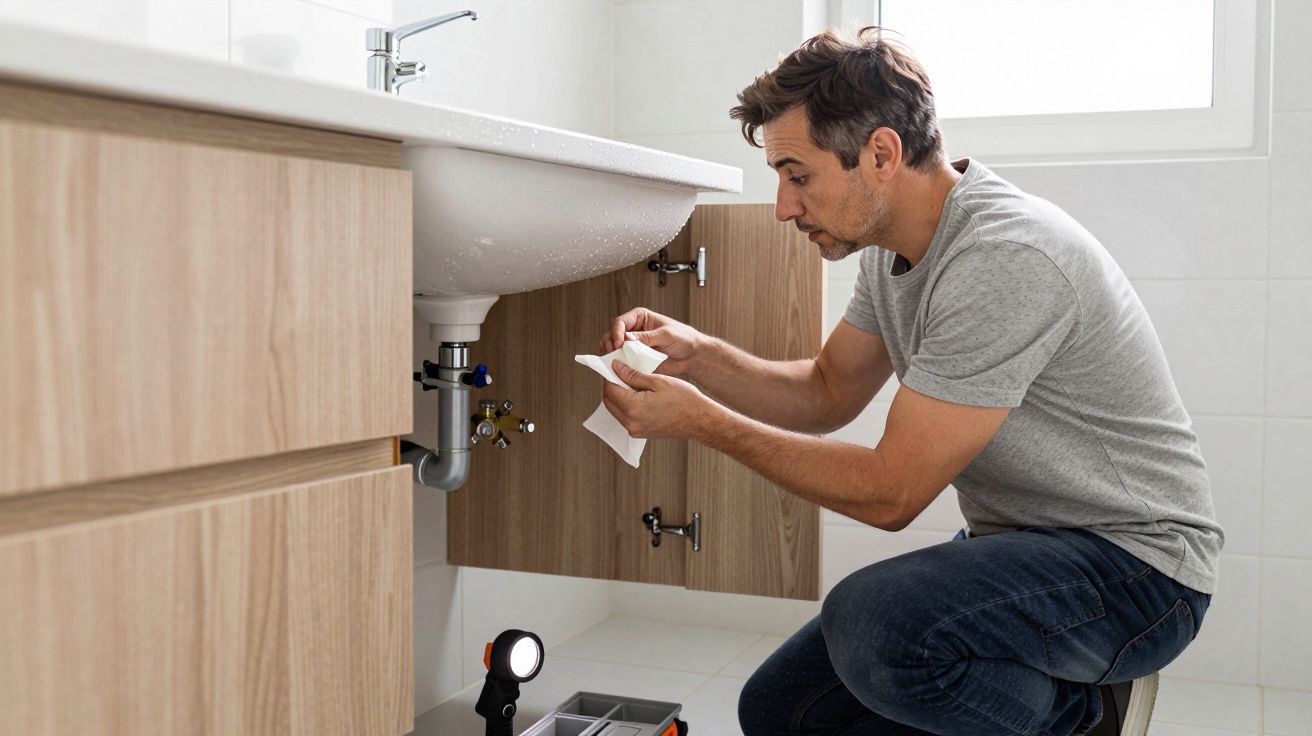
If you have a vanity unit, open it and look. If it’s a maze of rigid pipework with no valves in sight, that’s worth sorting before something fails.
The toilet wobble you should never ignore
A wobbling loo after a renovation isn’t “settling in”. It’s movement at a joint that’s meant to stay sealed.
Sometimes it’s a fixing issue-wrong anchors into the floor, or bolts not properly seated. Sometimes it’s the pan connector being slightly misaligned, creating stress that eventually opens a gap. Either way, every tiny rock is an invitation for leaks and smells, and once water gets under the flooring, it rarely stays politely contained.
If the toilet moves, stop using it until it’s checked. It’s not being precious; it’s preventing a slow leak that will cost far more than tightening the right fixings.
A quick post-renovation check you can actually do
You don’t need to be a plumber to catch the obvious problems early. You just need a calm half hour and a willingness to look where the drama hides.
Run this little circuit:
- Run the shower for 5–10 minutes, then check the ceiling below (if applicable) and the edges of the tray or floor.
- Fill the basin halfway, then release the plug and listen: smooth drain or gurgle-and-glug?
- Flush the loo twice and check around the base for any moisture or movement.
- Open every cupboard and feel around the traps and valves with dry tissue. Tissue doesn’t lie.
- Leave the bathroom door closed after a shower: does it clear normally, or does condensation cling like it’s got nowhere to go?
If anything feels “not quite right”, it’s easier to correct now than after the new paint and downstairs ceiling have absorbed the lesson.
| Mistake | What it looks like | What to do next |
|---|---|---|
| Waste fitted with poor fall | Slow drain, gurgling | Ask for fall check; adjust run if needed |
| No/poor trap or venting | Intermittent smells | Confirm trap depth; check for siphonage |
| No tanking in shower area | Damp patches, musty walls | Request tanking proof; investigate promptly |
FAQ:
- Why does my new bathroom smell even though it’s clean? It’s often a trap or venting issue: siphonage can pull water out of the trap, letting sewer gases back in. A plumber can confirm trap depth and whether the waste is properly vented.
- Is silicone enough to stop shower leaks? No. Silicone is a finishing seal, not the primary waterproofing. The waterproofing should be a tanking system or membrane behind the tiles, properly detailed at corners and penetrations.
- My shower goes hot and cold after the renovation-what causes that? Common causes are unbalanced supplies, undersized pipework, or an incompatible thermostatic valve for your system. It’s usually fixable with correct sizing and proper pressure/flow control.

Comments (0)
No comments yet. Be the first to comment!
Leave a Comment