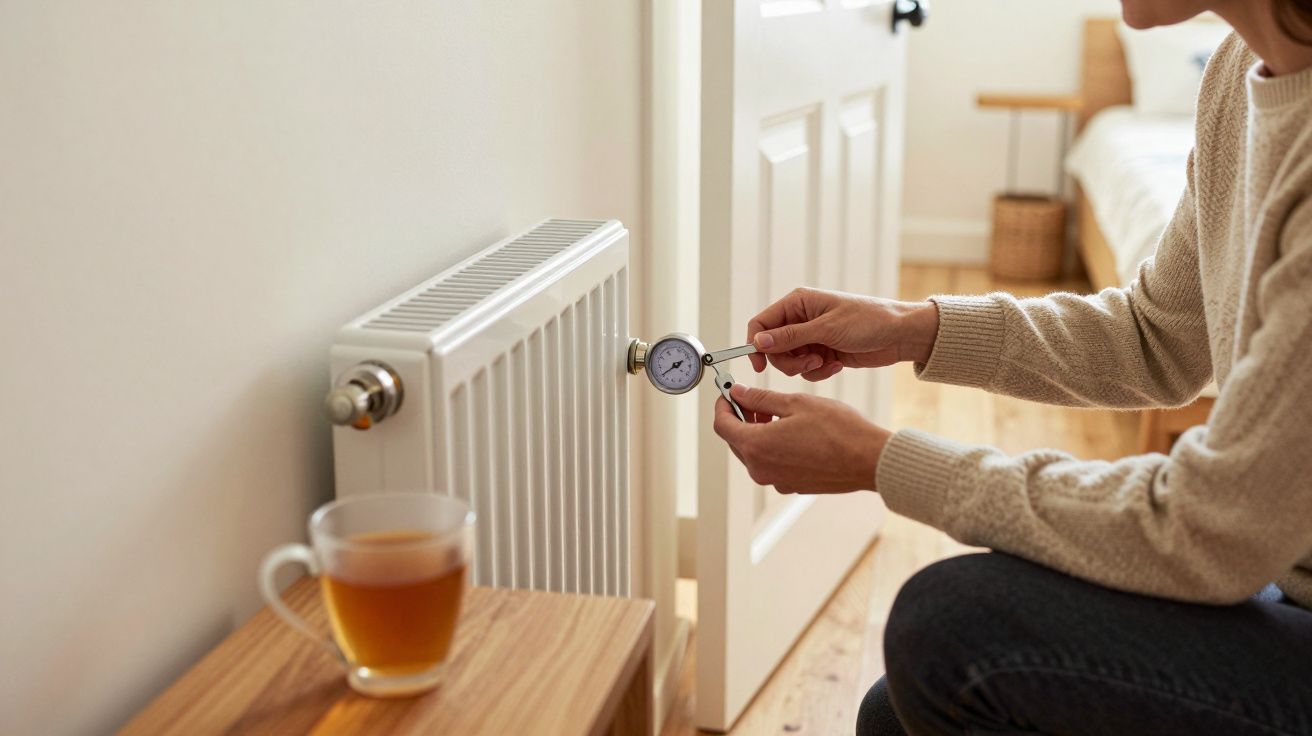
The radiators are hot to the touch, yet the room still feels stubbornly chilly. Radiator balancing is the quiet, slightly nerdy fix that makes heat distribution across a home behave like a system instead of a collection of random outcomes. It matters because the problem is rarely “the boiler is weak” - it’s usually that one loop is hogging the flow while another starves.
You notice it on winter evenings: the lounge is toasty, the back bedroom never gets going, the hallway feels like a draught even with the heating “on”. Somewhere, an engineer has seen this pattern a thousand times and watched someone do the same ritual-crank the thermostat higher, wait, sigh, and blame the weather.
The familiar mystery: hot metal, cold air
A radiator can heat up quickly and still fail to warm a room properly. That’s because the radiator’s job isn’t simply to be hot; it’s to transfer enough heat into the air and to do it at the right time compared with the rest of the system. If the water whips through too fast, or arrives lukewarm because it’s been robbed upstream, you get a radiator that feels “alive” but doesn’t deliver comfort.
Homes make this worse by being inconsistent. Some rooms lose heat faster (external walls, bigger windows), others are shielded (internal rooms, above warm kitchens), and long pipe runs behave differently from short ones. In practice, the system will always take the easiest path unless you tell it not to.
Radiator balancing is that telling: a way of nudging each radiator so it receives an appropriate share of hot water, rather than letting the nearest ones win by default.
What “balancing” actually changes
Central heating works like a small network. Hot water leaves the boiler or heat pump, travels around the circuit, and returns cooler. Without adjustment, the radiators closest to the pump often get more flow, heat faster, and satisfy the thermostat sooner - which can shut the whole system down before distant rooms catch up.
Balancing uses the lockshield valve (usually the plain cap on one side of the radiator) to restrict flow on radiators that are overheating early. That forces more flow to reach the radiators that need help, improving heat distribution without changing any hardware.
Think of it like a border check for hot water. If one radiator’s “passport” is too easily accepted, it rushes through; balancing adds just enough friction to keep the system fair.
The tells: how to spot a system that’s out of balance
You don’t need instruments to suspect it. Most people feel it in patterns that repeat no matter how high they turn the dial.
Common signs include:
- One or two rooms always warm first, even on low settings.
- Farther rooms never quite catch up unless you run the heating for ages.
- Some radiators are hot at the top but only mildly warm overall (not a classic “cold bottom” sludge issue).
- The boiler cycles on and off frequently while parts of the house remain cool.
- After bleeding radiators, nothing really improves - because air wasn’t the main problem.
None of these prove balancing is the only issue. But they’re the everyday clues that the flow isn’t being shared sensibly.
How engineers do it (and why they look so calm)
A good balancing job is methodical, not dramatic. Engineers tend to start with the heating off and fully cool, then open all radiator valves, then bring the system up to temperature and measure how quickly each radiator heats and what the temperature drop is between flow and return.
The goal isn’t identical radiators. It’s a consistent, predictable warm-up across the home, with each radiator doing a useful amount of work rather than racing or idling.
A practical, homeowner-friendly version looks like this:
- Open all thermostatic radiator valves (TRVs) fully, so they don’t interfere.
- Fully open every lockshield, then note its starting position so you can go back.
- Turn the heating on and let things stabilise.
- Work from the nearest radiator outward, slightly closing lockshields on the radiators that heat too quickly.
- Aim for “even progress”, where distant radiators start warming in reasonable time, not as an afterthought.
It’s slow because every adjustment takes time to show up. That slowness is also why people give up and decide the system is “just like that”.
What balancing can and can’t fix
Balancing helps when the system’s behaviour is wrong. It won’t fix a radiator that can’t transfer heat because it’s blocked, undersized, or in a terrible place.
Here’s a compact reality check:
| Symptom | Likely cause | Balancing helps? |
|---|---|---|
| Near radiators roast, far rooms lag | Flow favouring shortest path | Yes |
| Radiator cold at bottom | Sludge or blockage | No (needs clean) |
| One room always cold despite warm radiator | Insulation/draughts/undersized rad | Not much |
It also matters what you’re heating with. Heat pumps typically want lower flow temperatures and steady circulation, which makes balanced flow even more important. A poorly balanced system can push you into higher temperatures than necessary - and that shows up on bills.
Small adjustments, outsized comfort
The quiet win of radiator balancing is that it often feels like “we finally have a normal house”. The back bedroom stops being a punishment. The thermostat stops dictating comfort based on whichever radiator reaches it first. You may even find you can lower the flow temperature or thermostat setting, because the warmth is spread more evenly rather than concentrated.
There’s also a social benefit: fewer arguments about who “always gets the warm room” and fewer nightly tweaks to TRVs like they’re volume knobs on a temperamental radio.
If you take only one idea away, let it be this: when radiators heat up but rooms don’t, the system may not need more heat. It may need fairer flow.
FAQ:
- Is radiator balancing the same as bleeding radiators? No. Bleeding removes trapped air; balancing adjusts water flow rates so radiators warm up in a controlled, even way.
- Can I balance radiators myself? Many people can, if they’re patient and comfortable making small valve adjustments. If you have a complex system, a heat pump, or persistent cold rooms, an engineer can do it faster and with temperature measurements.
- Will balancing reduce my energy bills? It can, especially if it lets you run lower temperatures or shorter heating cycles. The main benefit is comfort through better heat distribution.
- How long does balancing take? Typically a couple of hours for an average home, sometimes longer because each adjustment needs time to settle.
- When should I not bother balancing? If radiators are blocked with sludge, if the pump/controls are faulty, or if the issue is mainly insulation and draughts, balancing won’t be the main fix.




Comments (0)
No comments yet. Be the first to comment!
Leave a Comment