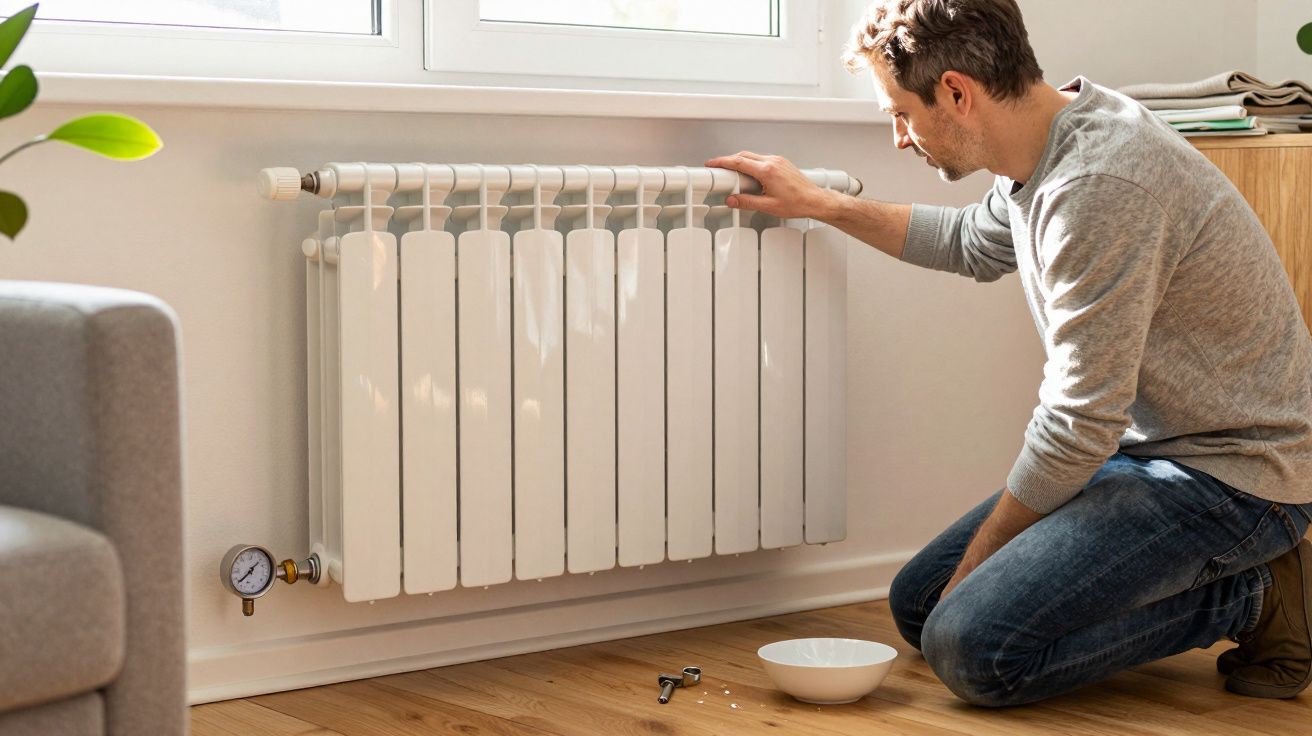
The warnings don’t arrive with smoke or a dramatic bang. In most homes and workplaces, heating systems lose reliability through gradual degradation: a pump that runs a little louder, a valve that sticks a little longer, a sensor that drifts a little further from truth. It matters because the bill still climbs even as comfort slips, and by the time you notice, the fix is rarely the cheap one.
You can feel this in the odd moments: the radiator that’s hot at the top but sulky at the bottom, the boiler that “hunts” on and off, the office zone that never quite reaches setpoint. Engineers see it too. They just tend to see it earlier, and more quietly.
How reliability leaks out: the small, stubborn mechanics
Most heating failures aren’t sudden. They’re the end of a slow unravelling of tolerances, flow, and control that started months ago when nobody was watching. The system still works, technically, but it’s working harder for less.
Gradual degradation often shows up as:
- Flow getting compromised: sludge, scale, air, partially closed valves, tired pumps.
- Heat transfer getting worse: scaled-up heat exchangers, fouled plates, dusty fan coils, radiators full of magnetite.
- Controls drifting: sensors ageing, thermostats mislocated, poorly tuned compensation curves.
- Combustion and firing efficiency slipping: burner setup out of trim, condensate issues, flue restrictions.
The reason it’s so quiet is that each change is small enough to be tolerated. A boiler can mask a lot with longer run times. A building can hide a lot with mild weather. The first truly cold week is when the system stops being able to cover its own tracks.
“Most breakdowns are old stories with a new date on them,” a commissioning engineer once told me, staring at a graph that had been warning everyone for a year.
The signs you can actually spot (without becoming the building manager)
You don’t need gauges and a laptop to notice the early tells. You need pattern recognition and a bit of honesty about what “normal” used to feel like.
Look for this cluster:
- More cycling: boiler fires, stops, fires again, especially around mild temperatures.
- Uneven rooms: one end of the house roasting, the other never catching up.
- New noises: gurgling radiators, buzzing zone valves, pump whine, kettling.
- Hot water mood swings: temperature swings, longer waits, “warm then cold” showers.
- Bleeding radiators becomes a hobby: air keeps returning, suggesting ingress or poor pressure control.
- Pressure dropping on sealed systems: topping up more often than you used to.
None of these alone is proof. Together, they usually mean the system is losing its margins-like a car that still drives, but only if you ignore the dashboard and never take the motorway.
Why engineers “quietly watch” (and what they’re waiting for)
Engineers aren’t indifferent; they’re constrained. In a lot of buildings, maintenance is reactive by default, budgets are seasonal, and disruptions are politically expensive. So the system is allowed to limp until a threshold is crossed.
That threshold is often one of three things:
- A comfort complaint that becomes loud enough to be logged, escalated, and funded.
- A safety or compliance trigger: combustion readings, flue issues, gas safety checks, overheating, pressure relief events.
- A measurable performance drop: energy use spikes, return temperatures rise, heat pump COP collapses, callouts multiply.
The frustrating part is that the fix is typically easiest before the threshold. After, you’re paying for emergency labour, parts availability roulette, and the collateral damage of running stressed equipment.
The boring interventions that keep the whole thing alive
The best reliability work looks unimpressive. It’s not a shiny new boiler; it’s the small maintenance loop that stops problems from compounding.
A sensible “keep it boring” plan includes:
- System water quality checks (inhibitor level, corrosion risk) and filtration that’s actually cleaned.
- Bleeding and balancing so flow is where it needs to be, not where it’s easiest.
- Pump and valve exercise (especially for kit that sits idle through summer).
- Control verification: sensor placement, calibration, weather compensation, scheduling, setpoint sanity.
- Heat exchanger cleaning on boilers and HIUs, and coil cleaning on fan convectors/AHUs.
- Combustion analysis for gas appliances and a check that condensate and flue paths are clear.
If you’re in a home, “boring” might just mean an annual service that includes water-side checks, plus a magnetic filter clean and a proper look at cycling behaviour. If you’re in a larger building, it’s trend logs and planned micro-interruptions rather than heroic callouts.
A quick reality check you can run this week
Pick one room that’s always awkward and treat it as your canary. Over seven days, note what happens at the same times each day: morning warm-up, evening peak, and overnight setback.
Write down:
- How long it takes to feel warm
- Whether radiators are evenly hot across their surface
- Any pressure top-ups or fault codes
- Any patterns in cycling (you can often hear it)
If the same annoyance repeats, you’ve found something system-level, not a one-off. That’s the moment to ask for targeted checks rather than vague “it seems fine” reassurance.
Care now, fewer failures later: a simple map
| Quiet warning | Likely cause | Low-drama next step |
|---|---|---|
| Uneven radiator heat | Air/sludge/poor balance | Bleed, clean filter, balance, consider flush if severe |
| Short cycling | Oversized output, control issue, low flow | Check settings, flow rates, sensors, compensation curve |
| Rising bills, same comfort | Efficiency loss | Service with combustion + water-side checks, clean exchangers |
FAQ:
- Can gradual degradation really make a system fail even if nothing is “broken”? Yes. Reliability often fails when multiple small losses (flow, sensor accuracy, heat transfer) stack up until the system has no spare capacity.
- What’s the fastest homeowner check for early problems? Listen for frequent cycling and check for uneven radiator heat (top hot, bottom cool). Those two signs often point to flow or control issues.
- Do I need a powerflush every time performance drops? Not always. Start with water quality testing, filter cleaning, bleeding, and balancing. Flushes are useful when sludge is significant, but they’re not a universal first step.
- Why does the system behave worse on the first cold week? Mild weather hides inefficiency. Cold snaps remove the buffer, so small faults turn into comfort loss and fault codes.
- What should I ask an engineer to do, specifically? Request evidence-based checks: system pressure trend, delta-T across emitters, pump performance, control settings (including compensation), and water quality/inhibitor level.





Comments (0)
No comments yet. Be the first to comment!
Leave a Comment