In the middle of winter, better heating performance can feel like a small miracle: you turn the thermostat up, and the radiators get hot fast. But when that speed comes with odd noises, short cycling, or rooms that never quite settle, it can be a sign of system stress building inside the boiler, heat pump, or pipework. It matters because the “nice and toasty” moment is often the first clue that the system is working harder than it should - and quietly ageing itself in the process.
Picture a semi in Leeds on a wet evening. The homeowner bragged last week that their place “heats up in minutes now”. Tonight, the boiler fires, stops, fires again, and the landing radiator gurgles like a kettle. Comfort arrived quicker, yes. So did the wear.
When fast warm-up is a real upgrade - and when it’s a warning
Sometimes faster heat-up is exactly what you paid for. A properly sized boiler, balanced radiators, a smart control that stops overshoot, or new insulation can genuinely improve response time. The key is that the house warms smoothly, then stays stable without drama.
The warning version feels different. The system heats hard in bursts, then drops off; some rooms roast while others lag; the boiler cycles on and off like it can’t find its rhythm. That “rapid” feeling can come from water moving in the wrong way, sensors being fooled, or flow being restricted - all of which translate into extra strain.
Think of it like a car that suddenly feels faster because it’s stuck in a lower gear. It’s loud, it jumps, and it gets you moving - but it’s not efficient, and it’s not happy.
The common culprits hiding behind the “wow, it’s quick” moment
Fast heat-up paired with instability usually points to one of a few causes. None are mystical; they’re just physics, flow, and control logic.
Short cycling is a classic. The boiler reaches its target temperature quickly, shuts down, then restarts because the heat hasn’t been distributed properly. You get quick blasts of heat and a lot of ignition cycles, which is rough on components.
Poor circulation can also create a fake sense of speed. A pump issue, a stuck valve, or a partially blocked pipe means one part of the system gets very hot very quickly, while the rest waits. The hot bits convince you the system is “rapid”; the cold bits tell the truth.
Other usual suspects:
- Sludge or magnetite in radiators and pipework, narrowing the pathways and forcing hotter, faster bursts through what’s left.
- Air in the system, giving you hot tops/cold bottoms and that gurgling, rushing-water soundtrack.
- Incorrect boiler settings (flow temperature too high, modulation not behaving, or controls set up to overshoot).
- Thermostat placement (near a radiator, in a sunny spot, or in a draught), causing the system to stop early then restart.
You don’t need to diagnose it perfectly on day one. You just need to notice the pattern: fast heat-up plus unsettled behaviour.
A quick self-check: spot the difference between “responsive” and “stressed”
Give yourself one evening to observe, not guess. Put the heating on from cold, then watch what happens for 30–45 minutes.
Look for five signals:
- Does the boiler/heat pump run steadily, or does it start/stop every few minutes?
- Do radiators warm evenly, or do a few get scorching while others stay lukewarm?
- Do you hear noises (kettling, gurgling, banging pipes) during warm-up?
- Does the temperature overshoot, then you feel chilly again soon after?
- Are hot water and heating behaviour linked (e.g., heating becomes erratic after a shower)?
If you see two or more, the speed you’re enjoying may be coming at a cost. The system isn’t just delivering heat quickly; it’s fighting itself to do it.
How to ease the load (without turning your house into a science project)
You’re aiming for calmer operation, not slower comfort. Start with the basics that reduce stress and improve distribution.
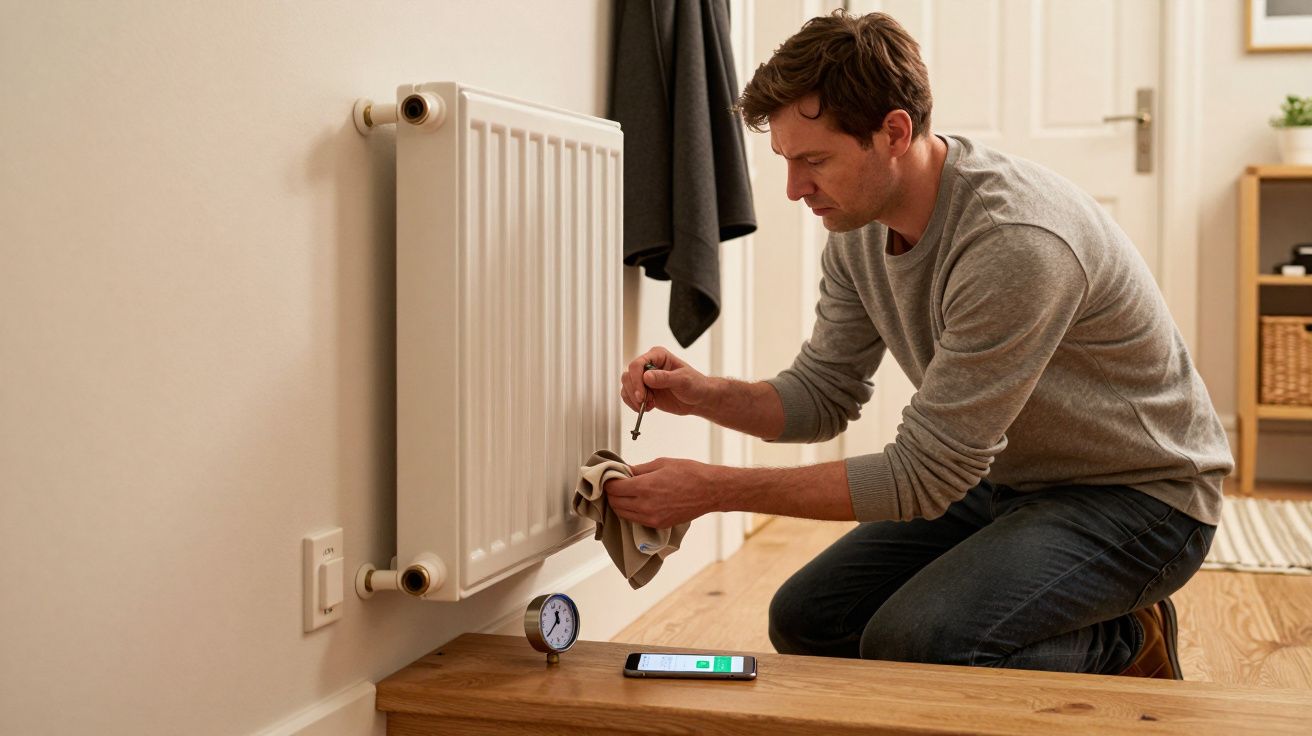
- Bleed radiators if you have cold spots and obvious air noise. Then check pressure and top up if your system requires it.
- Check thermostat basics: away from radiators, not in direct sun, not right by a draughty door.
- Try a lower flow temperature (if appropriate for your system). Many homes run hotter than needed, which can cause overshoot and cycling.
- Open radiator valves fully for a test (then rebalance later). A partly closed radiator on a key circuit can distort flow and trick controls.
If you suspect sludge - radiators hot at the top and cold at the bottom, or one radiator that never behaves - it’s time to think beyond quick tweaks. A magnetic filter service, inhibitor check, or powerflush (in the right cases) can turn “fast but chaotic” into “steady and efficient”.
“Quick heat is only good news when it’s smooth,” as one heating engineer put it. “If it’s quick because it’s spiking, something’s restricting the system.”
When to call someone in (and what to say so you’re taken seriously)
Call a Gas Safe engineer (or a qualified heat pump engineer) if you notice persistent cycling, kettling noises, repeated pressure drops, or radiators that refuse to heat evenly. Don’t just report “it heats up fast”; describe the behaviour that suggests stress.
Useful phrases that get better diagnostics:
- “It fires for 2–3 minutes, then shuts off, then repeats.”
- “Several radiators get very hot quickly; others stay cold.”
- “There’s a gurgling/kettling noise during warm-up.”
- “The house overshoots, then cools quickly even though the heating was on.”
Those details point them towards flow, sensors, pump performance, heat exchanger issues, or system contamination - the real roots behind the headline symptom.
| Signal you notice | Likely direction | Why it matters |
|---|---|---|
| Rapid bursts, frequent on/off | Short cycling/control issue | Extra wear and wasted energy |
| Hot in one area, cold elsewhere | Circulation/balancing | Heat isn’t being distributed |
| Noises during warm-up | Air, scaling, or restricted flow | Stress on heat exchanger and pipework |
FAQ:
- Is faster heat-up always a bad sign? No. If warm-up is smooth and the system then runs quietly and steadily, it can mean controls, insulation, or sizing are working well.
- What does “short cycling” actually do to a boiler? It increases starts/stops, which adds wear to ignition and components and often increases fuel use because the system never settles into efficient running.
- Can turning the flow temperature down really help? Often, yes. Lower flow temperatures can reduce overshoot and cycling, and help condensing boilers condense more, improving efficiency - as long as your home still reaches comfort.
- Do noisy pipes mean danger? Not always, but persistent banging, kettling, or gurgling is a sign something isn’t right (air, scaling, pressure, or flow restrictions) and is worth investigating.
- Should I powerflush straight away? Not automatically. A good engineer will look for evidence of sludge/poor circulation first and may recommend cleaning, filter servicing, and inhibitor before jumping to a full flush.






Comments (0)
No comments yet. Be the first to comment!
Leave a Comment