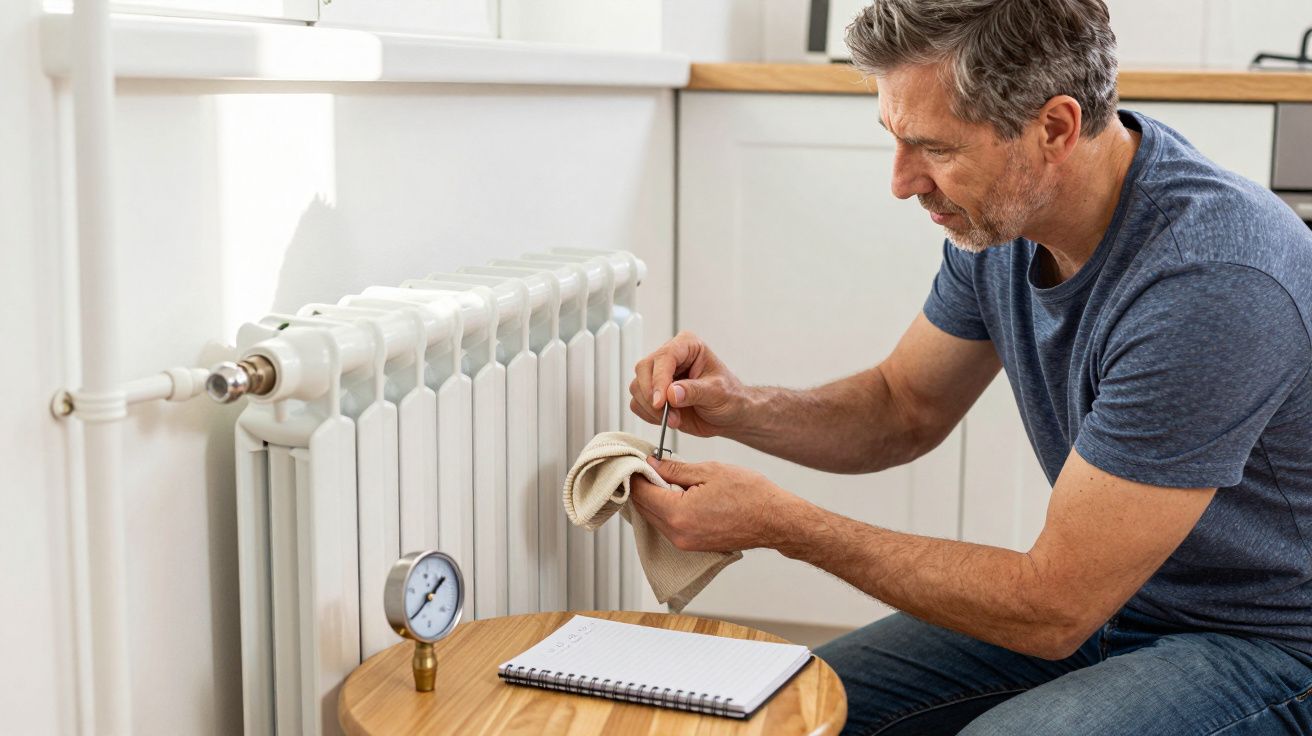
Water hammer noise is the clunk, thud, or sharp knock you hear in central-heating pipework when water flow changes abruptly, often as a pump starts, a valve shuts, or a radiator TRV “hunts”. Engineers pay attention because it’s rarely just a sound: it’s a sign of pipe stress building in places you can’t see, nudging joints, brackets and valves over thousands of cycles. The odd bit is that the risky systems aren’t always the loud ones - sometimes the worrying call is, “It sounds almost normal.”
You know the feeling: the boiler fires, radiators warm, and the house does its usual chorus of soft ticks and a faint rush. But there’s a new “nearly nothing” in there - a gentle tapping, a single muted knock, a whoosh that stops too quickly - and it only happens on certain mornings. That’s often the moment a heating engineer starts asking very specific questions, because “almost normal” can mean the system is almost behaving, right up until it doesn’t.
Why “almost normal” is not reassurance - it’s a clue
Heating systems have a baseline soundtrack. Pipes expand as they warm, floorboards creak, and radiators ping as metal moves. Most of that is harmless and predictable, which is exactly why a slightly-changed version stands out.
A classic water hammer noise can be dramatic: one valve closes, the moving water hits a sudden stop, and the shockwave slaps the pipe. But in real houses, it’s often damped by insulation, plasterboard and furniture, so it arrives as something subtler: a dull thunk behind a wall, a quick shiver in a copper run, a single knock when the last radiator shuts.
That “nearly normal” version can be worse than the obvious bang because it suggests the force is happening repeatedly and getting absorbed by the building. The energy doesn’t disappear; it transfers into brackets, elbows, soldered joints, and the little rubber bits in valves. That’s pipe stress with a polite voice.
What’s actually happening in the pipework when it “half-knocks”
Picture a column of water moving through your heating circuit like a train with no gaps between carriages. When something stops it abruptly - a fast-closing valve, a pump changing speed, an air bubble shifting - the momentum has to go somewhere.
In a sealed system, that “somewhere” is pressure. The pressure wave travels, reflects off bends and tees, and makes the pipe try to move. If the pipe is clipped too tightly, routed through joists with no room, or touching timber, that movement turns into noise - and over time, wear.
Common triggers that create that almost-normal pattern include:
- TRVs modulating rather than fully opening/closing, especially in mild weather when rooms hover around setpoint.
- Modern variable-speed pumps ramping up and down in response to demand, creating quick changes in flow.
- Partially closed lockshields and balancing issues that make some branches turbulent.
- Air and microbubbles shifting around high points, making flow “grab” and release.
- A sticking zone valve or diverter that closes a fraction too fast, then reopens.
None of these have to sound catastrophic to be doing damage. They just have to happen often.
The small sounds engineers clock immediately
If you’re trying to describe it to someone (or decide whether to call someone), these are the details that matter more than volume:
- When does it happen? First heat-up of the day, hot-water draw-off, after a thermostat is satisfied, when a particular radiator warms.
- How many knocks? One dull knock can be a valve event; repeated tapping can be vibration; a machine-gun rattle can be a loose pipe run.
- Where does it “feel” like it is? Near the boiler, at a manifold, under upstairs floors, behind a bathroom wall.
- Does changing one thing stop it? Turning a single TRV down, opening all radiators, switching hot water on/off.
Engineers listen for patterns because patterns point to causes. A single knock every time the bathroom TRV closes is a very different job from a gentle thud when the pump ramps.
The real risks: not just annoyance, but wear you don’t see
Nobody’s claiming one soft knock will flood your kitchen by tea time. The worry is cumulative.
Repeated water hammer noise can:
- Loosen pipe clips and allow more movement, which makes the noise worse and accelerates rubbing.
- Fatigue valve internals (particularly in TRVs and zone valves) so they start sticking or chattering.
- Stress soldered joints and compression fittings in awkward, hidden runs that were never meant to flex.
- Encourage micro-leaks that show up later as staining, swollen skirting, or a mysteriously dropping system pressure.
If you’re on a combi or sealed system and you top up pressure more than you used to, that’s not “just winter”. It can be the system telling you it’s being worked.
“It’s not the bang that worries me,” one engineer told me. “It’s the knock that happens twenty times a day and everyone learns to ignore.”
What you can check safely before you book a call-out
Keep it simple. You’re not dismantling valves - you’re gathering clues and removing obvious aggravators.
- Bleed radiators (once the system is off and cool enough to handle). Air can amplify odd flow behaviour.
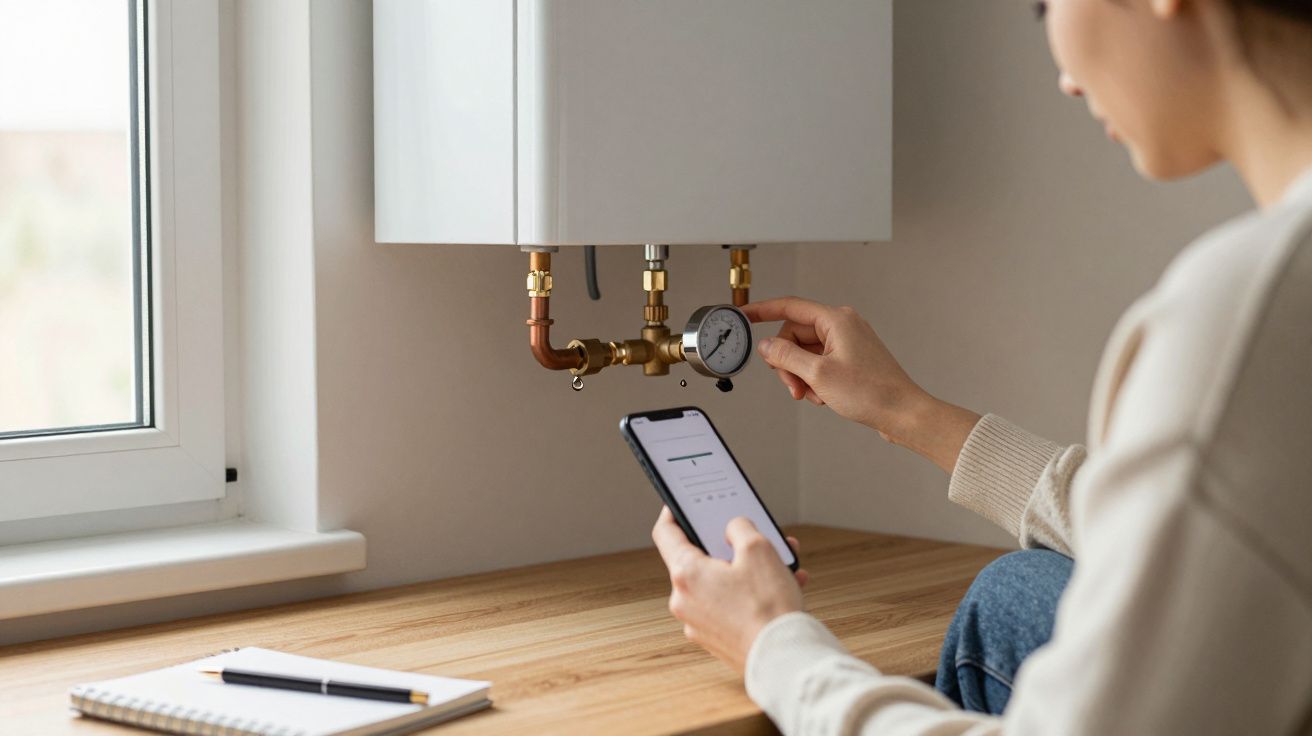
- Make sure the system pressure is in the normal range (for many homes, roughly 1.0–1.5 bar when cold, but follow your boiler manual).
- Open any fully-closed radiator valves you don’t actually need closed. Dead-end branches can cause strange pressure spikes.
- Listen during a controlled test: set all TRVs fully open for an hour and see if the tapping/knock disappears. If it does, the issue may be TRV modulation or balancing.
- Note the “event” that triggers it (hot-water tap, heating on, particular room reaching temperature). Write it down; it saves time and money.
If the sound is accompanied by violent shaking, visible pipe movement, leaks, or the boiler locking out, stop testing and get help.
What engineers usually do to stop it (and why it works)
Most fixes are boring in a good way. They’re about slowing changes and giving water somewhere to “go”.
Depending on the system, a professional might:
- Adjust pump speed or control mode to reduce rapid flow changes. Many systems are simply set too aggressively.
- Balance radiators so flow is stable across branches and TRVs don’t hunt as much.
- Replace a sticky TRV head or valve body that’s snapping shut instead of modulating smoothly.
- Fit or check an expansion vessel / pressure-reducing arrangements (more relevant in some set-ups than others) so pressure swings are better managed.
- Secure or re-route pipework where it’s touching joists or clipped too tight, adding cushioning where appropriate.
- Check zone valves and diverters for sluggish movement that creates pressure spikes.
The goal isn’t “total silence”. The goal is a system whose normal noises are genuinely normal - steady, predictable, and not caused by impact.
A quick sanity guide: normal heat noises vs problem noises
| Sound | Usually means | Worth acting on? |
|---|---|---|
| Soft ticking as rads warm | Expansion/contraction | Only if new and persistent |
| Whoosh/hiss through one rad | High flow, balancing/TRV issue | Often, yes |
| Single dull knock when heating starts/stops | Valve/pump event, minor hammer | Investigate if recurring |
| Rapid tapping or repeated thuds | Vibration/hammer/chatter | Yes - sooner rather than later |
FAQ:
- Is water hammer noise dangerous? It’s rarely an immediate safety hazard, but it can increase pipe stress and wear valves/fittings over time, especially if it happens frequently.
- Why does it only happen in mild weather? TRVs tend to “hover” near their set temperature and modulate more, which can create frequent small flow changes that trigger subtle hammer.
- Can I fix it by turning the pump down? Sometimes, but not always, and setting it too low can cause poor heating and boiler issues. It’s a useful clue, not a guaranteed fix.
- Does bleeding radiators always help? Not always, but trapped air can make flow unstable and noises worse. If you bleed, recheck system pressure afterwards.
- When should I call an engineer? If the noise is new, getting more frequent, linked to a specific valve action, or you notice pressure drops, leaks, or pipe movement.



Comments (0)
No comments yet. Be the first to comment!
Leave a Comment